30 Days English Challenge
Thirty speaking lessons, from sentence foundations to expressing ideas accurately.
Start with the day’s video. Read the short rules, compare the examples, then try the self-checks before opening the answers.
Days 1–10: Sentence foundations
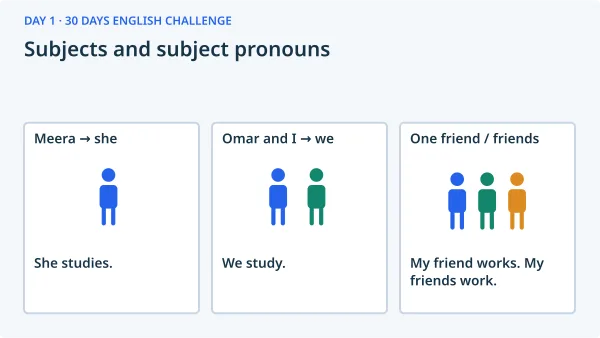 Day 1Subject Pronouns: Build Clear English SentencesIntroduce people and describe their everyday activities without repeating every name.
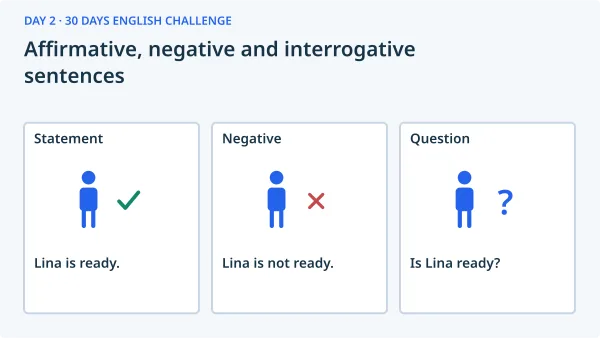 Day 2Positive, Negative and Question Forms in EnglishTell someone what happens, say what does not happen and check the same information.
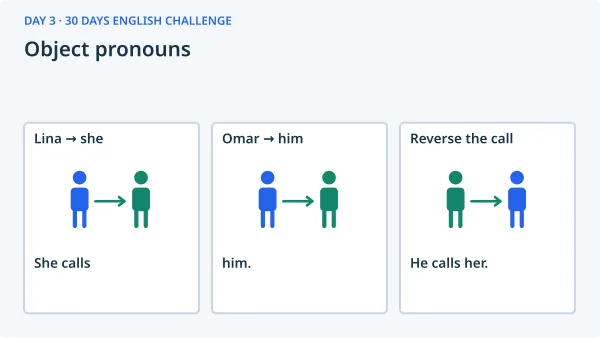 Day 3Object Pronouns: When to Use Me, Him, Her and ThemDescribe who receives an action and who a message, gift or invitation is for.
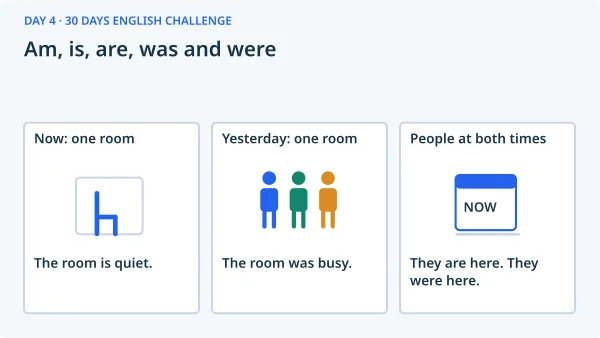 Day 4Am, Is, Are, Was and Were: Choose the Right FormDescribe people, places and actions now and at a past moment.
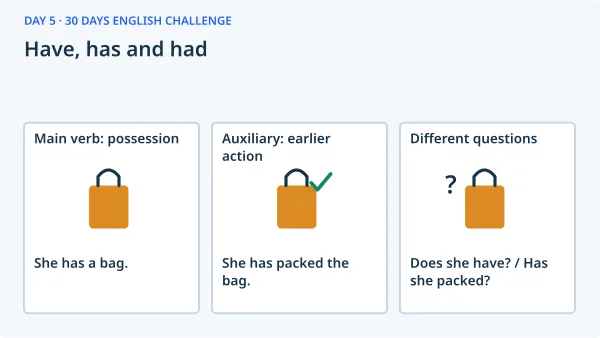 Day 5Have, Has and Had: Simple Rules and Everyday ExamplesTalk about possessions and experiences while choosing the correct question pattern.
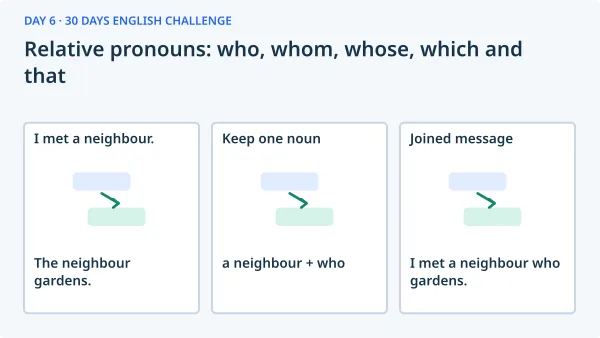 Day 6Relative Pronouns: Connect Ideas with Who, Which and ThatJoin short messages so a listener knows which person or thing you mean.
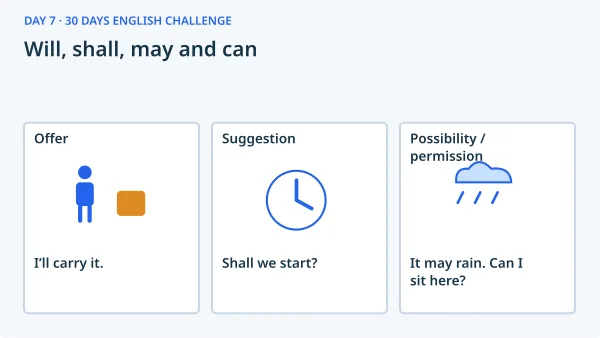 Day 7Will, Shall, May and Can: Ability, Offers and PermissionMake an offer, discuss a possibility and ask for permission naturally.
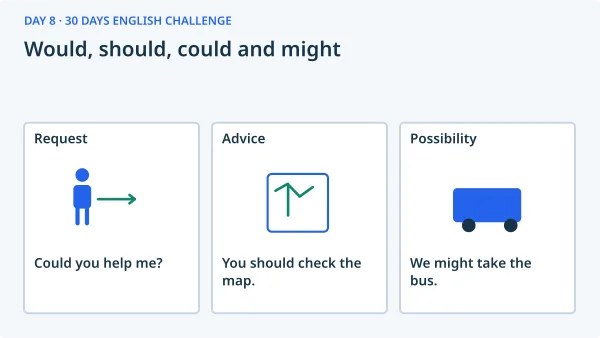 Day 8Would, Should, Could and Might: Uses and ExamplesAsk politely, offer useful advice and discuss an uncertain possibility.
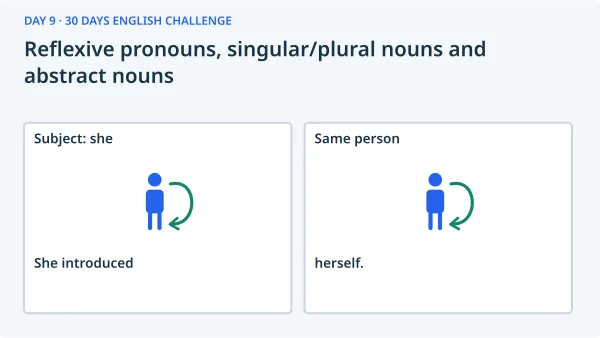 Day 9Reflexive Pronouns and Nouns: A Practical GuideDescribe actions you do yourself, count familiar things and talk about qualities or ideas.
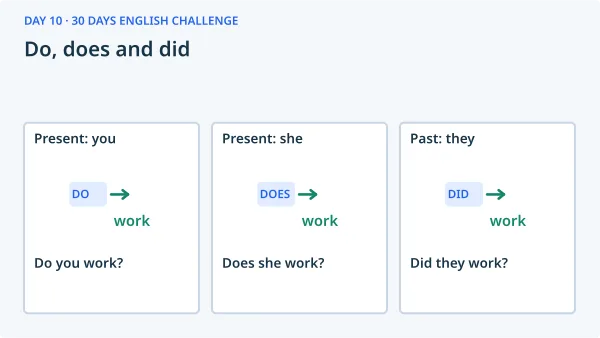 Day 10Do, Does and Did: Ask Questions and Make NegativesAsk about routines and past events without adding an extra ending to the main verb.
Days 11–17: Everyday grammar
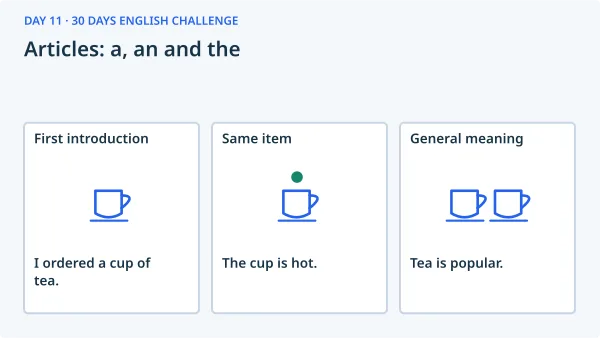 Day 11A, An and The: Choose the Right English ArticleIntroduce an item, identify it later and avoid unnecessary articles.
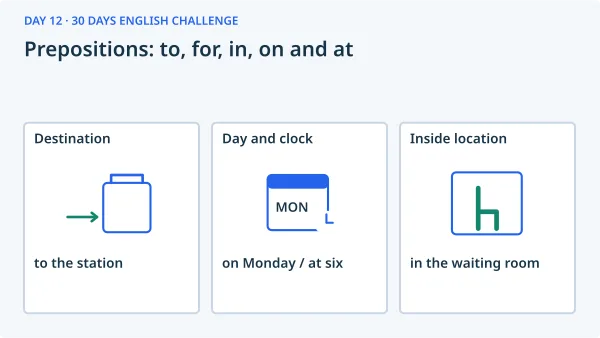 Day 12To, For, In, On and At: Everyday PrepositionsExplain a destination, a purpose and a familiar time or place.
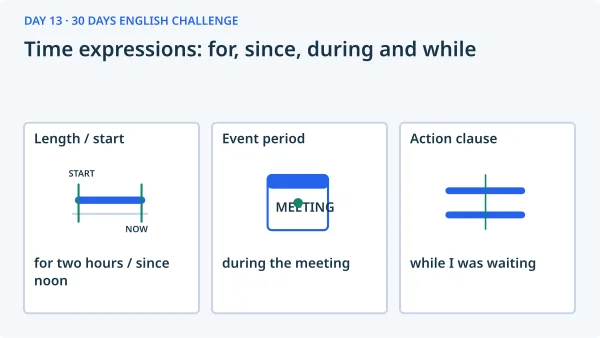 Day 13For, Since, During and While: Say When and How LongExplain how long something lasts, when it started and what happened alongside it.
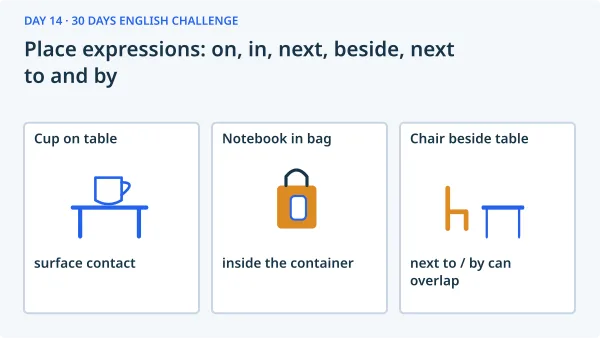 Day 14Prepositions of Place: In, On, Beside and Next ToGive clear directions around one room without confusing sequence and position.
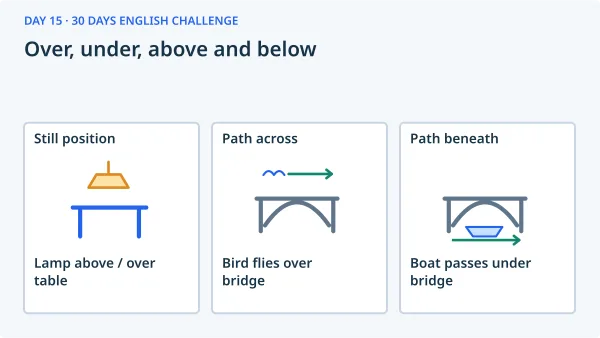 Day 15Over, Under, Above and Below: Position and MovementDescribe where things are and how they move above, below, over or under other things.
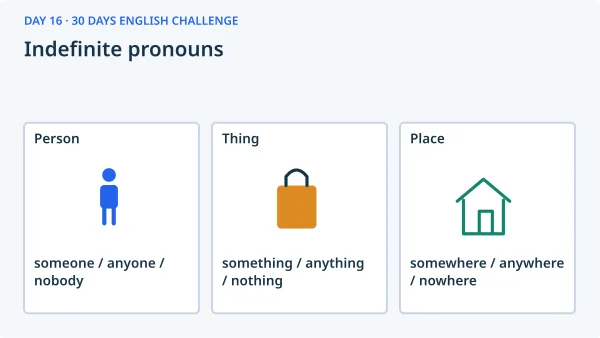 Day 16Indefinite Pronouns: Someone, Anyone, Everyone and NobodyTalk about people, places and things without naming every one.
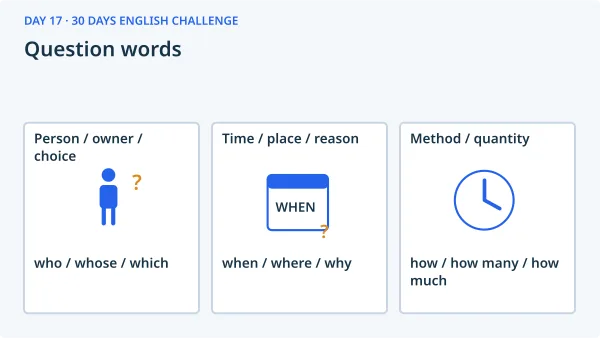 Day 17English Question Words: Ask for the Right InformationAsk for the particular information you need and recognize a useful answer.
Days 18–21: Tense comparisons
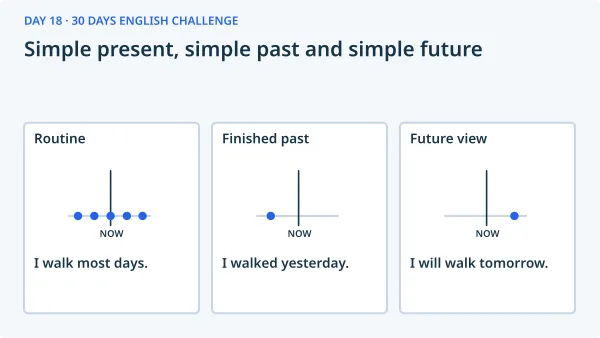 Day 18Simple Tenses: Habits, the Past and the FutureDescribe a routine, a finished event and a future prediction using one familiar activity.
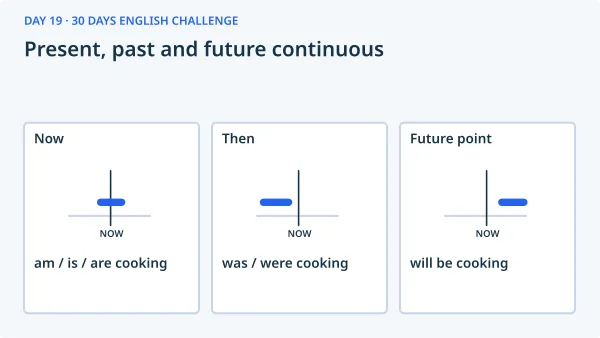 Day 19Continuous Tenses: Describe Actions in ProgressDescribe what is in progress around now, a past moment or a future moment.
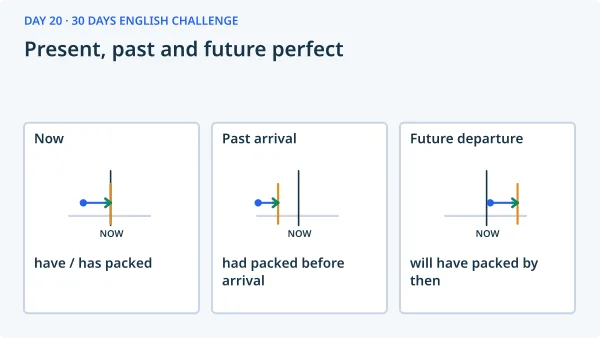 Day 20Perfect Tenses: Present, Past and Future ExplainedTalk about what has happened, what happened before a past event and what will be done by a future time.
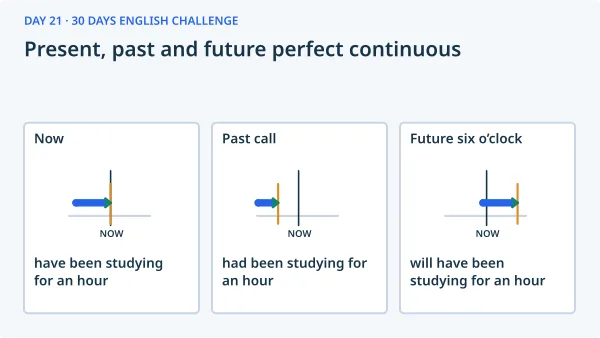 Day 21Perfect Continuous Tenses: Explain How LongSay how long an activity has continued up to now, a past time or a future time.
Days 22–30: Expressing ideas accurately
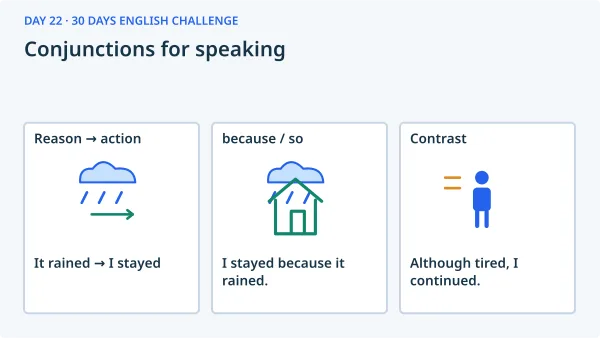 Day 22English Conjunctions: Connect Ideas with And, But and BecauseConnect short ideas so your listener understands addition, contrast, choice, reason and result.
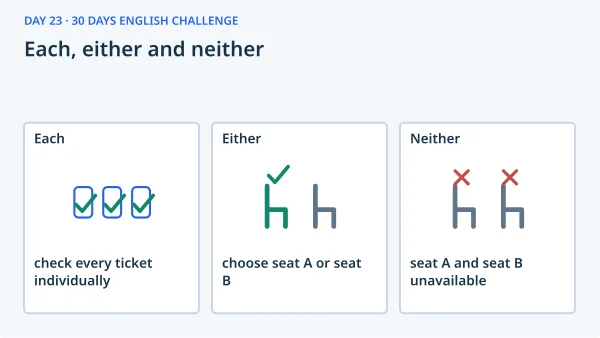 Day 23Each, Either and Neither: Understand the DifferenceDiscuss people one by one and make choices between two alternatives.
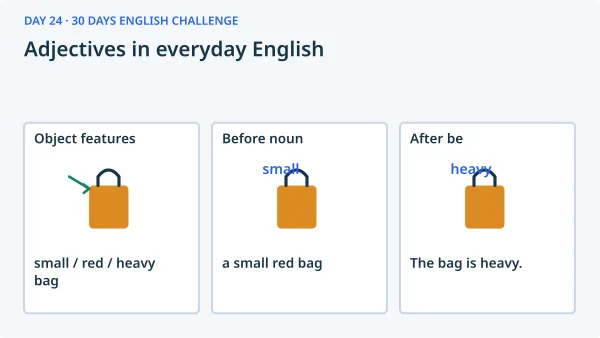 Day 24English Adjectives: Describe People and Things ClearlyDescribe people and things with clear, well-placed adjectives.
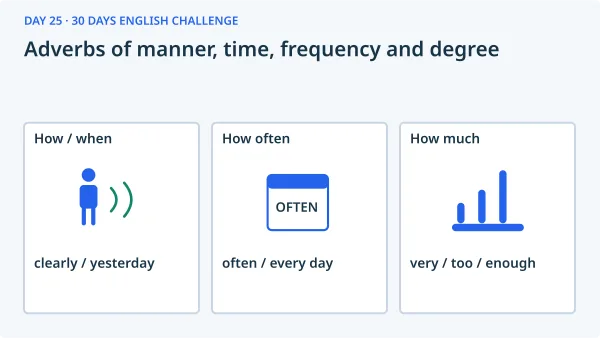 Day 25English Adverbs: How, When, How Often and How MuchExplain how, when, how often and how much something happens.
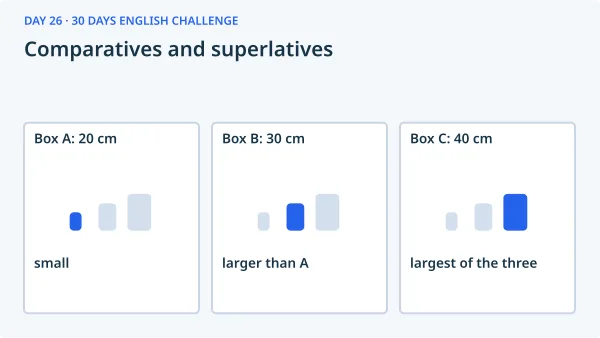 Day 26Comparatives and Superlatives: Compare People and ThingsCompare two things and choose the best option from a group.
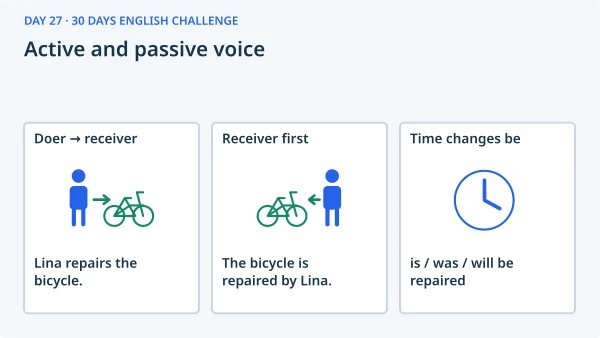 Day 27Active and Passive Voice: Rules, Examples and PracticeDescribe one event from the doer’s viewpoint or the receiver’s viewpoint.
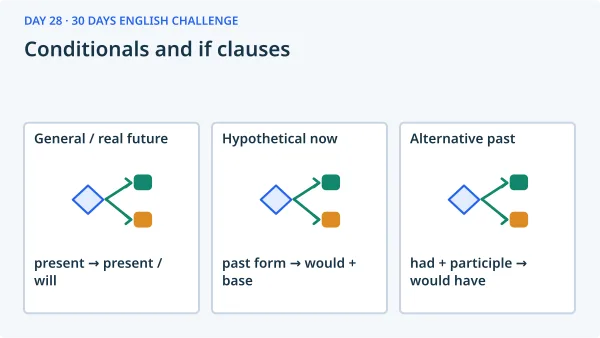 Day 28English Conditionals: Real and Imagined SituationsUse if to explain possible results and imagine different situations.
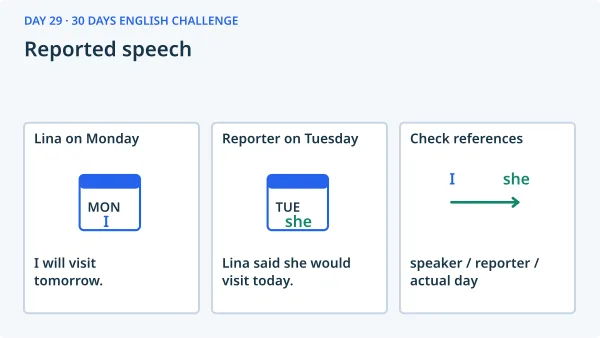 Day 29Reported Speech: Share What Someone SaidPass on a message while keeping people, time and question order clear.
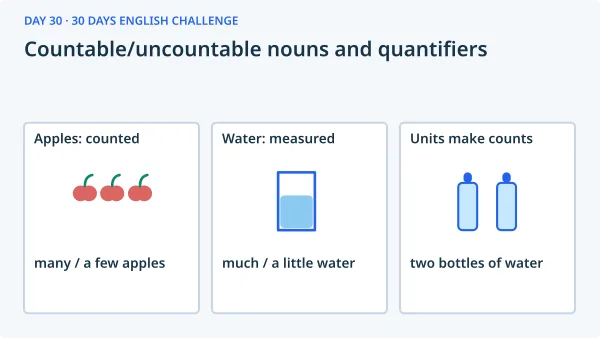 Day 30Countable and Uncountable Nouns: Choose the Right QuantityDescribe useful amounts, make an offer and explain whether you have enough.