Basics
Day 5 · 30 Days English Challenge
Have, Has and Had: Simple Rules and Everyday Examples
· 6 min read
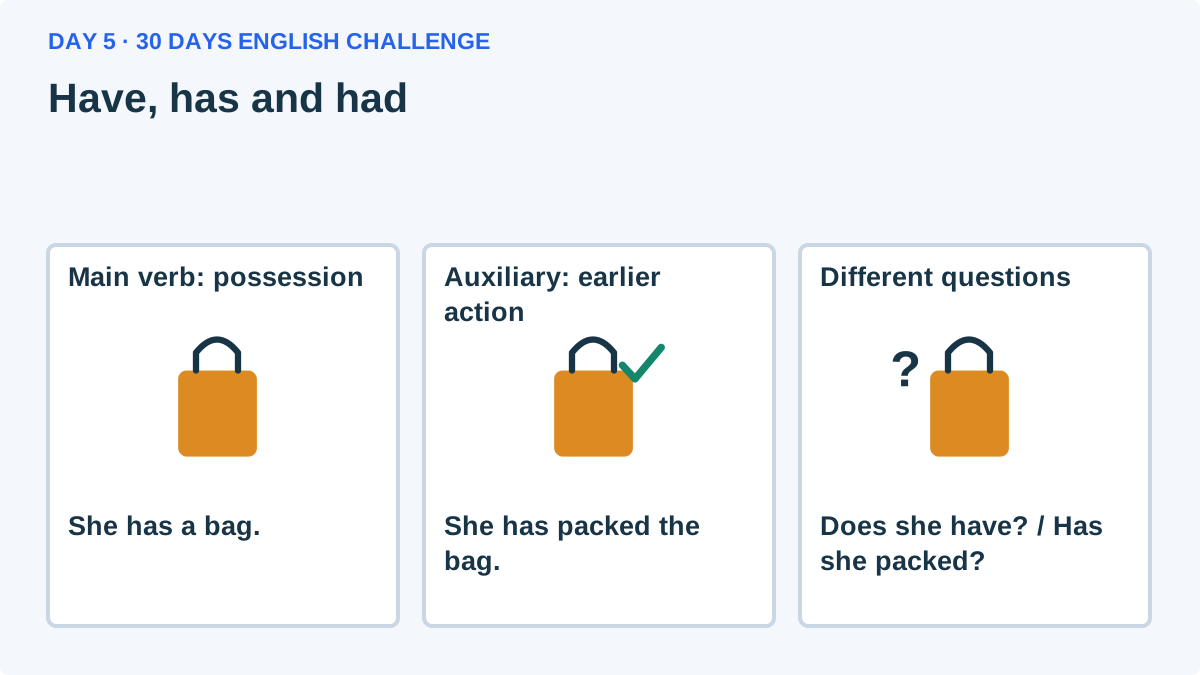
Day 5 speaking goal: Talk about possessions and experiences while choosing the correct question pattern.
I have a bag means I own a bag. I have packed means my packing is done. Learn both patterns.
Jump to: Rules · Compare · Examples · Self-checks · Answers
5.1 Have, has and had
| Learn | Simple English |
|---|---|
| Rule | Use have or has for things you own and activities such as lunch. Use had for the past. |
| Pattern | I/you/we/they have. He/she/it has. Everyone uses had in the past. |
| Example | I have a ticket. She has a map. We had lunch at noon. |
| Why | Have can mean own, but have lunch means eat lunch. |
5.2 Ask about things and activities
| Learn | Simple English |
|---|---|
| Rule | Use do, does or did to ask about possessions or activities. After these words, always use have. |
| Pattern | Do you have…? Does she have…? Did they have…? |
| Example | Does she have a ticket? She does not have a ticket. |
| Why | Have you got a ticket? is another correct present pattern, especially in British English. Do not mix the two patterns. |
5.3 Have as a helping verb
| Learn | Simple English |
|---|---|
| Rule | Have can help another verb. A past participle is a verb form such as packed, eaten or seen. |
| Pattern | Have/has + past participle. Had + past participle. |
| Example | I have packed my bag. I had packed it before the taxi arrived. |
| Why | Have packed: my bag is ready now. Had packed: my bag was ready before the taxi arrived. |
5.4 Ask with have, has or had
| Learn | Simple English |
|---|---|
| Rule | When have helps another verb, put have, has or had before the person. Do not add do. |
| Pattern | Have you eaten? Has she arrived? Had they left? |
| Example | Has she arrived? No, she has not arrived yet. |
| Why | Keep arrived after the person. Say Has she arrived?, not Does she has arrived? |
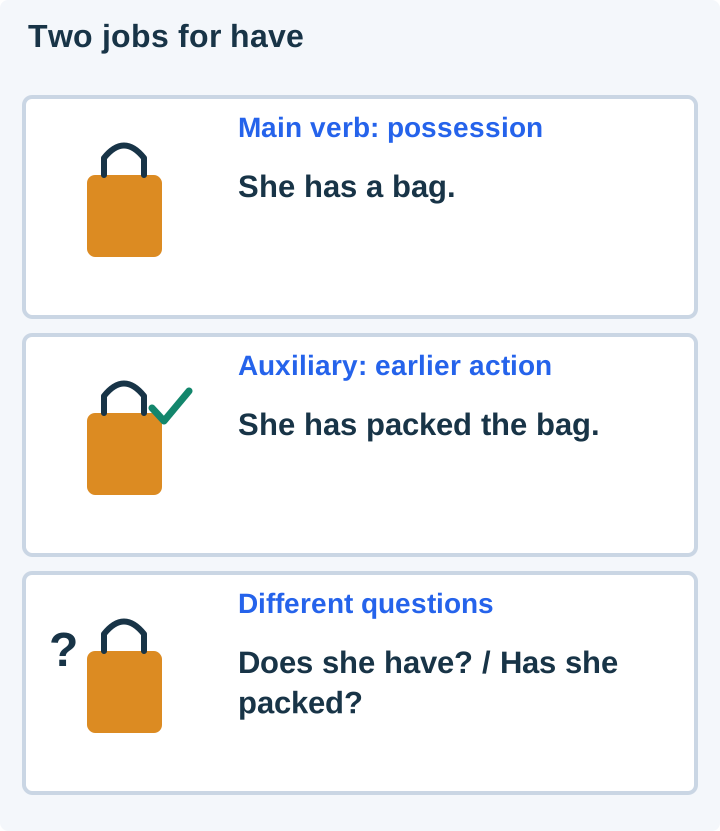
5.5 Compare the patterns side by side
| Use | Statement | Question |
|---|---|---|
| Possession now | She has a ticket. | Does she have a ticket? |
| Main verb in past | They had lunch. | Did they have lunch? |
| Helping verb | She has eaten. | Has she eaten? |
| Before another past event | They had left. | Had they left before you arrived? |
5.6 Everyday examples: notice the meaning
I have a small bag.
💡 Have describes possession.
My sister has a bicycle.
💡 With he, she or it, use has.
We have two tickets.
💡 With “we”, use “have”.
They had a car last year.
💡 Had places possession in the past.
I have lunch at noon.
💡 Have is part of an activity phrase.
She has a meeting today.
💡 Has is a main verb here.
Do you have a charger?
💡 A main-verb question uses do.
Does Omar have a key?
💡 After does, use have, not has.
Did you have breakfast?
💡 Did asks about the past.
We don’t have much time.
💡 Main-verb negative uses do not.
Have you got a pen?
💡 A common present-possession alternative.
I haven’t got a pen.
💡 This matches the have got pattern.
I have finished my message.
💡 Have helps the perfect form.
She has lost her ticket.
💡 A past event has a present consequence.
Have you eaten yet?
💡 Put the helping word have before you to ask the question.
Has the bus arrived?
💡 Has asks about a current result.
We had left before it rained.
💡 Had shows the action happened before another past time.
Had you met her before the course?
💡 Had forms the past-perfect question.
5.7 Common mistakes and why
❌ Does she has a ticket?
✅ Does she have a ticket?
After does, use have, not has.
❌ Do you have finished?
✅ Have you finished?
Perfect have forms the question directly.
❌ She have a bicycle.
✅ She has a bicycle.
Use has with he, she or it in the present.
5.8 Try it yourself
Step 1: Say one thing you have and one thing a friend has.
Step 2: Ask: Does your friend have a ticket?
Step 3: Say I have packed. Then ask: Have you packed?
5.9 Five self-checks
Choose A or B for each question. Read the answers below after you finish.
1. Choose the missing word: “My friend ___ a map.”
A. have
B. has
2. Which question is correct?
A. Did she have lunch?
B. Did she had lunch?
3. Ask your friend if their task is finished. Which question is correct?
A. Do you have finished the task?
B. Have you finished the task?
4. In “We have a car,” what does “have” mean?
A. We own a car.
B. We are washing a car.
5. They left first. I arrived later. Choose the missing word: “They ___ left before I arrived.”
A. has
B. had
Self-check answers and explanations
1. B — has
💡 My friend means one person. Use has in the present.
2. A — Did she have lunch?
💡 After did, use have, not had.
3. B — Have you finished the task?
💡 Put have before you. Do not add do when have helps finished.
4. A — We own a car.
💡 Have describes possession here. It does not help another verb.
5. B — had
💡 Had left shows that their leaving happened before my past arrival.
5.10 Remember these points
Own or do something: I have lunch. Does she have lunch?
Help another verb: I have eaten. Have you eaten?
Review any self-check you missed. Then say three examples aloud without looking.
Further reading: present perfect tense · past perfect tense
Grammar references: Cambridge: Have and have got · Cambridge: Questions with have