Basics
Day 4 · 30 Days English Challenge
Am, Is, Are, Was and Were: Choose the Right Form
· 5 min read
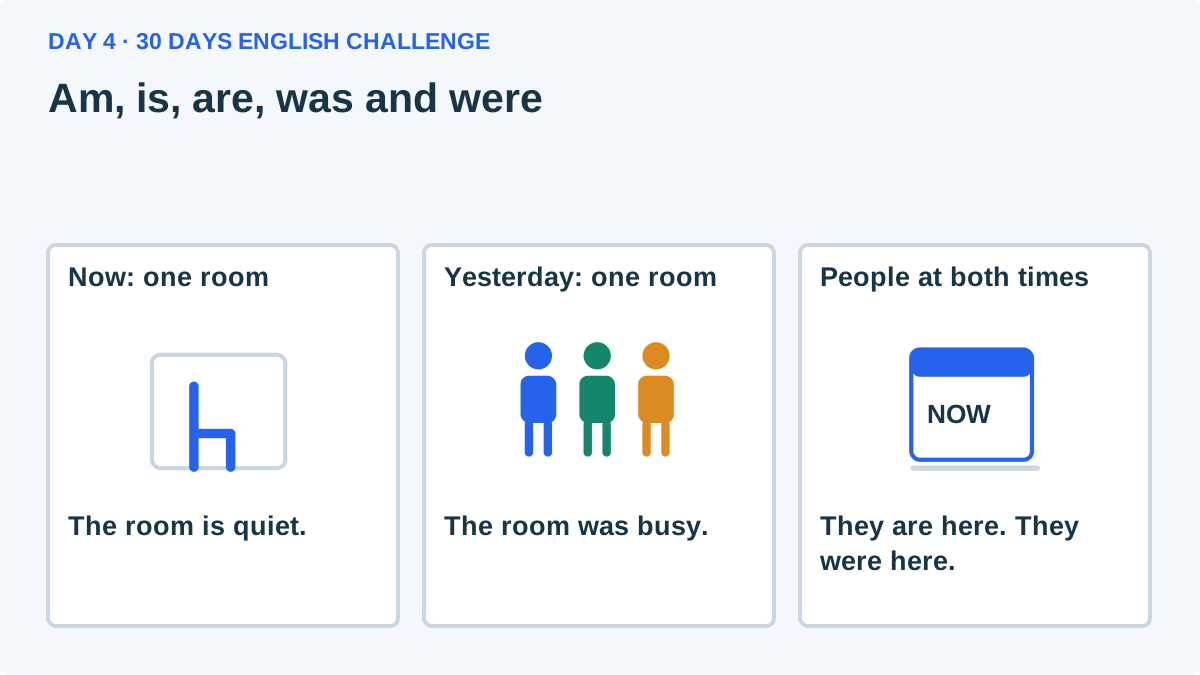
Day 4 speaking goal: Describe people, places and actions now and at a past moment.
Use am, is and are to talk about now. Use was and were to talk about the past.
Jump to: Rules · Compare · Examples · Self-checks · Answers
4.1 Am, is and are: now
| Learn | Simple English |
|---|---|
| Rule | Use am with I. Use is with he, she, it or one named person. Use are with you, we and they. |
| Pattern | I am. She is. You are. We are. They are. |
| Example | I am tired. My friends are happy. |
| Why | Say “I am”, not “I is”. Say “you are” for one person or several. |
4.2 Was and were: before now
| Learn | Simple English |
|---|---|
| Rule | Was and were are past forms of be. Use were with you, we and they. |
| Pattern | I/he/she/it was. You/we/they were. |
| Example | She was busy yesterday. We were at home. |
| Why | The time changes, so is becomes was and are becomes were. |
4.3 Be alone or with another verb
| Learn | Simple English |
|---|---|
| Rule | Be can describe someone or something. It can also help an action word ending in -ing. |
| Pattern | She is tired. She is working. |
| Example | She is a teacher. She is teaching now. |
| Why | Is a teacher tells us her job. Is teaching tells us her current activity. |
4.4 Questions and negatives
| Learn | Simple English |
|---|---|
| Rule | For a question, put be before the person. For a negative, put not after be. |
| Pattern | Is she ready? She is not ready. |
| Example | Were you at home? No, I was not. |
| Why | Keep the right form: Were you…? but I was…. |
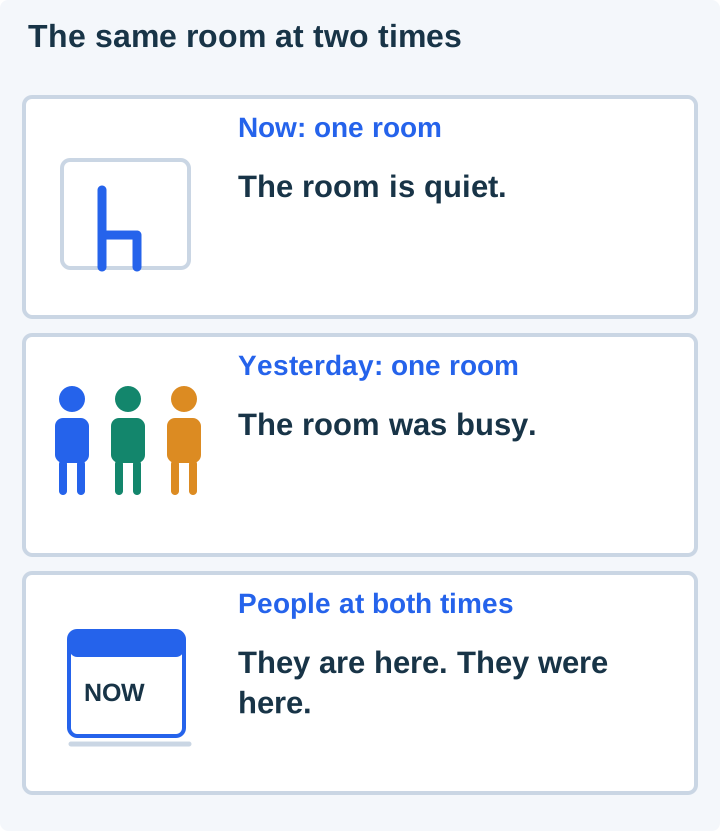
4.5 Compare the patterns side by side
| Subject | Now | Past |
|---|---|---|
| I | I am ready. | I was ready. |
| he / she / it | She is here. | She was here. |
| you / we / they | They are busy. | They were busy. |
| one / several rooms | The room is quiet. | The rooms were quiet. |
4.6 Everyday examples: notice the meaning
I am a student.
💡 Am links I with an identity.
The station is nearby.
💡 Is gives a location.
The trains are late.
💡 There is more than one train, so use “are”.
You are welcome here.
💡 Say “you are” for one person or a group.
We are tired.
💡 Be connects we with a description.
I was nervous yesterday.
💡 Was locates the state in the past.
The room was quiet at noon.
💡 A singular room takes was.
The rooms were crowded yesterday.
💡 There is more than one room, so use “were”.
You were very helpful.
💡 With “you” in the past, use “were”.
They were outside.
💡 Were gives a past location.
She is reading now.
💡 Is helps form a continuous activity.
They are cooking dinner.
💡 Are supports cooking.
She was reading at eight.
💡 Was places the activity around eight.
We were waiting when you arrived.
💡 Were helps describe an ongoing past activity.
Is the door open?
💡 Be moves before the subject.
Were the shops busy?
💡 The past question uses were.
The door isn’t open.
💡 Not denies the description.
We weren’t waiting outside.
💡 The negative denies the activity or location.
4.7 Common mistakes and why
❌ You was late.
✅ You were late.
Standard past be with you uses were.
❌ Does she is ready?
✅ Is she ready?
Be forms this question without does.
❌ They are cook dinner now.
✅ They are cooking dinner now.
An ongoing action after are needs the -ing form.
4.8 Try it yourself
Step 1: Say where you are and how you feel now.
Step 2: Say where you were yesterday.
Step 3: Ask one question with are and one with were.
4.9 Five self-checks
Choose A or B for each question. Read the answers below after you finish.
1. Choose the missing word: “I ___ ready now.”
A. am
B. is
2. Choose the missing word: “The children ___ here yesterday.”
A. was
B. were
3. Ask about the shop yesterday. Which question is correct?
A. Was the shop open yesterday?
B. Is the shop open yesterday?
4. In “She is writing now,” what does the word “is” do?
A. It means she owns something.
B. It helps writing describe an activity happening now.
5. Say that you were not late. Which sentence is correct?
A. I did not were late.
B. I was not late.
Self-check answers and explanations
1. A — am
💡 Use am with I in the present.
2. B — were
💡 Children means more than one child. Use were for the past.
3. A — Was the shop open yesterday?
💡 Yesterday is in the past, so use was.
4. B — It helps writing describe an activity happening now.
💡 Is and writing work together: is writing.
5. B — I was not late.
💡 Put not after was. Do not add did.
4.10 Remember these points
Now: am, is, are.
Past: was, were.
Question: Are you ready? Negative: I am not ready.
Review any self-check you missed. Then say three examples aloud without looking.
Further reading: present continuous tense · past continuous tense
Grammar references: Cambridge: Questions with be