Basics
Day 3 · 30 Days English Challenge
Object Pronouns: When to Use Me, Him, Her and Them
· 5 min read
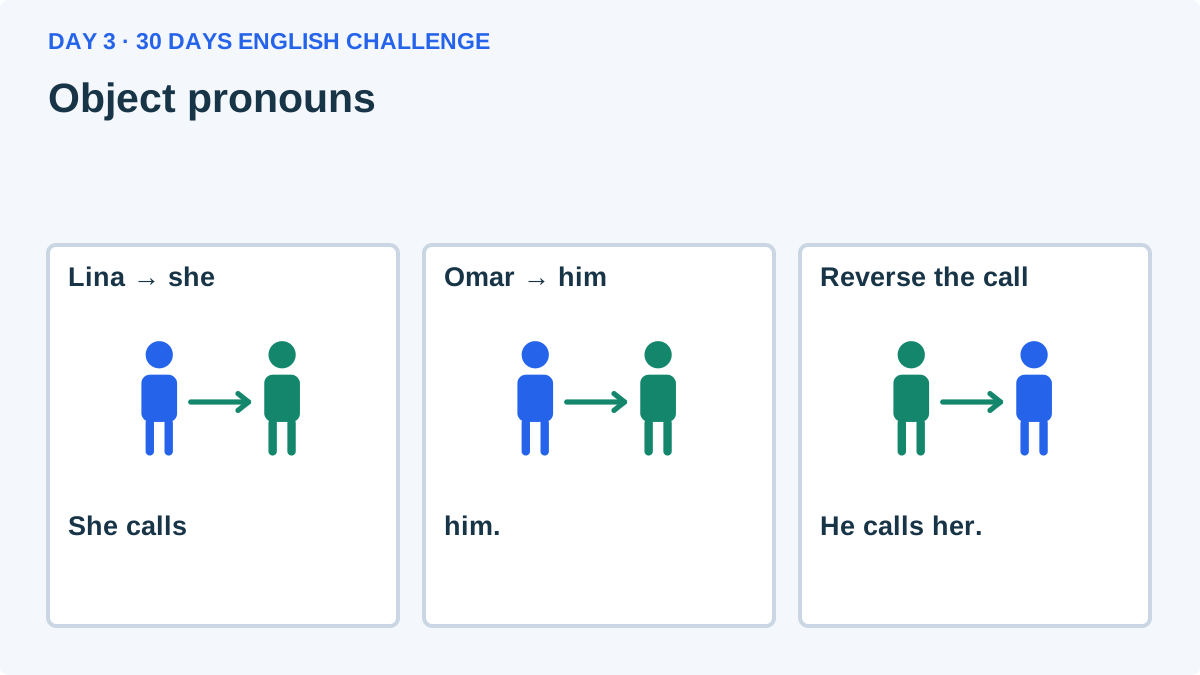
Day 3 speaking goal: Describe who receives an action and who a message, gift or invitation is for.
“I” can be the person doing an action. “Me” can be the person receiving it. Learn which pronoun goes where.
Jump to: Rules · Compare · Examples · Self-checks · Answers
3.1 Who receives the action?
| Learn | Simple English |
|---|---|
| Rule | In this pattern, the subject does the action and the object receives it. Look at who helps and who receives help. |
| Pattern | Subject + verb + object. |
| Example | Meera helps Omar. |
| Why | Meera does the helping. Omar receives the help. |
3.2 Choose me, him or them
| Learn | Simple English |
|---|---|
| Rule | Use me, you, him, her, it, us or them after a verb when the pronoun receives the action. |
| Pattern | I → me. He → him. She → her. We → us. They → them. |
| Example | Omar helps me. I help him. |
| Why | Use “I” and “he” for the people helping. Use “me” and “him” for the people receiving help. |
3.3 After to, with and for
| Learn | Simple English |
|---|---|
| Rule | Use object pronouns after words such as to, with and for. |
| Pattern | To me. With her. For them. |
| Example | Please send the photo to her. |
| Why | Say to her, not to she. Use the same pattern with other object pronouns. |
3.4 Make the person clear
| Learn | Simple English |
|---|---|
| Rule | Name the person before using a pronoun. If two people could fit, repeat the name. |
| Pattern | Name first → clear pronoun next. |
| Example | I saw Lina. I gave her the book. |
| Why | Her clearly means Lina. If the listener is unsure, say Lina again. |
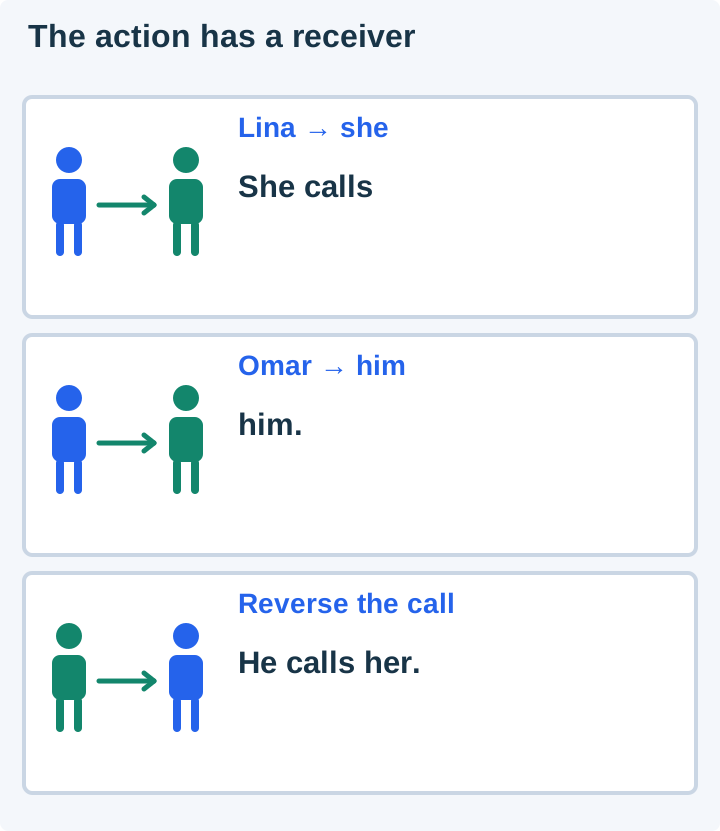
3.5 Compare the patterns side by side
| Subject | Object | In context |
|---|---|---|
| I / we | me / us | She invited me. They helped us. |
| he / she | him / her | We thanked him. I called her. |
| you / it | you / it | I saw you. Please move it. |
| they | them | We met them yesterday. |
3.6 Everyday examples: notice the meaning
She called me.
💡 Me receives the call.
I called her.
💡 Her is the object, not she.
We invited him.
💡 Him replaces one known person.
He invited us.
💡 Us includes the speaker.
They thanked you.
💡 “You” stays the same before and after the verb.
You thanked them.
💡 Them receives the thanks.
Please open it.
💡 It replaces a known door or container.
I found them.
💡 Them can refer to the lost keys.
Give the ticket to me.
💡 To is followed by an object form.
This message is for her.
💡 For introduces the recipient.
Come with us.
💡 With is followed by us.
I sat beside him.
💡 Beside expresses location.
Tell me about them.
💡 About also takes an object pronoun.
The teacher helped Omar and me.
💡 The whole phrase is an object.
Between you and me, the trip was tiring.
💡 Both pronouns follow a preposition.
Sam arrived. We welcomed them.
💡 Them may refer to one person using they.
I sent her a photo.
💡 Her is the recipient; a photo is the item sent.
She sent it to me.
💡 It is the item; me follows to.
3.7 Common mistakes and why
❌ She called I.
✅ She called me.
The caller is she; the receiver needs an object form.
❌ Come with we.
✅ Come with us.
After with, use us.
❌ This is for Omar and I.
✅ This is for Omar and me.
After “for”, use “me”, even when another name comes first.
3.8 Try it yourself
Step 1: Name two people who help you.
Step 2: Replace each name with an object pronoun.
Step 3: Say one sentence with to and one with for.
3.9 Five self-checks
Choose A or B for each question. Read the answers below after you finish.
1. Omar uses he. Replace Omar: “Lina invited Omar.” Which sentence is correct?
A. Lina invited he.
B. Lina invited him.
2. You want a friend to join you and your group. Complete: “Please come with ___.”
A. us
B. we
3. Choose the missing word: “The teacher helped Ravi and ___.”
A. I
B. me
4. Replace the keys with a pronoun: “I found the keys.” Which sentence is correct?
A. I found them.
B. I found it.
5. Sam uses they. Complete: “I thanked ___ for helping.”
A. they
B. them
Self-check answers and explanations
1. B — Lina invited him.
💡 Omar receives the invitation, so use him after invited.
2. A — us
💡 Us means the speaker and other people. Use us after with.
3. B — me
💡 Me receives the help. Use me, not I, after helped.
4. A — I found them.
💡 Keys means more than one thing, so use them.
5. B — them
💡 Use them after thanked. They is the subject form.
3.10 Remember these points
Subjects: I, he, she, we, they.
Objects: me, him, her, us, them.
You and it stay the same.
Review any self-check you missed. Then say three examples aloud without looking.
Further reading: pronouns basics · parts of a sentence
Grammar references: Cambridge: Subject and object pronouns