Basics
Day 2 · 30 Days English Challenge
Positive, Negative and Question Forms in English
· 5 min read
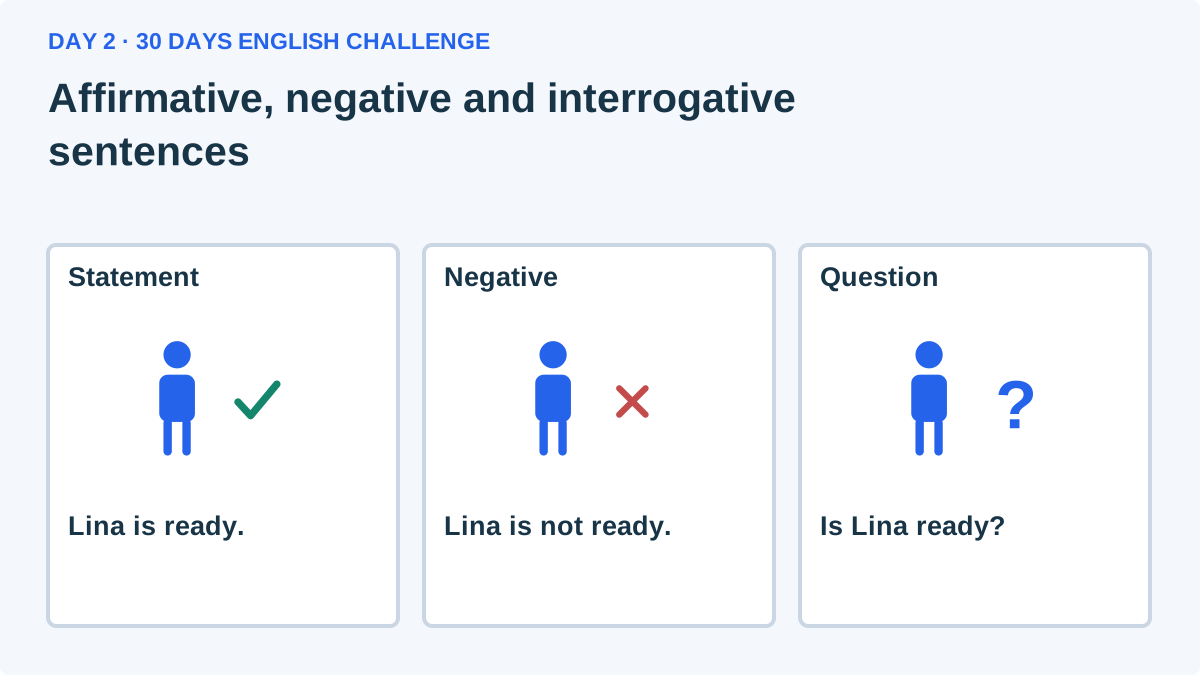
Day 2 speaking goal: Tell someone what happens, say what does not happen and check the same information.
Practise one message in three ways: say it, make it negative and ask a question.
Jump to: Rules · Compare · Examples · Self-checks · Answers
2.1 Three ways to say it
| Learn | Simple English |
|---|---|
| Rule | An affirmative sentence says something is true. A negative says it is not true. A question asks for information. |
| Pattern | She is ready. She is not ready. Is she ready? |
| Example | Lina works today. Does Lina work today? |
| Why | The first sentence gives information. The second asks someone to check it. |
2.2 Questions with be
| Learn | Simple English |
|---|---|
| Rule | With am, is, are, was or were, put the verb before the person. Add not to make a negative. |
| Pattern | She is ready → Is she ready? |
| Example | Is she ready? Yes, she is. |
| Why | Do not add do: say Is she ready?, not Does she is ready? |
2.3 Questions with do, does and did
| Learn | Simple English |
|---|---|
| Rule | With verbs such as work or like, use do or does for present questions. Use did for past questions. |
| Pattern | Does + person + basic verb? |
| Example | Does Lina work here? Lina does not work here. |
| Why | After does or did, use work, not works or worked. |
2.4 Questions with can and will
| Learn | Simple English |
|---|---|
| Rule | Can, will and should come before the person in questions. Add not for negatives. |
| Pattern | She can help → Can she help? |
| Example | Can you help? I cannot help today. |
| Why | Use can help, not can helps or can to help. |
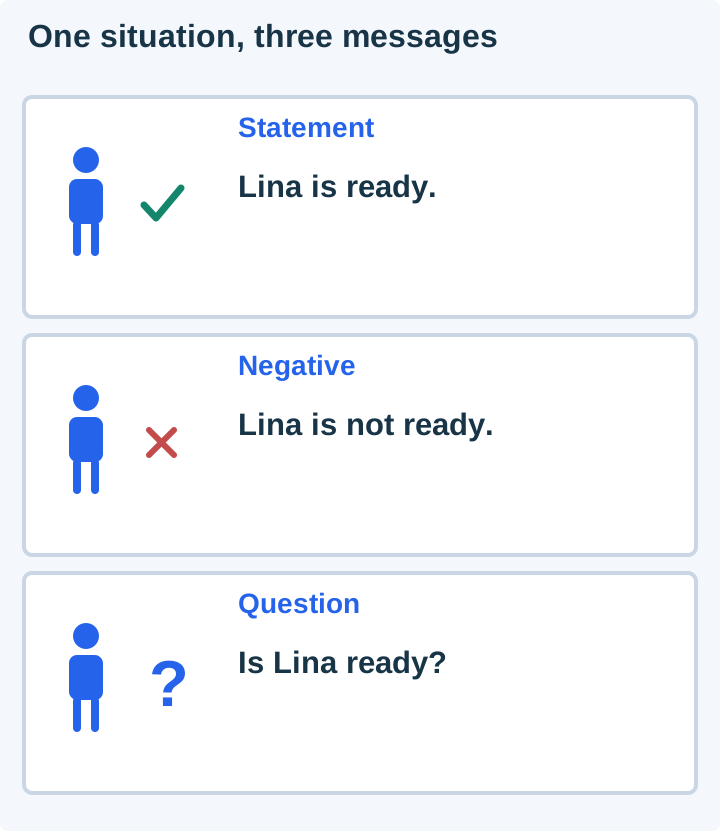
2.5 Compare the patterns side by side
| Verb family | Affirmative | Negative | Question |
|---|---|---|---|
| be | She is ready. | She is not ready. | Is she ready? |
| ordinary verb | She works today. | She does not work today. | Does she work today? |
| modal | She can help. | She cannot help. | Can she help? |
2.6 Everyday examples: notice the meaning
I am at home.
💡 Be gives a location.
I am not at home.
💡 Not denies that location.
Are you at home?
💡 Be moves before you.
The tickets are valid.
💡 A plural subject uses are.
The tickets aren’t valid.
💡 Aren’t is a common contraction.
Are the tickets valid?
💡 The question checks validity.
We eat here.
💡 This states a habit.
We don’t eat here.
💡 Do not supports the ordinary verb.
Do you eat here?
💡 After do, use eat, not eats.
Ravi likes tea.
💡 With he, she or it, say likes.
Ravi doesn’t like tea.
💡 Doesn’t already matches he or she. Do not add -s to the next verb.
Does Ravi like tea?
💡 Do not keep -s on like.
They arrived early.
💡 The statement refers to the past.
They didn’t arrive early.
💡 Didn’t takes arrive.
Did they arrive early?
💡 Did forms the past question.
We can wait.
💡 Can expresses ability or willingness in context.
We cannot wait.
💡 Cannot is normally one word.
Can we wait?
💡 The modal precedes the subject.
2.7 Common mistakes and why
❌ Does she is ready?
✅ Is she ready?
Be does not need do here.
❌ She doesn’t works here.
✅ She doesn’t work here.
After doesn’t, use work, not works.
❌ Can he to help?
✅ Can he help?
After can, use help without to.
2.8 Try it yourself
Step 1: Choose a sentence with is, such as She is busy.
Step 2: Make it negative. Then ask a question.
Step 3: Repeat with work and can help.
2.9 Five self-checks
Choose A or B for each question. Read the answers below after you finish.
1. Change “She is tired” into a question. Which version is correct?
A. Is she tired?
B. Does she is tired?
2. Say that you and your friends do not like coffee. Which sentence is correct?
A. We not like coffee.
B. We do not like coffee.
3. Which question is correct?
A. Does he works here?
B. Does he work here?
4. Say that they cannot swim. Which sentence is correct?
A. They cannot swim.
B. They do not can swim.
5. Ask a friend about arriving early yesterday. Which question is correct?
A. Do you arrived early yesterday?
B. Did you arrive early yesterday?
Self-check answers and explanations
1. A — Is she tired?
💡 Put is before she. Do not add does.
2. B — We do not like coffee.
💡 Use do not before like to make this sentence negative.
3. B — Does he work here?
💡 After does, use work, not works.
4. A — They cannot swim.
💡 Add not to can. Do not add do.
5. B — Did you arrive early yesterday?
💡 Did asks about the past. Use arrive after did.
2.10 Remember these points
Be: Is she ready?
Ordinary verb: Does she work?
Can: Can she help?
Review any self-check you missed. Then say three examples aloud without looking.
Further reading: question word order · wh questions yes no questions
Grammar references: Cambridge: Yes/no questions