Questions
Correct Word Order in English Questions
· 5 min read
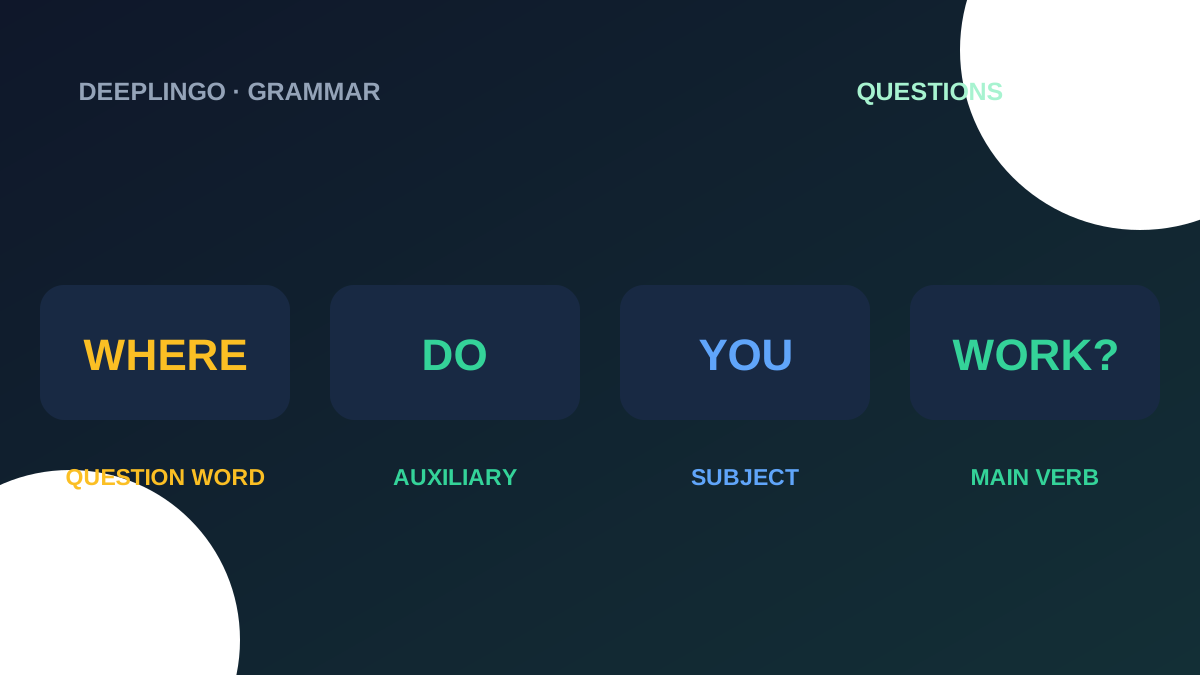
Many English questions place an auxiliary before the subject. Subject questions such as “Who called?” follow a different pattern.
Why Word Order Matters in Questions
In English, the order of words is very important. If you put words in the wrong order, your question will sound strange or be difficult to understand.
Good news: There are simple rules to follow! Let's learn them. 📚
Statement vs Question: What Changes?
In a statement, the subject comes first. In a question, the helping verb comes before the subject.
Statement: Subject + Verb
Question: Helping Verb + Subject + Main Verb
Statement: You like tea.
Question: Do you like tea?
💡 Helping verb (do) moves to front
Statement: She is working.
Question: Is she working?
💡 Helping verb (is) moves to front
Statement: They can swim.
Question: Can they swim?
💡 Modal verb (can) moves to front
Rule 1: Questions with DO/DOES/DID
Use DO/DOES/DID for questions in Simple Present and Simple Past tenses.
Do/Does/Did + Subject + Base Verb + ?
| Tense | Subject | Use | Example |
|---|---|---|---|
| Present | I, You, We, They | DO | Do you like pizza? |
| Present | He, She, It | DOES | Does she work here? |
| Past | All subjects | DID | Did they come yesterday? |
❌ You like pizza?
✅ Do you like pizza?
💡 Add DO before subject
❌ She works here?
✅ Does she work here?
💡 Add DOES, verb becomes base form
❌ They came yesterday?
✅ Did they come yesterday?
💡 Add DID, verb becomes base form
Rule 2: Questions with BE (is/are/was/were)
When the sentence has BE verb, just move it to the front.
Is/Are/Was/Were + Subject + ... + ?
Statement: She is happy.
Question: Is she happy?
💡 Move IS to front
Statement: They are playing.
Question: Are they playing?
💡 Move ARE to front
Statement: He was sleeping.
Question: Was he sleeping?
💡 Move WAS to front
Statement: We were late.
Question: Were we late?
💡 Move WERE to front
Rule 3: Questions with Modal Verbs
Modal verbs (can, could, will, would, should, must, may, might) move to the front.
Modal + Subject + Base Verb + ?
Statement: You can swim.
Question: Can you swim?
💡 Move CAN to front
Statement: She will come.
Question: Will she come?
💡 Move WILL to front
Statement: I should go.
Question: Should I go?
💡 Move SHOULD to front
Statement: They must wait.
Question: Must they wait?
💡 Move MUST to front
Rule 4: Questions with HAVE/HAS (Perfect Tenses)
In perfect tenses, move HAVE/HAS to the front.
Have/Has + Subject + Past Participle + ?
Statement: You have finished.
Question: Have you finished?
💡 Move HAVE to front
Statement: She has eaten.
Question: Has she eaten?
💡 Move HAS to front
Statement: They have been waiting.
Question: Have they been waiting?
💡 Move HAVE to front
Rule 5: Wh-Questions Word Order
Wh-questions follow the same rules, but add the Wh-word at the beginning.
Wh-word + Helping Verb + Subject + Main Verb + ?
❌ What you are doing?
✅ What are you doing?
💡 What + are + you + doing
❌ Where she goes?
✅ Where does she go?
💡 Where + does + she + go
❌ Why they left?
✅ Why did they leave?
💡 Why + did + they + leave
❌ When he will come?
✅ When will he come?
💡 When + will + he + come
Exception: Who/What as Subject
When WHO or WHAT is the subject (doing the action), don't add a helping verb:
Who called you?
💡 Who is subject - no helping verb needed
What happened?
💡 What is subject - no helping verb needed
Who lives here?
💡 Who is subject - no helping verb needed
What made you cry?
💡 What is subject - no helping verb needed
Compare with Who/What as object (needs helping verb):
Who did you call?
💡 You is subject, who is object - need DID
What did you buy?
💡 You is subject, what is object - need DID
Complete Word Order Chart
| Question Type | Word Order |
|---|---|
| Yes/No (Present Simple) | Do/Does + subject + base verb? |
| Yes/No (Past Simple) | Did + subject + base verb? |
| Yes/No (with BE) | Is/Are/Was/Were + subject + ...? |
| Yes/No (with Modal) | Modal + subject + base verb? |
| Yes/No (Perfect) | Have/Has + subject + past participle? |
| Wh- (Present Simple) | Wh + do/does + subject + base verb? |
| Wh- (Past Simple) | Wh + did + subject + base verb? |
| Wh- (with BE) | Wh + is/are/was/were + subject + ...? |
| Wh- (Subject question) | Who/What + verb (no helping verb)? |
Common Mistakes Summary
❌ You are coming?
✅ Are you coming?
💡 Move helping verb to front
❌ She does works here?
✅ Does she work here?
💡 Base verb after does
❌ Where you went?
✅ Where did you go?
💡 Add DID, use base verb
❌ How much it costs?
✅ How much does it cost?
💡 Add DOES, use base verb
❌ What time the train leaves?
✅ What time does the train leave?
💡 Add DOES
Practice Examples
Check if these questions have correct word order:
✅ Do you speak English?
💡 Correct: Do + you + speak
✅ Is she your friend?
💡 Correct: Is + she
✅ What did you eat?
💡 Correct: What + did + you + eat
✅ Where does he live?
💡 Correct: Where + does + he + live
✅ Who called you?
💡 Correct: Who as subject, no helping verb
✅ Have you been to Japan?
💡 Correct: Have + you + been
✅ Can I help you?
💡 Correct: Can + I + help
✅ When will they arrive?
💡 Correct: When + will + they + arrive
Continue learning
Wh-Questions and Yes/No Questions · Present Simple: Rules, Forms and Examples
Practice in the 30 Days English Challenge: Day 2: Positive, Negative and Question Forms in English · Day 10: Do, Does and Did: Ask Questions and Make Negatives · Day 17: English Question Words: Ask for the Right Information