Grammar Basics
Day 17 · 30 Days English Challenge
English Question Words: Ask for the Right Information
· 5 min read
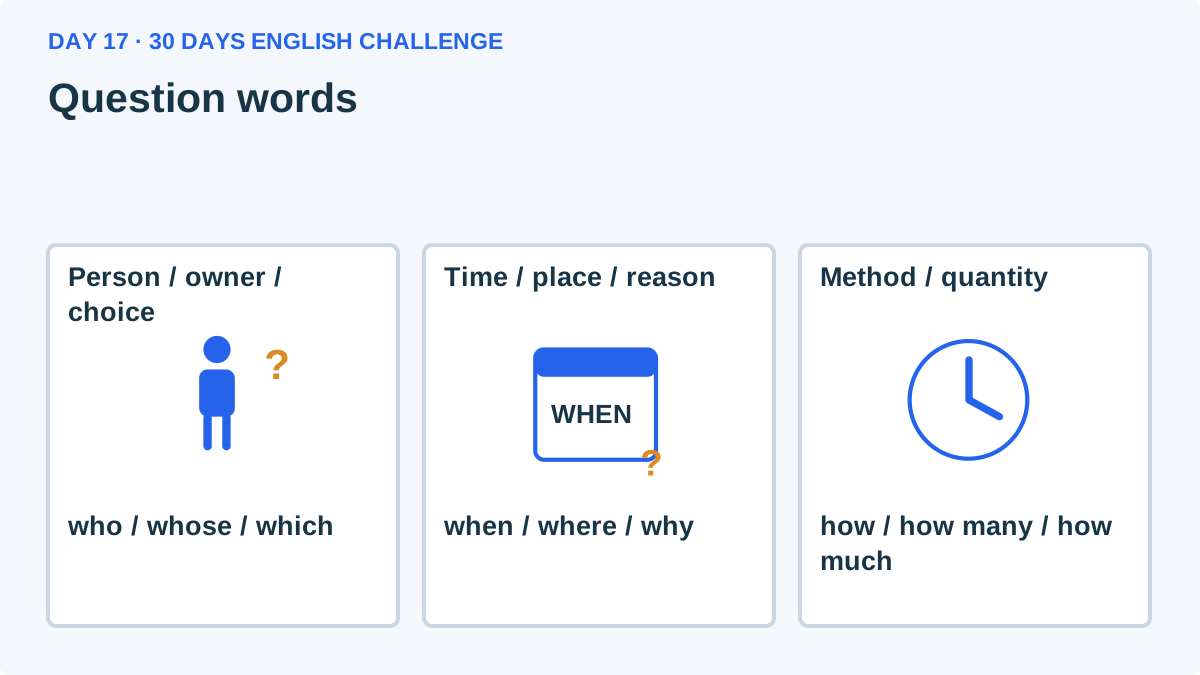
Day 17 speaking goal: Ask for the particular information you need and recognize a useful answer.
Choose the question word that matches the answer you need: a person, place, time, reason or amount.
Jump to: Rules · Compare · Examples · Self-checks · Answers
17.1 Who and whose
| Learn | Simple English |
|---|---|
| Rule | Who asks about a person. Whose asks who owns something. Whom is a formal form used when a person receives the action. |
| Pattern | Who called? Who did you call? Whose bag is this? |
| Example | Who called? Lina. Whose bag is this? Lina’s. |
| Why | Whom did you call? is formal. Who did you call? is natural in everyday English. |
17.2 What and which
| Learn | Simple English |
|---|---|
| Rule | What asks for information. Which often asks you to choose from a known group. |
| Pattern | What do you need? Which of these do you want? |
| Example | What is in your bag? Which of these two bags is yours? |
| Why | What leaves the answer open. Which points to a choice you can identify. |
17.3 When, where and why
| Learn | Simple English |
|---|---|
| Rule | When asks about time. Where asks about place. Why asks for a reason. |
| Pattern | When → time. Where → place. Why → reason. |
| Example | When does it start? At six. Where? At school. Why? To learn English. |
| Why | A short answer can be enough when the meaning is clear. |
17.4 How and how much
| Learn | Simple English |
|---|---|
| Rule | How asks about a way or condition. Add another word to ask about age, number or amount. |
| Pattern | How old? How many tickets? How much water? |
| Example | How do you travel? By bus. How many tickets? Two. |
| Why | Use how many for things you count. Use how much for amounts such as water. |
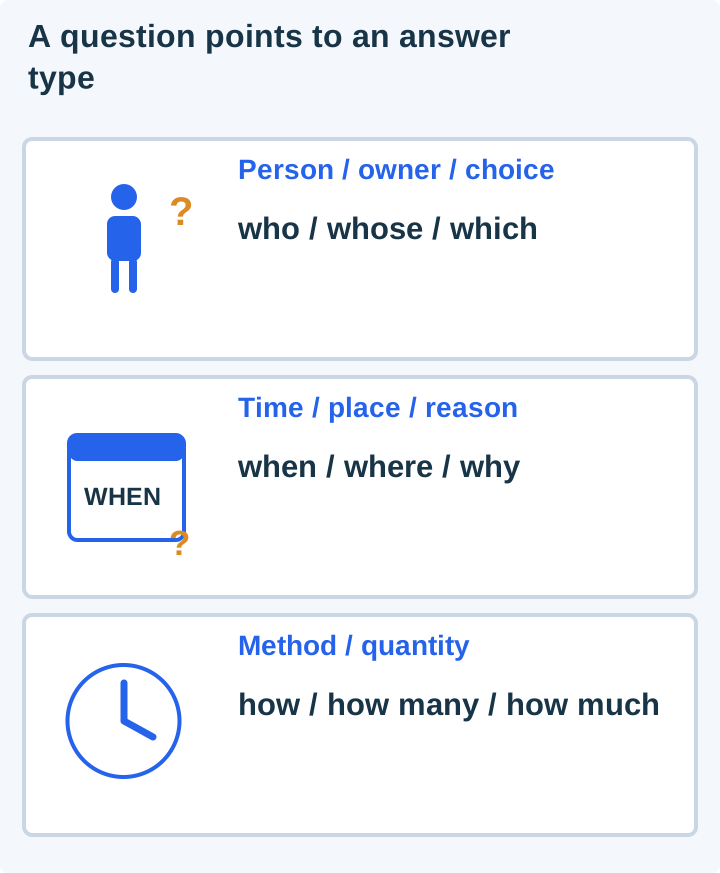
17.5 Compare the patterns side by side
| Word | Answer type | Question |
|---|---|---|
| who / whom | Person | Who called? Whom did you invite? |
| whose | Owner | Whose bag is this? |
| what / which | Information / choice | What do you need? Which bag? |
| when / where / why | Time / place / reason | When do we meet? |
| how | Method or condition | How do you travel? |
17.6 Everyday examples: notice the meaning
Who called you?
💡 The answer identifies the subject.
Who did you call?
💡 Everyday object who.
Whom did you invite?
💡 Formal object form.
To whom did you send it?
💡 Whom comes after to in this formal question.
Whose coat is this?
💡 The answer names an owner.
What do you need?
💡 An open information question.
Which of these seats is yours?
💡 A choice from a visible set.
What colour is your bag?
💡 Asks for a colour.
When does the train leave?
💡 Asks for time.
Where is the station?
💡 Asks for place with be.
Why are you waiting?
💡 Asks for a reason.
How do you get to work?
💡 Asks for method.
How are you today?
💡 Asks about condition.
How old is the building?
💡 How combines with old.
How many tickets do we need?
💡 Countable quantity.
How much water is left?
💡 Uncountable amount.
How often do you practise?
💡 Frequency.
How long did the journey take?
💡 Duration.
17.7 Common mistakes and why
❌ Who did called you?
✅ Who called you?
This asks for the subject and normally needs no did.
❌ Whose is calling?
✅ Who is calling?
Calling asks for a person, not an owner.
❌ How much tickets do we need?
✅ How many tickets do we need?
Tickets are countable plural items.
17.8 Try it yourself
Step 1: Ask who, where and when about a lesson.
Step 2: Ask why someone is learning English.
Step 3: Ask one question with how many and one with how much.
17.9 Five self-checks
Choose A or B for each question. Read the answers below after you finish.
1. Someone called, but you do not know the person’s name. Which question asks for it?
A. Who called?
B. Where did they call from?
2. You want to know who owns a bag. Which question should you ask?
A. Who bag is this?
B. Whose bag is this?
3. You are choosing between two seats. Choose the missing word: “___ of these two seats do you want?”
A. Why
B. Which
4. Ask your friend for the reason they left. Which question should you ask?
A. Why did you leave?
B. When did you leave?
5. You need to know the number of tickets to buy. Which question should you ask?
A. How much tickets do we need?
B. How many tickets do we need?
Self-check answers and explanations
1. A — Who called?
💡 Who asks about the person. Where asks about the place.
2. B — Whose bag is this?
💡 Whose asks who something belongs to.
3. B — Which
💡 Which asks for a choice from a known group.
4. A — Why did you leave?
💡 Why asks for a reason. When asks for a time.
5. B — How many tickets do we need?
💡 Use how many for things you count, such as tickets.
17.10 Remember these points
Who: person. Whose: owner. What: information. Which: choice.
When: time. Where: place. Why: reason.
How: way or condition. How many/much: number or amount.
Review any self-check you missed. Then say three examples aloud without looking.
Further reading: english question words · question word order
Grammar references: Cambridge: Wh-questions