Tenses
Day 18 · 30 Days English Challenge
Simple Tenses: Habits, the Past and the Future
· 5 min read
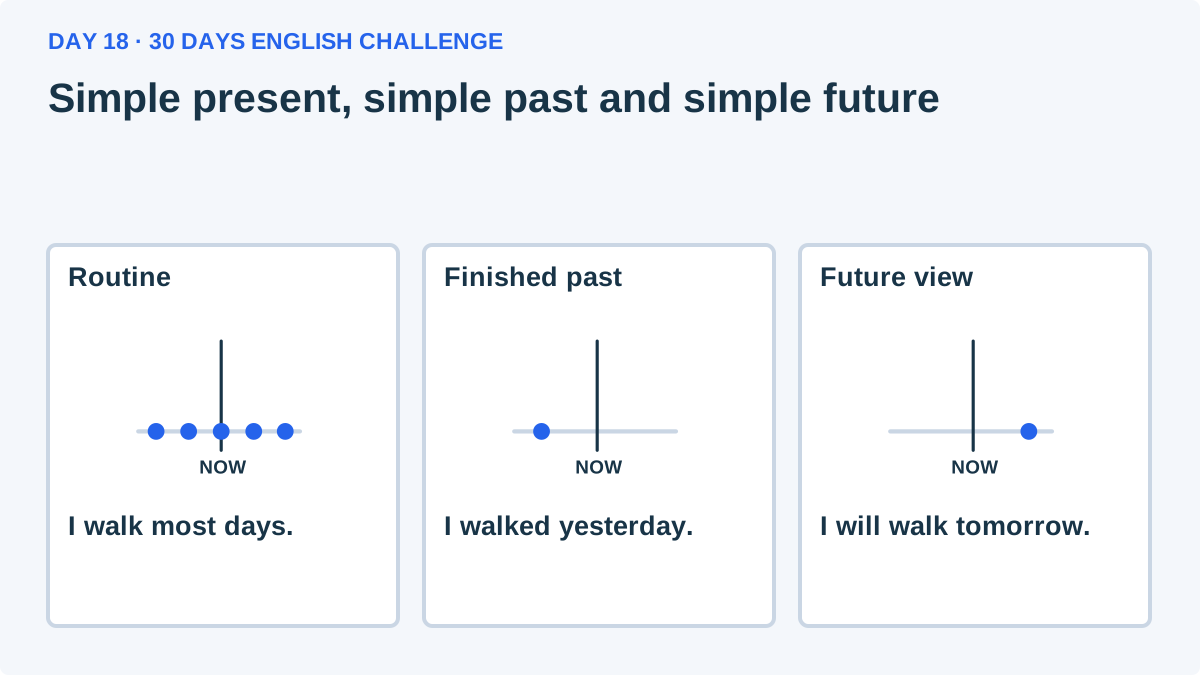
Day 18 speaking goal: Describe a routine, a finished event and a future prediction using one familiar activity.
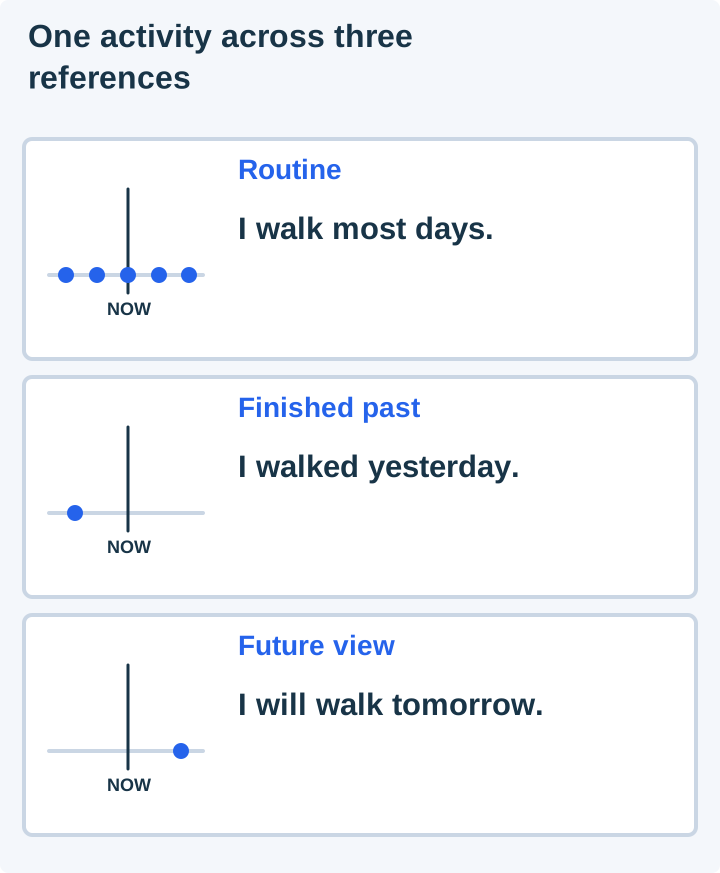
Compare one activity at three times: a usual day, a finished day and a future day.
Jump to: Rules · Compare · Examples · Self-checks · Answers
18.1 Present simple: usual activities
| Learn | Simple English |
|---|---|
| Rule | Use present simple for habits, facts and states. Add -s or -es with he, she, it or one named person. |
| Pattern | I walk. She walks. Do you walk? She does not walk. |
| Example | I walk to work most days. My sister walks too. |
| Why | Most days makes the routine clear. Timetables can also use present simple: The train leaves tomorrow. |
18.2 Past simple: a finished time
| Learn | Simple English |
|---|---|
| Rule | Use past simple for an event in a finished past time. Many verbs add -ed. Some change completely. |
| Pattern | Walk → walked. Go → went. Did you walk? I did not walk. |
| Example | I walked yesterday. She went by bus. |
| Why | After did, use the basic form: Did she go?, not Did she went? |
18.3 Future with will
| Learn | Simple English |
|---|---|
| Rule | Use will for a prediction, promise or decision. Will is one way to talk about the future. |
| Pattern | Will + basic verb. Will you walk? I will not walk. |
| Example | The bus is cancelled. I will walk home. |
| Why | This is a decision made now. English also has other future patterns, such as I am meeting her tomorrow. |
18.4 Compare the three meanings
| Learn | Simple English |
|---|---|
| Rule | Keep the activity the same. Change the time and verb form so the difference is easy to hear. |
| Pattern | Usually: walk. Yesterday: walked. Tomorrow: will walk. |
| Example | I walk most days. I walked yesterday. I will walk tomorrow. |
| Why | Time words help explain your meaning. They do not choose the tense automatically in every sentence. |
18.5 Compare the patterns side by side
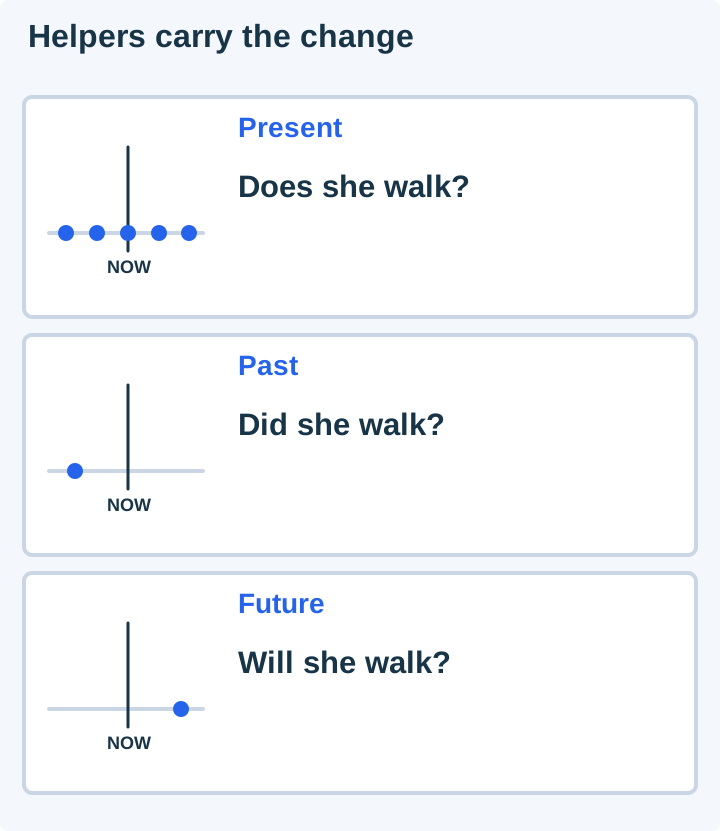
| Form | Present routine | Finished past | Future with will |
|---|---|---|---|
| Affirmative | She walks. | She walked. | She will walk. |
| Negative | She does not walk. | She did not walk. | She will not walk. |
| Question | Does she walk? | Did she walk? | Will she walk? |
| Context | most days | yesterday | tomorrow prediction |
18.6 Everyday examples: notice the meaning
I walk to work most days.
💡 A regular routine.
She walks to work on Mondays.
💡 With “she”, add -s: walks.
We don’t walk in heavy rain.
💡 A present habit negative.
Does Ravi walk to work?
💡 A routine question.
The bus leaves at seven.
💡 A schedule can use present simple.
I know the route.
💡 A state uses present simple naturally.
I walked to work yesterday.
💡 A finished past event.
She took the bus last Tuesday.
💡 An irregular past verb.
We didn’t walk yesterday.
💡 Base walk after did not.
Did Ravi walk last Friday?
💡 A past question.
The journey was slow yesterday.
💡 Past be has its own pattern.
They were tired after the walk.
💡 Plural past be.
I’ll walk tomorrow if the weather is fine.
💡 A future decision with a condition.
She will arrive at eight.
💡 A prediction or stated future expectation.
We won’t take the late bus.
💡 A future negative.
Will you walk with us tomorrow?
💡 Will forms the question.
I’ll send you the route.
💡 An immediate promise or offer.
The trip will take twenty minutes.
💡 A prediction of duration.
18.7 Common mistakes and why
❌ She don’t walk.
✅ She doesn’t walk.
Use does with she, he or it.
❌ Did you walked?
✅ Did you walk?
After did, use walk, not walked.
❌ She will walks.
✅ She will walk.
After will, use walk, not walks or walked.
18.8 Try it yourself
Step 1: Say what you usually do after breakfast.
Step 2: Say what you did yesterday.
Step 3: Predict what you will do tomorrow. Ask a question about each time.
18.9 Five self-checks
Choose A or B for each question. Read the answers below after you finish.
1. Choose the missing word for a daily habit: “My friend ___ to work every day.”
A. walks
B. walk
2. Which question about yesterday is correct?
A. Did she walked yesterday?
B. Did she walk yesterday?
3. Say that they will not travel. Which sentence is correct?
A. They will not travel.
B. They do not will travel.
4. What does “I walk to work every day” describe?
A. An action happening only at this exact moment.
B. A regular habit.
5. Ask about your friend’s plan for tomorrow. Which question is correct?
A. Will you walk tomorrow?
B. Will you walks tomorrow?
Self-check answers and explanations
1. A — walks
💡 One friend takes walks in this present-simple habit.
2. B — Did she walk yesterday?
💡 Did already shows past time. Use walk after it.
3. A — They will not travel.
💡 Put not after will. Do not add do.
4. B — A regular habit.
💡 Every day makes the repeated habit clear.
5. A — Will you walk tomorrow?
💡 Use walk after will, not walks.
18.10 Remember these points
Routine: I walk.
Finished past: I walked.
Future decision or prediction: I will walk.
Review any self-check you missed. Then say three examples aloud without looking.
Further reading: present simple tense · past simple tense · future simple tense
Grammar references: Cambridge: Tenses and time