Tenses
Day 19 · 30 Days English Challenge
Continuous Tenses: Describe Actions in Progress
· 6 min read
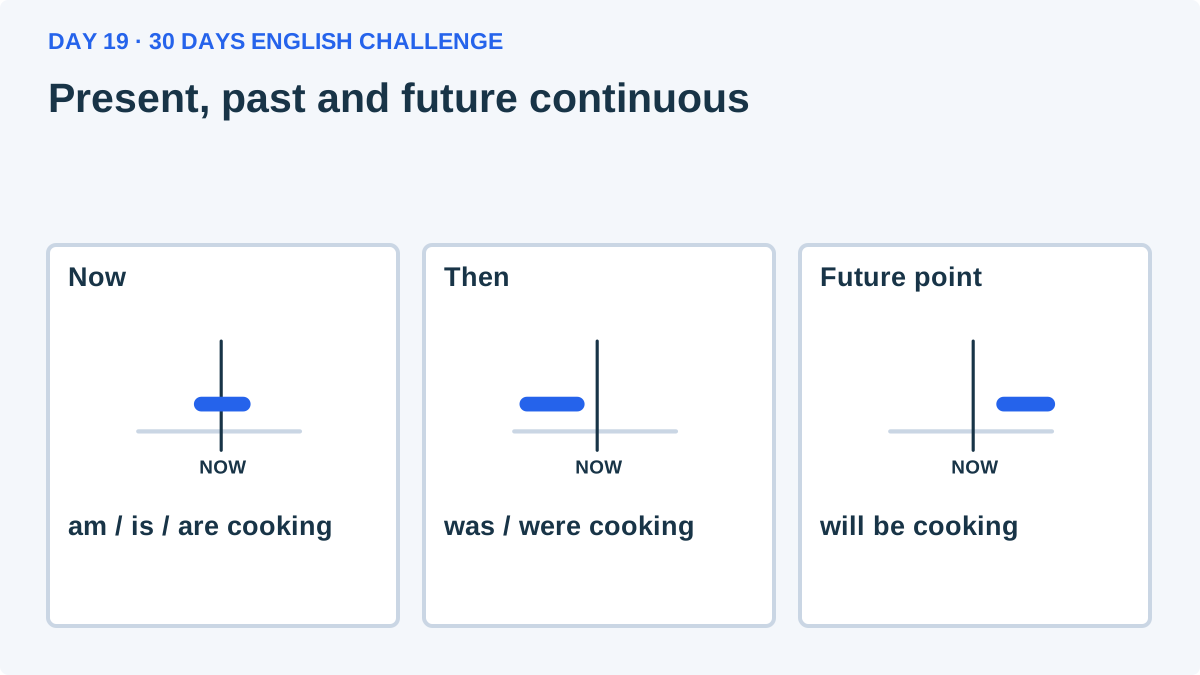
Day 19 speaking goal: Describe what is in progress around now, a past moment or a future moment.
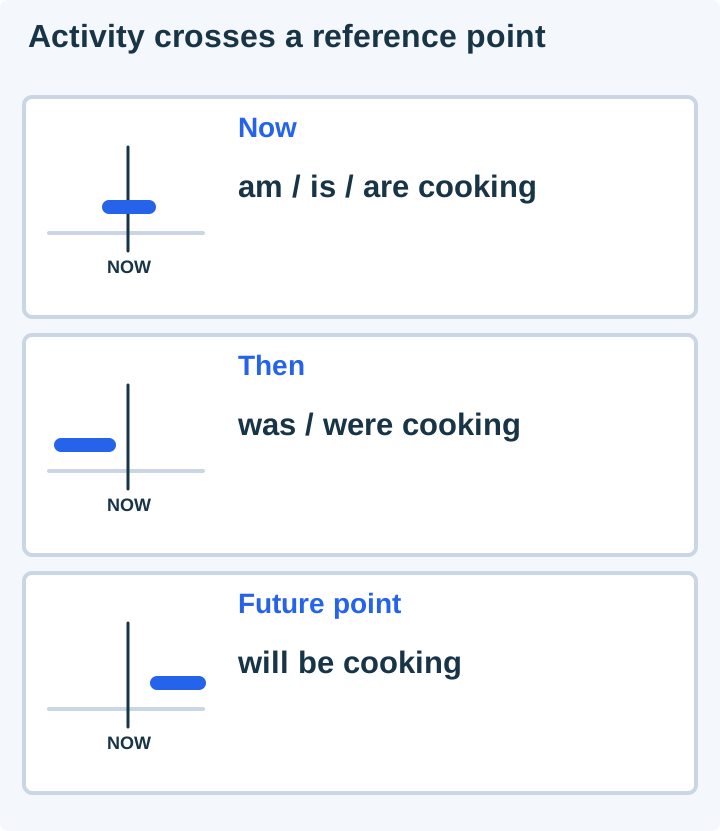
Continuous tenses show an activity in progress. Compare what is happening now, what was happening and what will be happening.
Jump to: Rules · Compare · Examples · Self-checks · Answers
19.1 Present continuous: happening now
| Learn | Simple English |
|---|---|
| Rule | Use am, is or are with a verb ending in -ing. This can describe an activity now or a temporary situation. |
| Pattern | Am/is/are + verb-ing. |
| Example | I am cooking now. She is taking an evening course this month. |
| Why | The course is temporary. She does not need to be in class at this exact moment. |
19.2 Past continuous: happening then
| Learn | Simple English |
|---|---|
| Rule | Use was or were with -ing for an activity in progress at a past time. |
| Pattern | Was/were + verb-ing. |
| Example | I was cooking when you called. |
| Why | Cooking was already happening when the call came. The sentence does not say when the cooking ended. |
19.3 Future continuous: happening later
| Learn | Simple English |
|---|---|
| Rule | Use will be with -ing for an activity expected to be in progress at a future time. |
| Pattern | Will be + verb-ing. |
| Example | At six tomorrow, I will be cooking. |
| Why | Imagine looking at me at six tomorrow: the cooking will be in progress. |
19.4 Some verbs describe states
| Learn | Simple English |
|---|---|
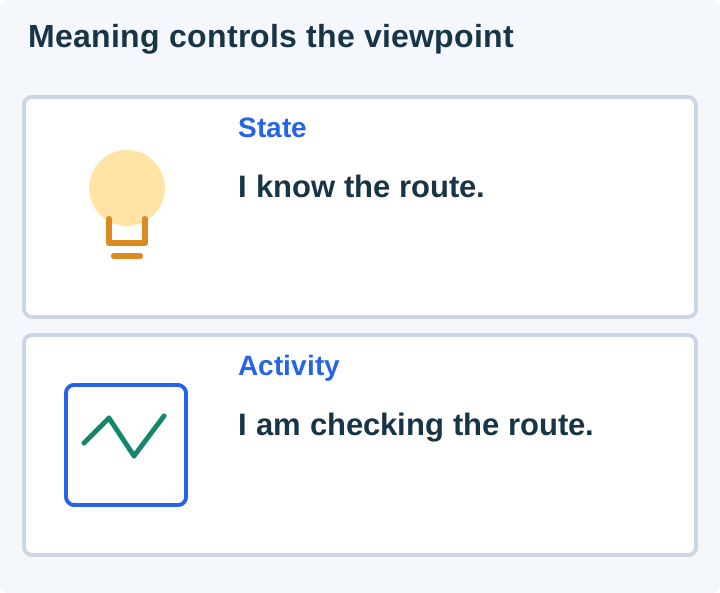
| Rule | Verbs such as know and own usually describe states, not activities. They normally use simple forms. Some verbs have more than one meaning. |
| Pattern | I know the answer. I own a car. I am having lunch. |
| Example | I have a car. I am having lunch. |
| Why | Have a car describes ownership. Have lunch names an activity, so having lunch is natural. |
19.5 Compare the patterns side by side
| Form | Now | Past point | Future point |
|---|---|---|---|
| Affirmative | She is cooking. | She was cooking. | She will be cooking. |
| Negative | She is not cooking. | She was not cooking. | She will not be cooking. |
| Question | Is she cooking? | Was she cooking? | Will she be cooking? |
| Reference | now | at six yesterday | at six tomorrow |
19.6 Everyday examples: notice the meaning
I am cooking now.
💡 An activity around the present point.
She is preparing dinner.
💡 Is helps the -ing form.
We are waiting outside.
💡 A plural subject uses are.
Are you cooking tonight?
💡 An arrangement is possible with context.
I am taking a short course this month.
💡 A temporary period.
He isn’t working today.
💡 A temporary negative.
I was cooking at six yesterday.
💡 A view inside a past activity.
They were waiting when I arrived.
💡 Background around another past event.
Was she reading at noon?
💡 Past continuous question.
We weren’t sleeping when you called.
💡 A negative past scene.
The rain was falling all evening.
💡 An extended past activity.
I finished cooking at seven.
💡 At six I was cooking; by seven the cooking was finished.
I will be cooking at six tomorrow.
💡 A future activity in progress.
Will you be working at noon?
💡 A question about a future scene.
She won’t be travelling on Monday.
💡 A future continuous negative.
I am thinking about your suggestion.
💡 Think has an activity meaning.
I think the plan is useful.
💡 Think expresses an opinion.
We are having lunch.
💡 Have names an activity, not possession.
19.7 Common mistakes and why
❌ I am knowing the answer.
✅ I know the answer.
Know describes a state here. Say I know, not I am knowing.
❌ She will cooking at six.
✅ She will be cooking at six.
Future continuous needs be.
❌ Were she cooking?
✅ Was she cooking?
Singular she takes was in this past pattern.
19.8 Try it yourself
Step 1: Say what you are doing now.
Step 2: Say what you were doing at six yesterday.
Step 3: Say what you will be doing at six tomorrow.
19.9 Five self-checks
Choose A or B for each question. Read the answers below after you finish.
1. Choose the missing word: “She ___ cooking now.”
A. are
B. is
2. Choose the missing word: “They ___ waiting when I arrived yesterday.”
A. were
B. was
3. Which sentence describes work in progress at noon tomorrow?
A. I will working at noon tomorrow.
B. I will be working at noon tomorrow.
4. Choose the natural sentence about knowing an answer.
A. I know the answer.
B. I am knowing the answer.
5. “At six yesterday, I was cooking.” What does this tell us?
A. I never finished cooking.
B. Cooking was in progress at six.
Self-check answers and explanations
1. B — is
💡 Use is with she: she is cooking.
2. A — were
💡 Use were with they for an activity happening at that past time.
3. B — I will be working at noon tomorrow.
💡 Keep be between will and working.
4. A — I know the answer.
💡 Know normally describes a state, so use the simple form here.
5. B — Cooking was in progress at six.
💡 The sentence shows the activity at six. It does not tell us when it finished.
19.10 Remember these points
Now: am/is/are + -ing.
Then: was/were + -ing.
Later: will be + -ing.
Review any self-check you missed. Then say three examples aloud without looking.
Further reading: present continuous tense · past continuous tense · future continuous tense
Grammar references: Cambridge: Present simple and present continuous