Tenses
Day 20 · 30 Days English Challenge
Perfect Tenses: Present, Past and Future Explained
· 6 min read
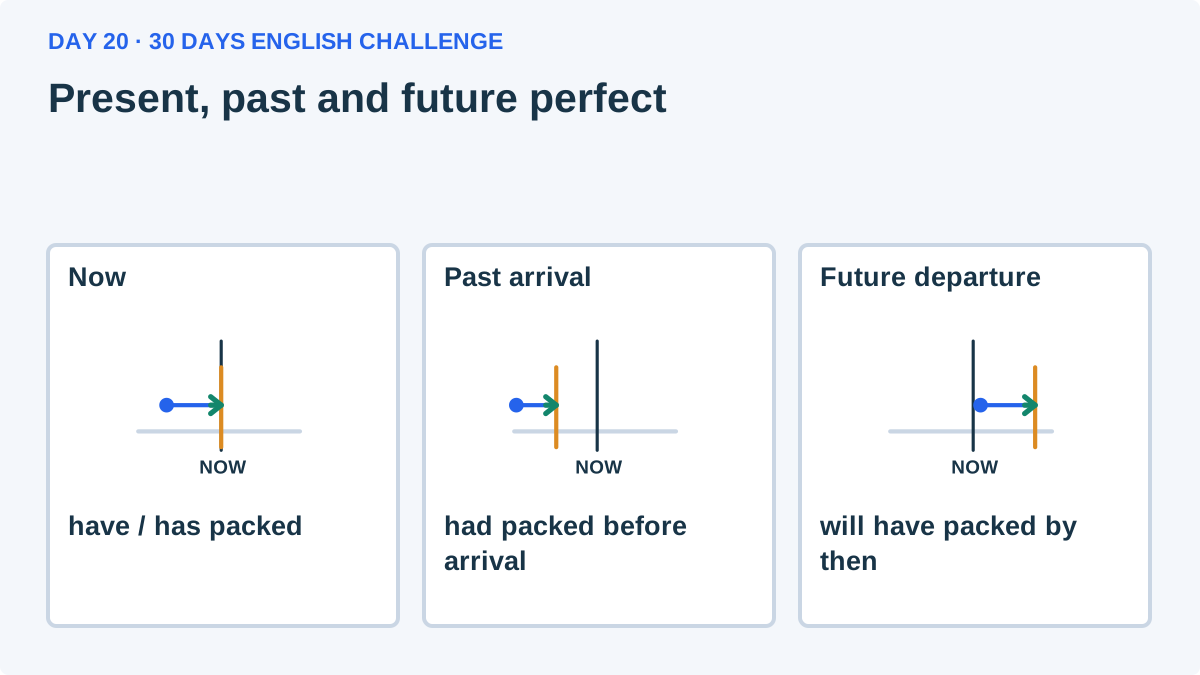
Day 20 speaking goal: Talk about what has happened, what happened before a past event and what will be done by a future time.
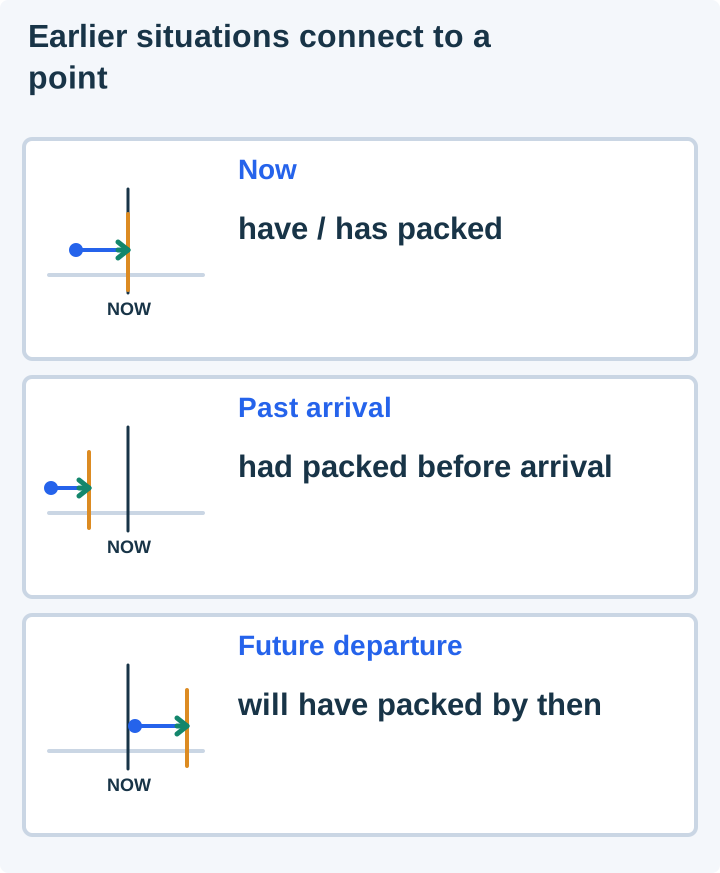
Perfect tenses connect an earlier event or situation to now, a past time or a future time. Compare three clear examples.
Jump to: Rules · Compare · Examples · Self-checks · Answers
20.1 Present perfect: linked to now
| Learn | Simple English |
|---|---|
| Rule | Use have or has with a past participle. A past participle is a verb form such as finished, eaten or seen. |
| Pattern | Have/has + past participle. |
| Example | I have lost my key. We have lived here for five years. |
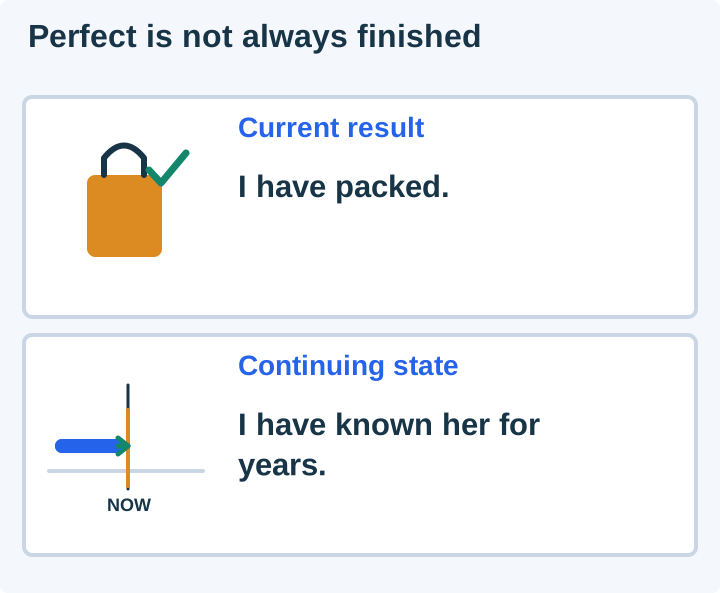
| Why | My key is missing now. We started living here five years ago and still live here. Perfect does not always mean finished. |
20.2 Past perfect: before another past event
| Learn | Simple English |
|---|---|
| Rule | Use had with a past participle to make clear that something happened before another past event. |
| Pattern | Had + past participle. |
| Example | When we arrived, the shop had closed. |
| Why | The shop closed first. We arrived later. You do not need past perfect for every event when the order is already clear. |
20.3 Future perfect: by a future time
| Learn | Simple English |
|---|---|
| Rule | Use will have with a past participle to look back from a future time. It can show completion or how long a state lasts. |
| Pattern | Will have + past participle. |
| Example | By six, I will have finished. By July, I will have known her for ten years. |
| Why | Finished shows completion. Known describes a state continuing to that future time. |
20.4 Choose the time and verb form
| Learn | Simple English |
|---|---|
| Rule | Use a past participle after have, has, had or will have. A finished time such as yesterday normally needs past simple. |
| Pattern | See → saw → seen. Finish → finished → finished. |
| Example | I saw her yesterday. I have seen her twice this week. |
| Why | Yesterday is finished. This week counts up to now here. British and American tense choices sometimes differ. |
20.5 Compare the patterns side by side
| Compare | Present perfect | Past perfect | Future perfect |
|---|---|---|---|
| Form | have / has packed | had packed | will have packed |
| Time | now | before past arrival | by future departure |
| Question | Have you packed? | Had you packed? | Will you have packed? |
| Negative | have not packed | had not packed | will not have packed |
20.6 Everyday examples: notice the meaning
I have packed my bag.
💡 A current result.
She has lost her key.
💡 The key is missing now in this context.
Have you visited this city?
💡 Experience up to now.
We have lived here for years.
💡 A situation continuing to now.
I have known her since school.
💡 A continuing state, not a finished action.
He hasn’t arrived yet.
💡 A relevant result has not occurred.
I lost the key yesterday.
💡 A finished past time uses past simple here.
The shop had closed before we arrived.
💡 This happened before the past time mentioned.
We had met before the course began.
💡 Earlier experience.
Had you eaten before the journey?
💡 A past-perfect question.
I hadn’t seen the message when she called.
💡 The earlier event had not occurred.
She had known him for years by then.
💡 A state lasting to a past point.
By six, I will have finished.
💡 Completion before a future deadline.
Will you have arrived by noon?
💡 A future-perfect question.
We won’t have finished by Friday.
💡 A future-perfect negative.
By July, I will have known her for ten years.
💡 A state extends to a future point.
I have had two calls today.
💡 A count up to now.
I had a call at nine today.
💡 A specifically located past event.
20.7 Common mistakes and why
❌ I have saw the film.
✅ I have seen the film.
Perfect have needs a past participle.
❌ I have met her yesterday.
✅ I met her yesterday.
Yesterday sets an explicit finished past frame.
❌ She have packed her bag.
✅ She has packed her bag.
With she in the present perfect, use has + past participle.
20.8 Try it yourself
Step 1: Say something you have done that matters now.
Step 2: Describe something that had happened before you arrived somewhere.
Step 3: Say something you will have finished by tomorrow evening.
20.9 Five self-checks
Choose A or B for each question. Read the answers below after you finish.
1. Choose the missing word: “She has ___ the film.”
A. saw
B. seen
2. Which sentence correctly places the visit yesterday?
A. I visited the museum yesterday.
B. I have visited the museum yesterday.
3. They left first. I arrived later. Complete: “They ___ left before I arrived.”
A. had
B. has
4. Choose the missing word about tomorrow: “By six tomorrow, I ___ have finished.”
A. had
B. will
5. “I have known her for five years.” Which meaning fits?
A. I no longer know who she is.
B. I started knowing her five years ago and still know her.
Self-check answers and explanations
1. B — seen
💡 Use seen after has. See, saw and seen are three forms of the same verb.
2. A — I visited the museum yesterday.
💡 Yesterday is a finished past time. Use visited here.
3. A — had
💡 Had left shows the leaving happened before my past arrival.
4. B — will
💡 Will have finished looks ahead to work completed by a future time.
5. B — I started knowing her five years ago and still know her.
💡 Have known can describe a state that continues now.
20.10 Remember these points
Now: have/has + past participle.
Before a past event: had + past participle.
By a future time: will have + past participle.
Review any self-check you missed. Then say three examples aloud without looking.
Further reading: present perfect tense · past perfect tense · future perfect tense · present perfect vs past simple
Grammar references: Cambridge: Present perfect simple and continuous