Tenses
Future Perfect Tense: Completed Actions by a Future Time
· 4 min read
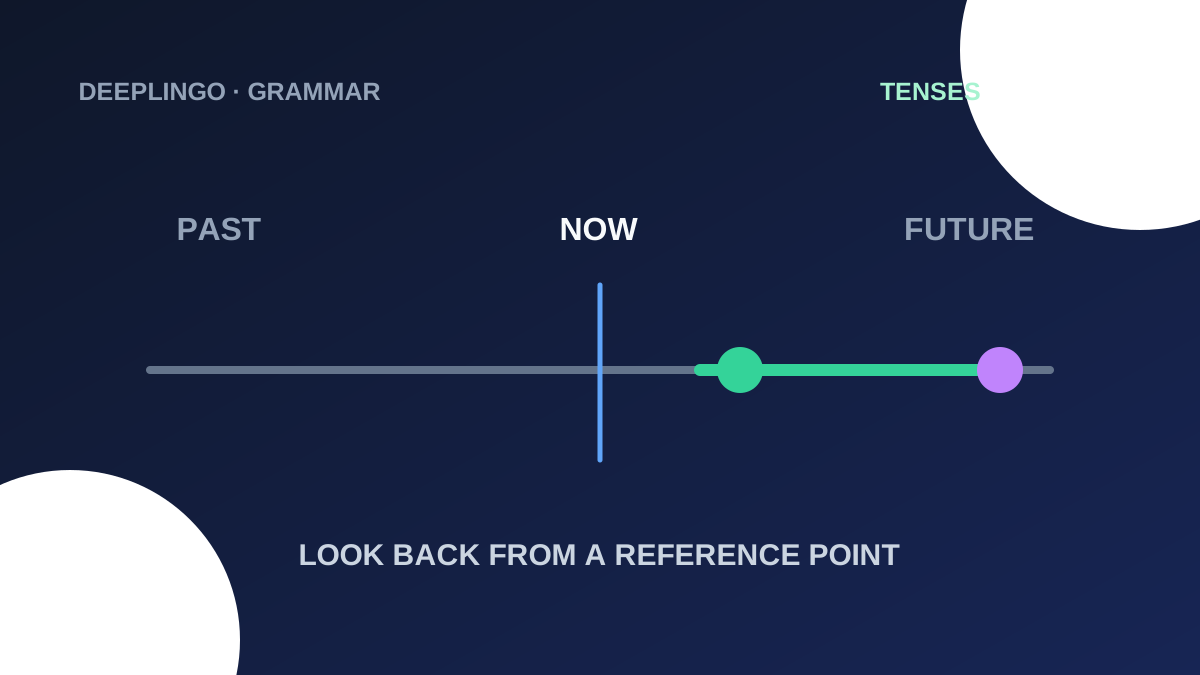
The future perfect uses will have plus a past participle to look back from a future point at something completed by then.
What is the Future Perfect Tense?
The Future Perfect tense describes actions that will be COMPLETED before a specific time in the future. Think of it as looking back from a future point: "By then, I will have done this."
Sentence Structure
Affirmative (Positive) Sentences:
Subject + will have + Past Participle (V3)
I will have finished by then.
She will have left before you arrive.
They will have eaten by 8 PM.
We will have completed everything.
Short Form: will have = 'll have
I'll have finished by then.
She'll have arrived by noon.
Negative Sentences:
Subject + will not have + Past Participle
I will not have finished by 5 PM.
💡 won't have finished
She won't have arrived yet.
They won't have completed the task.
Question Form:
Will + Subject + have + Past Participle + ?
Will you have finished by 6?
Will she have arrived by then?
How much will they have saved by December?
💡 WH-question
What will you have accomplished by then?
Key Phrase: BY + Time
Future Perfect is almost always used with "by" + a future time point:
By tomorrow, I will have finished.
By 5 PM, she will have left.
By next week, they will have moved.
By the end of the month, we will have paid.
By the time you read this, I will have gone.
By 2030, the population will have grown.
Future Perfect vs Future Simple
| Future Simple | Future Perfect |
|---|---|
| Action will happen | Action will be completed before a time |
| I will finish at 5. | I will have finished by 5. |
| She will graduate in 2025. | By 2025, she will have graduated. |
| Focus: the action | Focus: completion before deadline |
When Do We Use Future Perfect?
1. Actions Completed Before a Future Time
By 6 PM, I will have finished my work.
💡 Finished before 6 PM
By next year, she will have graduated.
💡 Graduated before next year
By the time you arrive, I will have cooked dinner.
💡 Cooking done before your arrival
2. Duration Up to a Future Point - How long something will have been by then.
By December, I will have lived here for 5 years.
💡 5 years completed by December
By 2025, they will have been married for 10 years.
By next month, she will have worked here for a year.
3. Achievements by a Deadline
By the end of this year, I will have saved ₹50,000.
💡 Goal achieved by deadline
By Friday, we will have completed the project.
By midnight, they will have crossed the border.
Everyday Conversation Examples
A: Can you pick me up at 6? B: Sure! I will have finished work by then.
A: Will she be there? B: No, she will have left by the time we arrive.
A: How long will you have been married? B: By June, we will have been married for 20 years!
A: Don't worry about dinner. B: Thanks! I will have eaten before I come.
Practice Paragraph
By the end of this year, I will have achieved many goals. I will have learned 500 new English words. I will have read 12 books. By December, I will have saved enough money for a new phone. I hope that by next summer, I will have passed my driving test. My sister will have graduated from college by then. By 2025, my brother will have lived in Canada for 5 years. Time flies! Before we know it, we will have grown older.
Continue learning
Future Continuous: Forms and Examples · Future Perfect Continuous: Examples
Practice in the 30 Days English Challenge: Day 20: Perfect Tenses: Present, Past and Future Explained