Tenses
Future Perfect Continuous: Duration Up to a Future Point
· 4 min read
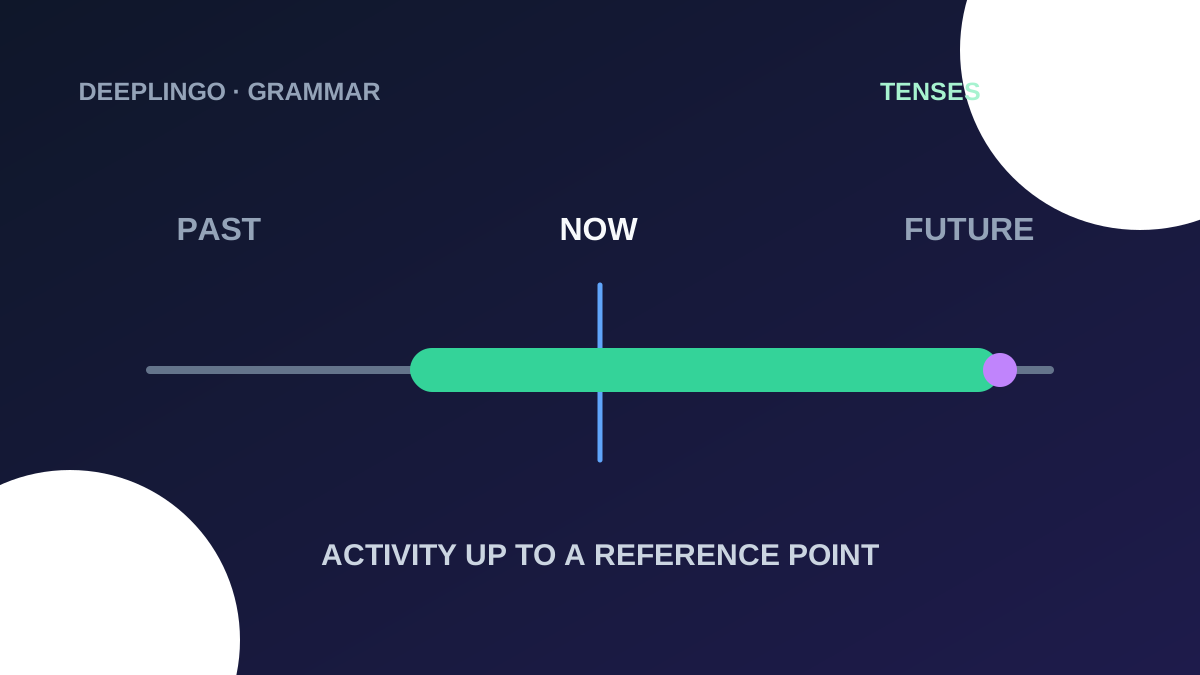
The future perfect continuous uses will have been plus an -ing form to measure how long an activity will have continued at a future point.
What is the Future Perfect Continuous Tense?
The Future Perfect Continuous tense (also called Future Perfect Progressive) shows how long an action will have been in progress by a certain future time. It emphasizes the DURATION of an ongoing action up to a future moment.
Sentence Structure
Affirmative (Positive) Sentences:
Subject + will have been + Verb-ing
I will have been working here for 5 years by June.
She will have been studying English for 3 years.
They will have been traveling for 24 hours.
We will have been living here for a decade.
Negative Sentences:
Subject + will not have been + Verb-ing
I will not have been waiting long.
💡 won't have been
She won't have been working there very long by then.
They won't have been living here for a full year yet.
Question Form:
Will + Subject + have been + Verb-ing + ?
Will you have been waiting long?
Will she have been working there for many years?
How long will they have been married by then?
💡 WH-question
What will you have been doing all this time?
Future Perfect vs Future Perfect Continuous
| Future Perfect | Future Perfect Continuous |
|---|---|
| Focus on COMPLETION | Focus on DURATION |
| will have + V3 | will have been + V-ing |
| I will have worked. (completed) | I will have been working. (ongoing, how long) |
| How much will you have done? | How long will you have been working? |
When Do We Use Future Perfect Continuous?
1. Duration of an Action Up to a Future Time
By 6 PM, I will have been working for 8 hours.
💡 8 hours of work by that time
By December, she will have been teaching for 20 years.
💡 20 years of teaching by December
By the time you arrive, I will have been waiting for 2 hours.
2. Cause of a Future Situation - Why something will be a certain way.
I will be tired because I will have been traveling all day.
💡 Traveling causes tiredness
She will be exhausted because she will have been studying for hours.
The roads will be wet because it will have been raining.
When NOT to Use This Tense
Don't use it with verbs that can't be continuous (state verbs):
❌ I will have been knowing him for 10 years.
✅ I will have known him for 10 years.
💡 Know = state verb, use Perfect
❌ She will have been having this car for 5 years.
✅ She will have had this car for 5 years.
💡 Have (possession) = state verb
Common Time Words
By this time tomorrow, I will have been traveling for 10 hours.
By next month, she will have been working here for a year.
By the end of the year, we will have been dating for 3 years.
By the time you finish, I will have been waiting for hours.
Everyday Conversation Examples
A: Will you be tired after the trip? B: Yes! I will have been driving for 12 hours.
A: How long will you have been working here by next year? B: I will have been working here for 5 years.
A: Won't she be exhausted? B: Definitely! She will have been dancing for 4 hours.
A: By the time the guests arrive... B: I will have been cooking all morning!
Practice Paragraph
By the end of this month, I will have been learning English for exactly one year. When I think about it, I will have been practicing speaking every day. By December, my teacher will have been teaching me for 12 months. By next summer, my family will have been living in this city for 10 years. Time passes quickly! By the time I am 30, I will have been working for almost 10 years. It's amazing to think about how much we will have been doing by then.
Continue learning
Future Perfect: Rules and Examples · since and for
Practice in the 30 Days English Challenge: Day 21: Perfect Continuous Tenses: Explain How Long