Grammar Basics
Since and For: Rules, Examples and Practice
· 4 min read
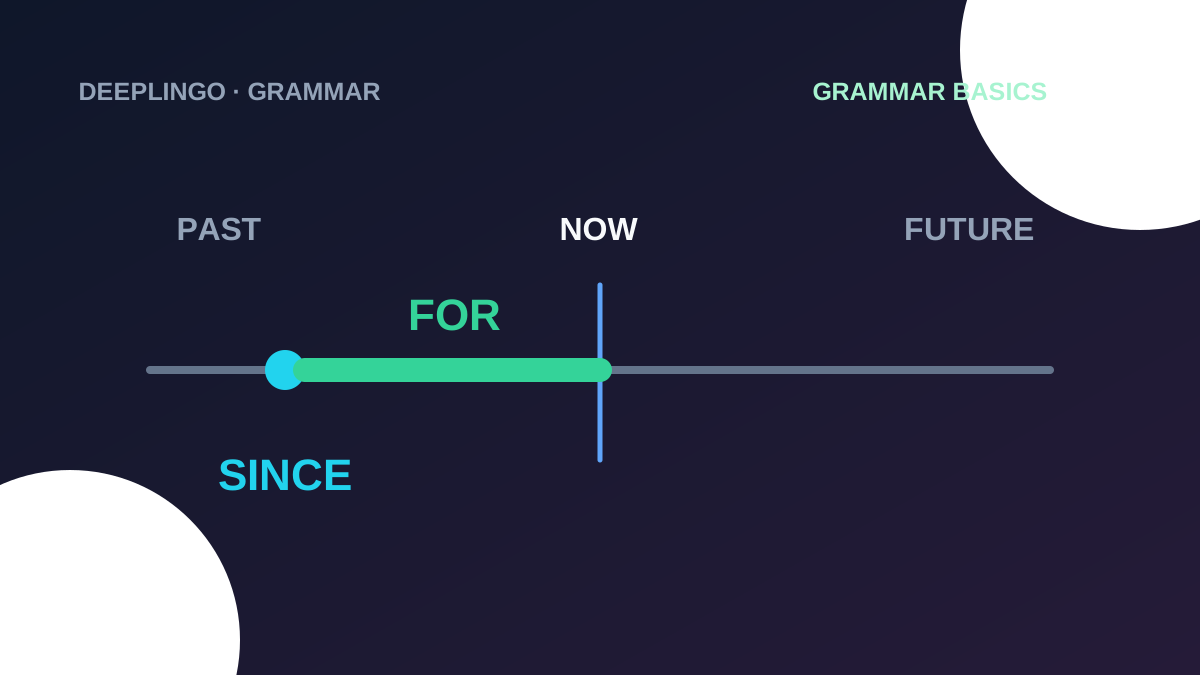
Use since for the starting point of a period and for for its length. Compare “since Monday” with “for three days.” When the situation continues now, a present perfect form often connects that past beginning with the present.
Starting point or duration?
| Question | Choice | Examples |
|---|---|---|
| When did it start? | since | since noon; since 2022; since we met |
| How long? | for | for ten minutes; for six months; for years |
A starting point identifies a place on a timeline. A duration measures the distance between two points. The same situation can be described both ways: if your class began at nine and it is now eleven, you have been in class since nine, or for two hours.
Maya has lived here since 2021.
💡 2021 identifies the beginning; the situation continues now.
Maya has lived here for five years.
💡 Five years tells us the duration.
We have been waiting for twenty minutes.
💡 The continuous form emphasizes the ongoing activity.
Choose the tense from the meaning
Neither word chooses the whole verb tense for you. For can describe a finished visit: “We stayed for four nights.” It can also describe a future plan: “We will stay for four nights.” For a state continuing now, use a suitable present perfect form: “I have known Lina for years.” Know normally uses the simple form rather than a continuous form.
Since can be followed by a time expression or a clause: “since the move” and “since we moved.” In a continuing-present example, the clause naming the starting event often uses the past simple. Past perfect can describe a period leading up to a later past moment: “By Friday, they had worked together for a week.”
Since can also give a reason
In “Since the café is closed, let's meet elsewhere,” since means because. That is a different use, so the starting-point rule does not apply. Read the whole sentence before deciding what since means.
Common mistakes
❌ I have studied here since six months.
✅ I have studied here for six months.
Six months is a length, not a starting point.
❌ She has worked here for 2020.
✅ She has worked here since 2020.
2020 identifies when the period began.
Practice: 12 questions
Try all twelve before reading the answers. Use the context in each sentence, not just a single signal word.
1. I have worked here ___ 2020. Choose since or for.
2. We have waited ___ forty minutes. Choose since or for.
3. Nora has known Amir ___ primary school. Choose since or for.
4. They stayed in Lisbon ___ three nights last summer. Choose since or for.
5. I will borrow the bike ___ an hour. Choose since or for.
6. She has been studying ___ breakfast. Choose since or for.
7. We have lived in this flat ___ two years. Choose since or for.
8. The shop has been closed ___ Monday. Choose since or for.
9. I have felt better ___ I changed my routine. Choose since or for.
10. He had been driving ___ six hours when he stopped. Choose since or for.
11. Rewrite using a duration: “They have been here since noon.” It is now 3 p.m.
12. Does since express time or reason in “Since the road is flooded, take the train”?
Answers and explanations
1. since
💡 2020 is a starting point.
2. for
💡 Forty minutes measures a duration.
3. since
💡 Primary school names the period when the relationship began.
4. for
💡 The visit lasted three nights; for also works with the past simple.
5. for
💡 An hour is the length of a future borrowing period.
6. since
💡 Breakfast is the starting event.
7. for
💡 Two years tells us how long.
8. since
💡 Monday marks the beginning.
9. since
💡 The clause identifies the event that began the change.
10. for
💡 Six hours measures the period before a later past event.
11. They have been here for three hours.
💡 The interval from noon to 3 p.m. is three hours.
12. Reason
💡 Since means because; it explains the travel advice.
Can I use for with the past simple?
Yes. “I worked there for a month” describes the length of a finished period.
Can since be followed by a sentence?
Yes. “I have been happier since I joined the club” uses a clause to name the starting event.
Keep learning
Review the present perfect, compare the present perfect and past simple, or study prepositions.
Grammar reference: Cambridge on since, for and ago. The lesson explanations and practice questions are original.
Practice in the 30 Days English Challenge: Day 12: To, For, In, On and At: Everyday Prepositions · Day 13: For, Since, During and While: Say When and How Long