Grammar Basics
Day 12 · 30 Days English Challenge
To, For, In, On and At: Everyday Prepositions
· 5 min read
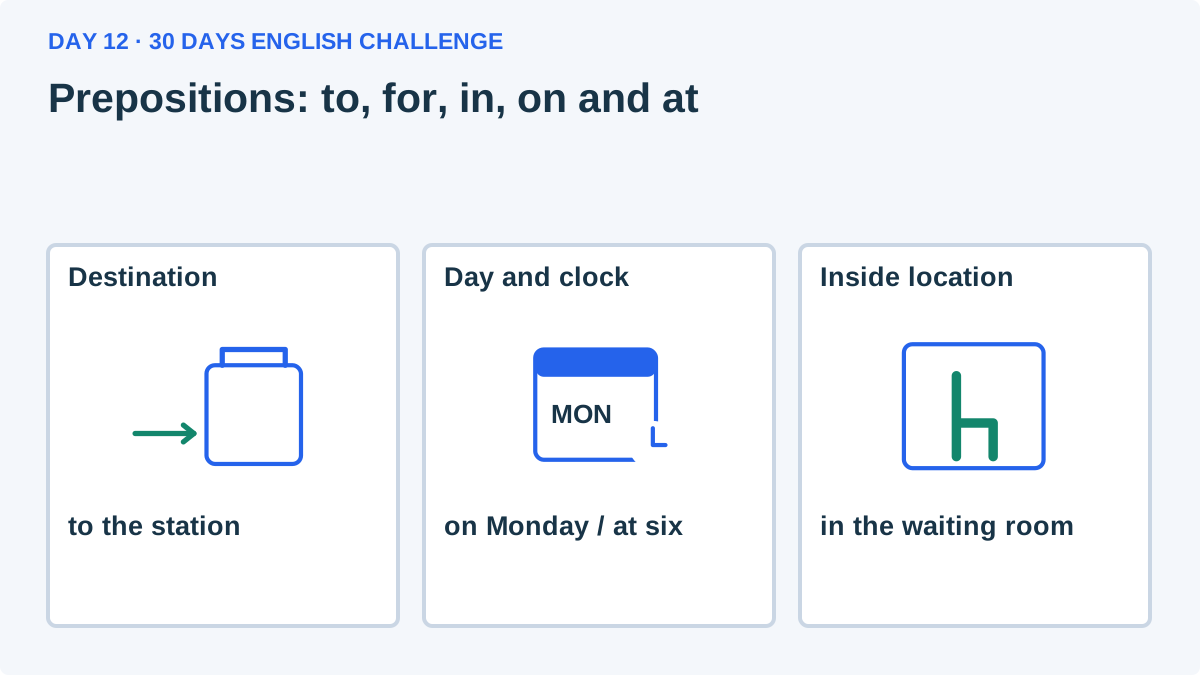
Day 12 speaking goal: Explain a destination, a purpose and a familiar time or place.
Say where you go, who something is for and when an activity happens. Start with these common patterns.
Jump to: Rules · Compare · Examples · Self-checks · Answers
12.1 To: where or to whom?
| Learn | Simple English |
|---|---|
| Rule | Use to for a destination or for the person receiving something. |
| Pattern | Go to + place. Give/send something to + person. |
| Example | Walk to the station. Send the photo to her. |
| Why | To the station shows where to go. To her shows who receives the photo. |
12.2 For: who benefits or how long?
| Learn | Simple English |
|---|---|
| Rule | For can show who benefits, what something is used for or how long something lasts. |
| Pattern | For my friend. For books. For two hours. |
| Example | This bag is for books. I bought it for my friend. |
| Why | Say “I came to study”: to + verb. Say “This bag is for books”: for + noun. |
12.3 In and on: time and place
| Learn | Simple English |
|---|---|
| Rule | In often goes with containers, months and years. On often goes with surfaces, days and dates. |
| Pattern | In July. In 2026. On Monday. On the table. |
| Example | My keys are in my bag. My bag is on the table. |
| Why | Some phrases need practice: on the bus means inside as a passenger, not on its roof. |
12.4 At: a time or meeting place
| Learn | Simple English |
|---|---|
| Rule | Use at with clock times and many activity locations. In can describe being inside a place. |
| Pattern | At six. At work. At the station. |
| Example | Meet me at the café at six. I am sitting in the café. |
| Why | At the café tells you the meeting place. In the café stresses that I am inside. |
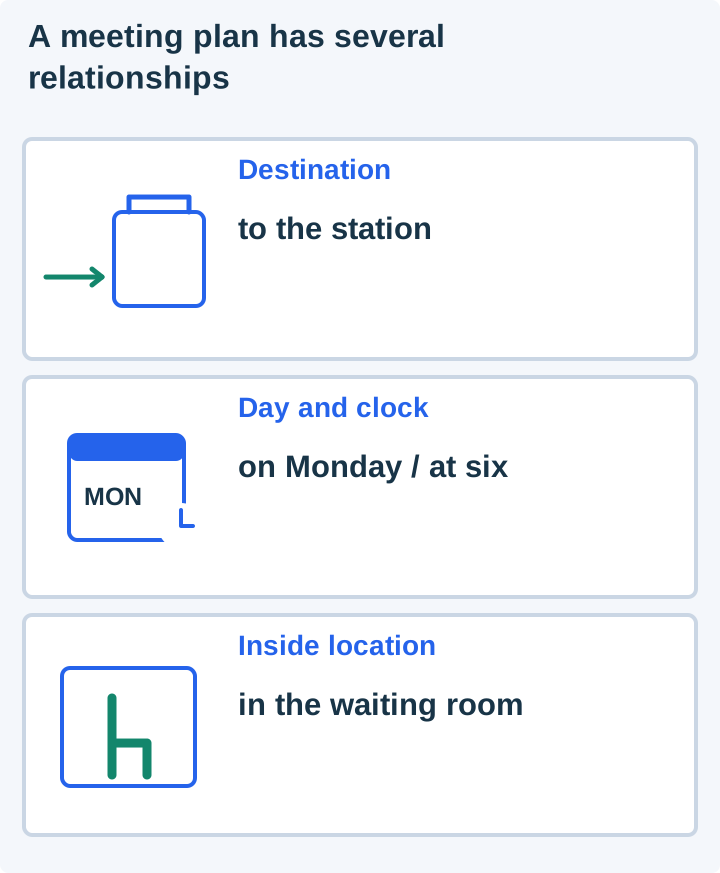
12.5 Compare the patterns side by side
| Relationship | Phrase | In a message |
|---|---|---|
| Destination | to the station | Walk to the station. |
| Benefit / purpose | for my friend | This ticket is for my friend. |
| Area / period | in the room / July | We meet in July. |
| Surface / day | on the table / Monday | The ticket is on the table. |
| Point / clock time | at the station / six | Meet me at six. |
12.6 Everyday examples: notice the meaning
We walked to the station.
💡 To marks the destination.
I sent the address to her.
💡 Her is the recipient.
This seat is for you.
💡 The seat is intended for you.
I waited for two hours.
💡 For measures duration.
This box is for books.
💡 For describes intended use.
I came to buy a ticket.
💡 To + verb expresses purpose.
The map is in my bag.
💡 The map is inside the bag.
We live in a small town.
💡 In identifies an area.
The course starts in July.
💡 In with a month.
The note is on the table.
💡 On describes surface contact.
We meet on Monday.
💡 On with a day.
Her birthday is on 15 October.
💡 On with a date.
Meet me at six.
💡 At with a clock time.
We are at the station.
💡 At identifies a meeting location.
I work at the library.
💡 At presents an activity location.
She is in the library.
💡 In emphasizes being inside.
We travelled on the bus.
💡 A conventional transport phrase.
I will see you next Monday.
💡 Next Monday normally needs no preposition.
12.7 Common mistakes and why
❌ We meet in Monday.
✅ We meet on Monday.
Days normally use on.
❌ I came for buy bread.
✅ I came to buy bread.
Use to before buy when you explain why you came.
❌ Meet me on six o’clock.
✅ Meet me at six o’clock.
Clock times use at.
12.8 Try it yourself
Step 1: Say where you are going using to.
Step 2: Name who a gift is for.
Step 3: Say a time with at, a day with on and a month with in.
12.9 Five self-checks
Choose A or B for each question. Read the answers below after you finish.
1. Choose the missing word: “We meet ___ Monday.”
A. in
B. on
2. Choose the missing word: “Meet me ___ six o’clock.”
A. at
B. on
3. Explain why you came. Choose the missing word: “I came ___ buy bread.”
A. for
B. to
4. You bought a gift for a friend. Complete: “This gift is ___ you.”
A. for
B. at
5. Which sentence about next Monday is natural?
A. We will meet on next Monday.
B. We will meet next Monday.
Self-check answers and explanations
1. B — on
💡 Use on with a day such as Monday.
2. A — at
💡 Use at with a clock time.
3. B — to
💡 Use to before buy to give the purpose of coming.
4. A — for
💡 For shows who the gift is intended for.
5. B — We will meet next Monday.
💡 Next Monday normally needs no on. Say We will meet next Monday.
12.10 Remember these points
To: a destination or receiver. For: a benefit, use or length of time.
In: a space, month or year. On: a surface, day or date.
At: a clock time or activity location.
Review any self-check you missed. Then say three examples aloud without looking.
Further reading: prepositions made easy · since and for
Grammar references: Cambridge: Prepositions