Grammar Basics
Prepositions Made Easy: In, On, At, and Beyond
· 5 min read · Updated
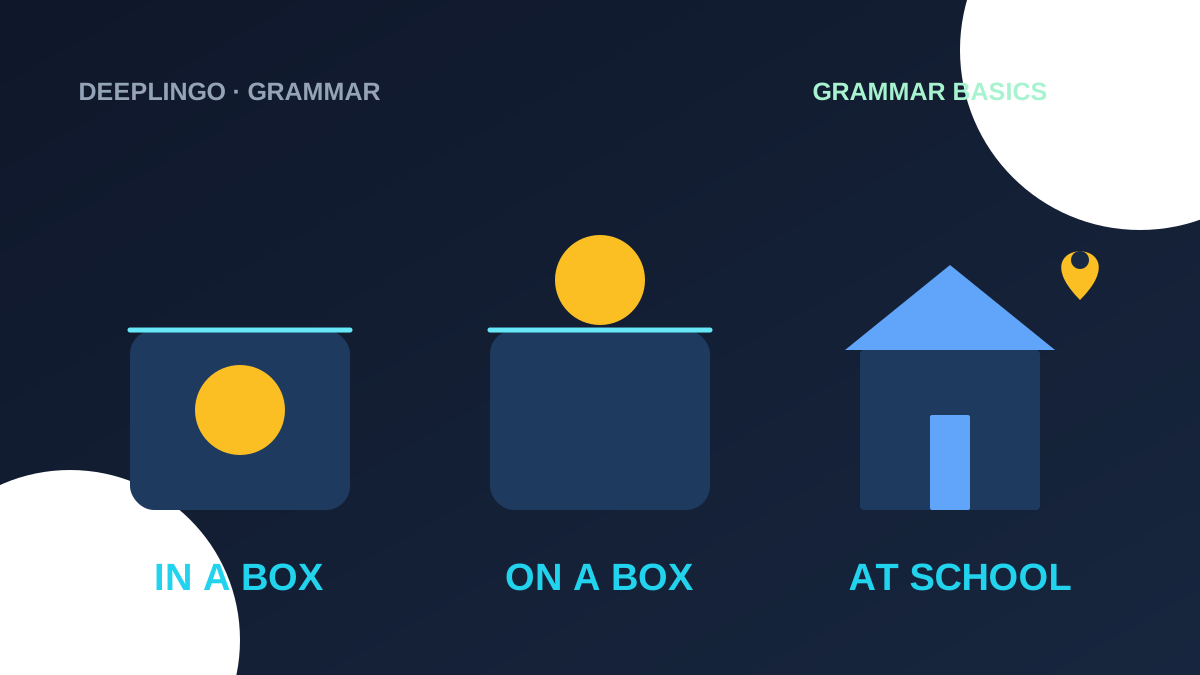
Prepositions show relationships such as time, place and direction. Learn in, on and at with contextual examples rather than translating isolated words.
Prepositions show relationships between things - like where something is or when it happens. The tricky part? They don't translate directly between languages! Let's make them easy. 🗺️
IN, ON, AT for Places
Think of it like a zoom lens on a camera! 📷 From wide to narrow: IN (large areas) → ON (surfaces) → AT (specific points)
| Preposition | Use For | Example |
|---|---|---|
| IN | Enclosed spaces, countries, cities, neighborhoods | in the box, in India, in Mumbai, in the garden |
| ON | Surfaces, streets, floors, islands | on the table, on Main Street, on the 5th floor |
| AT | Specific points, addresses, events | at the door, at 123 Park Ave, at the party |
More Examples with IN:
I live in New York.
💡 IN for cities
The keys are in my pocket.
💡 IN for enclosed spaces
She works in a bank.
💡 IN for buildings (inside)
He is in the kitchen.
💡 IN for rooms
I read it in the newspaper.
💡 IN for printed materials
There are fish in the water.
💡 IN for liquids
More Examples with ON:
My apartment is on 5th Avenue.
💡 ON for streets
The picture is on the wall.
💡 ON for surfaces
She lives on the second floor.
💡 ON for floors
I saw it on TV.
💡 ON for TV, radio, internet
The island is on the coast.
💡 ON for islands and coasts
There is a fly on the ceiling.
💡 ON for any surface
More Examples with AT:
Meet me at the coffee shop.
💡 AT for specific places
She is at work.
💡 AT for activities/locations
I will meet you at the entrance.
💡 AT for specific points
He is at the party.
💡 AT for events
We arrived at the airport.
💡 AT for arrival points
Turn left at the traffic light.
💡 AT for specific points
IN, ON, AT for Time
The same zoom lens idea works for time too! IN for long periods → ON for days → AT for precise times
| Preposition | Use For | Example |
|---|---|---|
| IN | Months, years, seasons, centuries, long periods | in January, in 2024, in summer, in the morning |
| ON | Days, dates, specific days | on Monday, on December 25th, on my birthday |
| AT | Specific times, mealtimes, festivals | at 3 PM, at noon, at midnight, at Christmas |
Time Examples with IN:
School starts in September.
💡 IN for months
I was born in 1990.
💡 IN for years
Flowers bloom in spring.
💡 IN for seasons
I exercise in the morning.
💡 IN for parts of day
I'll finish in 10 minutes.
💡 IN for future duration
This happened in the past.
💡 IN for periods
Time Examples with ON:
We have a test on Friday.
💡 ON for days
I'll see you on January 1st.
💡 ON for dates
What do you do on weekends?
💡 ON for weekends
We met on a rainy day.
💡 ON for specific days
The shop is closed on Sundays.
💡 ON for days of week
I'll call you on your birthday.
💡 ON for special days
Time Examples with AT:
Class begins at 9 AM.
💡 AT for specific times
We eat lunch at noon.
💡 AT for noon, midnight
The store opens at sunrise.
💡 AT for sunrise/sunset
I'll call you at night.
💡 AT for night (exception!)
We exchange gifts at Christmas.
💡 AT for festivals
He is busy at the moment.
💡 AT for current time
Movement Prepositions
These show direction and movement from one place to another:
Walk to the store.
💡 TO = destination
Jump into the pool.
💡 INTO = entering inside
Run across the field.
💡 ACROSS = from one side to another
Climb up the stairs.
💡 UP = moving higher
Go through the tunnel.
💡 THROUGH = from one end to another inside
Walk along the river.
💡 ALONG = following the length
Jump over the fence.
💡 OVER = above and across
The cat ran under the table.
💡 UNDER = below something
Position Prepositions
These show where something is located:
The book is on the table.
💡 ON = touching surface
The cat is under the bed.
💡 UNDER = below
Stand behind me.
💡 BEHIND = at the back
The bank is next to the post office.
💡 NEXT TO = beside
The park is between two buildings.
💡 BETWEEN = a position or relationship involving separate entities; it can sometimes involve more than two
Everyone is here except Tom.
💡 EXCEPT = not including
Stand in front of the mirror.
💡 IN FRONT OF = facing
The lamp is above the table.
💡 ABOVE = higher than (not touching)
Common Preposition Mistakes
These are mistakes many learners make. Learn the correct forms!
❌ I'm in the bus → ✅ I'm on the bus
💡 ON for public transport (bus, train, plane)
❌ I'm on the car → ✅ I'm in the car
💡 IN for cars and taxis
❌ Arrive to school → ✅ Arrive at school
💡 ARRIVE AT a place
❌ Married with → ✅ Married to
💡 We marry TO someone
❌ Different than → ✅ Different from
💡 Different FROM something
❌ Listen the music → ✅ Listen to the music
💡 Listen TO something
❌ Depend of → ✅ Depend on
💡 Depend ON something
❌ Good in math → ✅ Good at math
💡 Good AT a subject/skill
Continue learning
since and for · A, An and The: English Article Rules
Practice in the 30 Days English Challenge: Day 12: To, For, In, On and At: Everyday Prepositions · Day 14: Prepositions of Place: In, On, Beside and Next To · Day 15: Over, Under, Above and Below: Position and Movement