Grammar Basics
Day 14 · 30 Days English Challenge
Prepositions of Place: In, On, Beside and Next To
· 6 min read
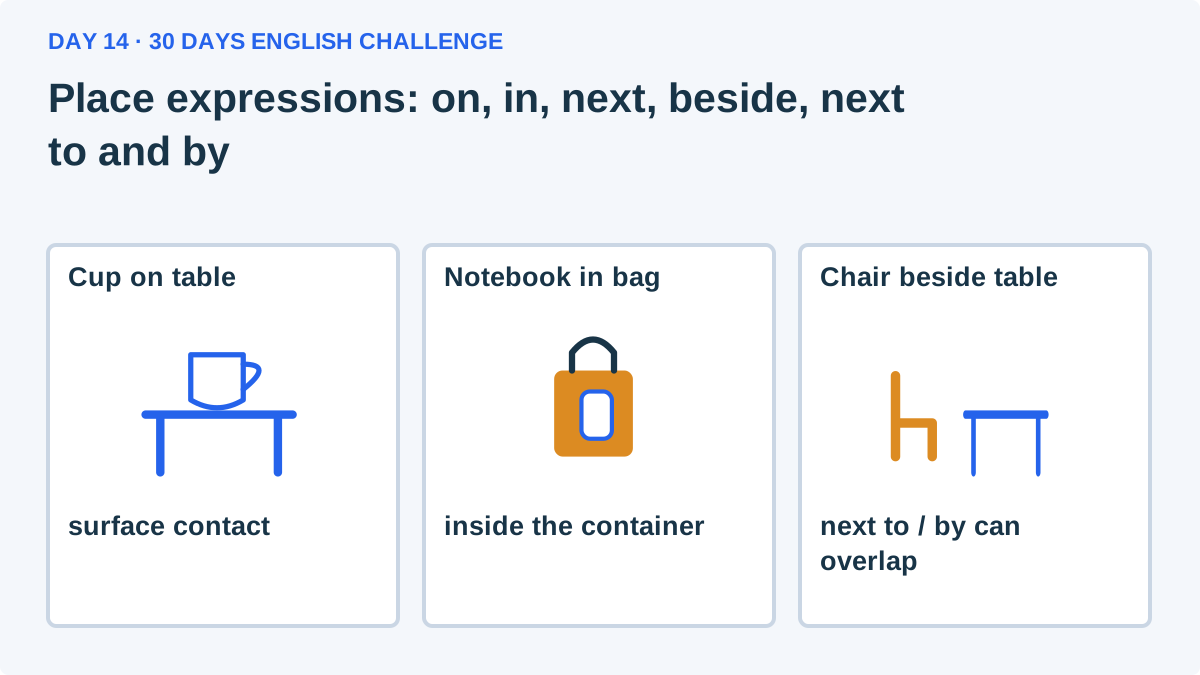
Day 14 speaking goal: Give clear directions around one room without confusing sequence and position.
Describe where things are. Compare in, on, beside, next to and by. Notice why next needs special care.
Jump to: Rules · Compare · Examples · Self-checks · Answers
14.1 On or in?
| Learn | Simple English |
|---|---|
| Rule | Use on for contact with a surface. Use in for something inside a space or container. |
| Pattern | On + surface. In + space/container. |
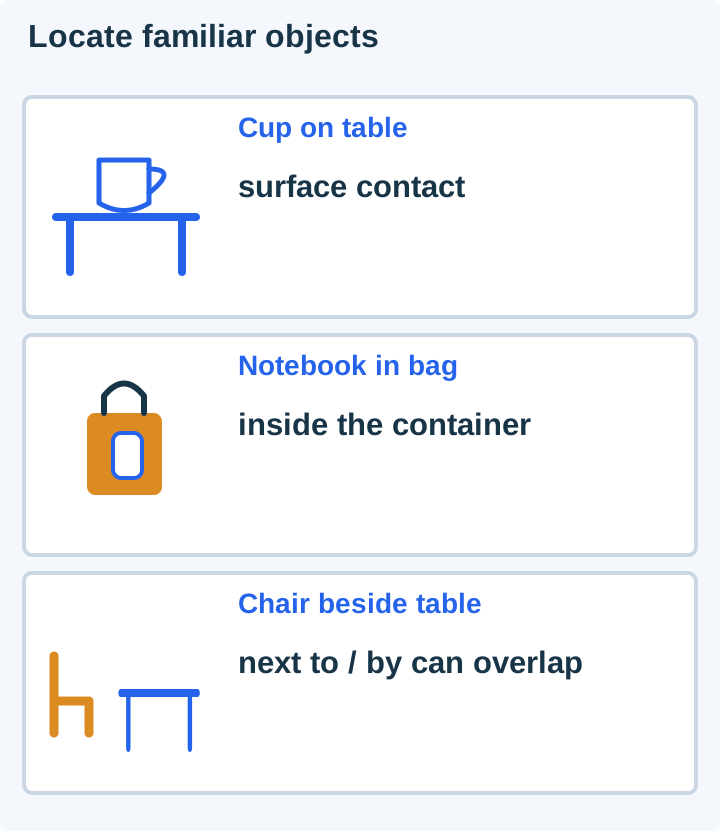
| Example | The cup is on the table. The notebook is in the bag. |
| Why | The cup touches the tabletop. The notebook is inside the bag. |
14.2 Next: what comes after?
| Learn | Simple English |
|---|---|
| Rule | Next shows order. For a nearby position, use next to. Do not leave out to before the thing beside you. |
| Pattern | The next chair. Next week. Next to the chair. |
| Example | The next lesson is tomorrow. My bag is next to the chair. |
| Why | Next lesson means the following lesson. Next to the chair tells us a place. |
14.3 Beside and next to
| Learn | Simple English |
|---|---|
| Rule | Beside and next to often mean the same thing: at the side of someone or something. |
| Pattern | Beside + noun. Next to + noun. |
| Example | The chair is beside the table. The chair is next to the table. |
| Why | Both sentences can describe the same chair and table. The exact distance depends on the scene. |
14.4 By: nearby
| Learn | Simple English |
|---|---|
| Rule | By can mean near or beside a place. It has other meanings too, so read the whole sentence. |
| Pattern | By + place. |
| Example | Leave your bag by the door. |
| Why | By the door means near the door. Finish by Friday uses by for a deadline instead. |
14.5 Compare the patterns side by side
| Expression | Relationship | Room example |
|---|---|---|
| on | Surface contact | The cup is on the table. |
| in | Within a space | The notebook is in the bag. |
| next | Order | Use the next chair. |
| beside / next to / by | Nearby position | The chair is beside the table. |
14.6 Everyday examples: notice the meaning
The cup is on the table.
💡 Surface contact.
The notebook is in the bag.
💡 The notebook is inside the bag.
The bag is in the room.
💡 A larger enclosing space.
The chair is beside the table.
💡 The chair is at the side of the table.
The chair is next to the table.
💡 “Next to” also means at the side of the table.
The bag is by the door.
💡 A nearby landmark.
Please use the next chair.
💡 Order in a row of chairs.
The next room is quieter.
💡 The following room in a sequence.
We will meet next week.
💡 A time expression, not next to.
Put the spoon on the plate.
💡 Contact with the plate.
Keep the keys in your pocket.
💡 Inside a container.
Sit beside me.
💡 Object form after a preposition.
Sit next to her.
💡 Next to forms the complete phrase.
Wait by the entrance.
💡 A clear meeting landmark.
The picture is on the wall.
💡 Attached surface relationship.
The desk is in the corner.
💡 A conventional location phrase.
Besides tea, we have coffee.
💡 Besides adds another item; it does not locate it.
Please finish by Friday.
💡 By can express a deadline, not place.
14.7 Common mistakes and why
❌ The chair is next the table.
✅ The chair is next to the table.
The place phrase needs to.
❌ The notebook is on the bag, meaning inside it.
✅ The notebook is in the bag.
Inside requires in for this intended scene.
❌ Sit next to she.
✅ Sit next to her.
After next to, use the object pronoun her.
14.8 Try it yourself
Step 1: Put a pen in a bag and describe it.
Step 2: Place the bag beside a chair and describe it two ways.
Step 3: Say when your next lesson is.
14.9 Five self-checks
Choose A or B for each question. Read the answers below after you finish.
1. The notebook is inside the bag. Choose the missing word: “The notebook is ___ the bag.”
A. on
B. in
2. The cup touches the tabletop. Choose the missing word: “The cup is ___ the table.”
A. on
B. in
3. Which instruction is correct?
A. Sit next me.
B. Sit next to me.
4. Which sentence refers to the following week?
A. My lesson is next week.
B. My lesson is next to week.
5. The chair is near the table. Can both beside the table and by the table describe it?
A. No, only beside can show a nearby place.
B. Yes, both can describe a nearby position.
Self-check answers and explanations
1. B — in
💡 In means inside the bag.
2. A — on
💡 On describes contact with the top surface here.
3. B — Sit next to me.
💡 Use next to before a person or thing when you mean beside them.
4. A — My lesson is next week.
💡 Next week means the following week. Do not add to for this time phrase.
5. B — Yes, both can describe a nearby position.
💡 Beside and by can have overlapping place meanings. The scene helps show the position.
14.10 Remember these points
In: inside. On: touching a surface.
Beside, next to and by can describe nearby places.
Next alone usually shows order.
Review any self-check you missed. Then say three examples aloud without looking.
Further reading: prepositions made easy · small words change meaning
Grammar references: Cambridge: Prepositions