Tenses
Day 21 · 30 Days English Challenge
Perfect Continuous Tenses: Explain How Long
· 6 min read
Day 21 speaking goal: Say how long an activity has continued up to now, a past time or a future time.
These forms often tell us how long an activity has continued. Keep the activity and the ending time clear.
Jump to: Rules · Compare · Examples · Self-checks · Answers
21.1 Up to now
| Learn | Simple English |
|---|---|
| Rule | Use have or has been with -ing to focus on an activity continuing up to now or stopping recently. |
| Pattern | Have/has been + verb-ing. |
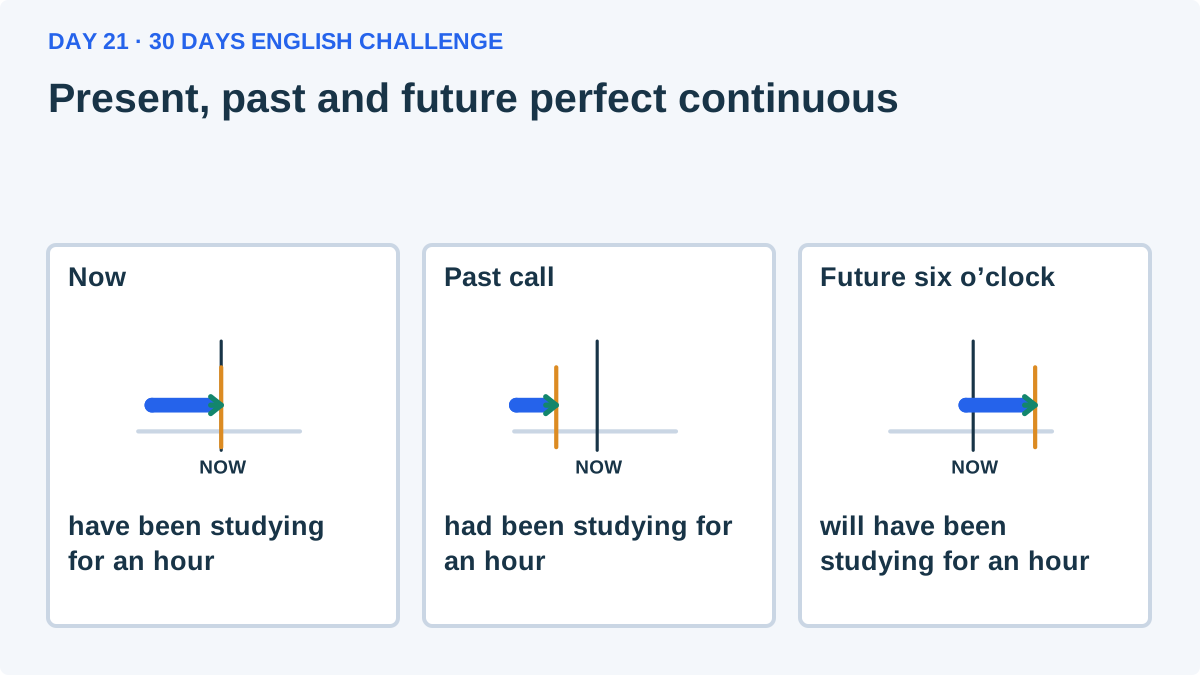
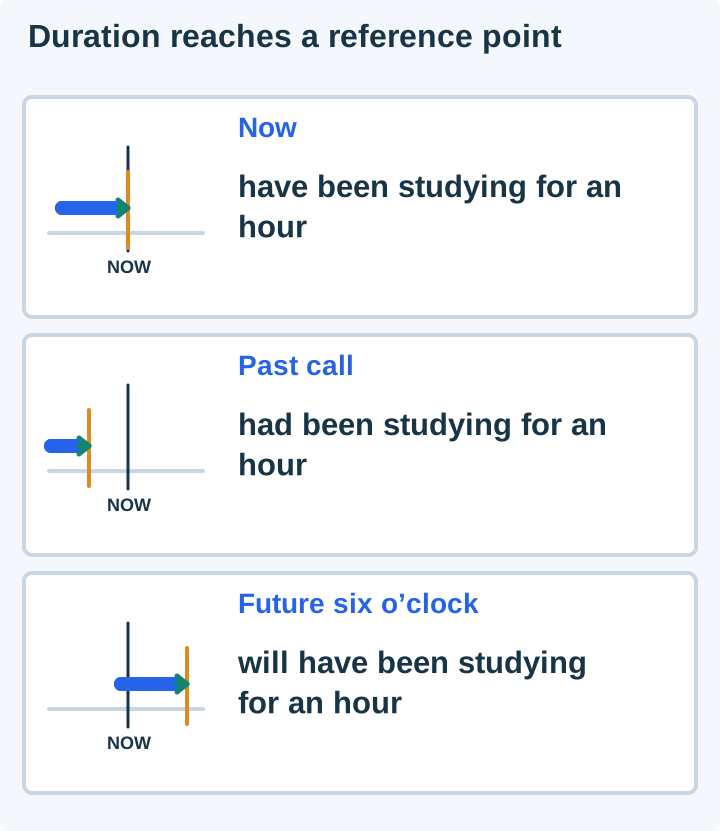
| Example | I have been studying for an hour. |
| Why | The focus is the activity and its length. It may still be happening, or I may have just stopped. |
21.2 Up to a past time
| Learn | Simple English |
|---|---|
| Rule | Use had been with -ing for an activity continuing up to a past event or time. |
| Pattern | Had been + verb-ing. |
| Example | I had been studying for an hour when you called. |
| Why | I started studying first. An hour later, you called. That call gives us the past time. |
21.3 Up to a future time
| Learn | Simple English |
|---|---|
| Rule | Use will have been with -ing to describe how long an activity will have lasted at a future time. |
| Pattern | Will have been + verb-ing. |
| Example | By six, I will have been studying for an hour. |
| Why | Imagine it is six: my study time will be one hour. Use this longer form only when that duration matters. |
21.4 Activity or result?
| Learn | Simple English |
|---|---|
| Rule | Perfect continuous often focuses on the activity. Perfect simple can focus on a result or number. State verbs such as know normally use perfect simple. |
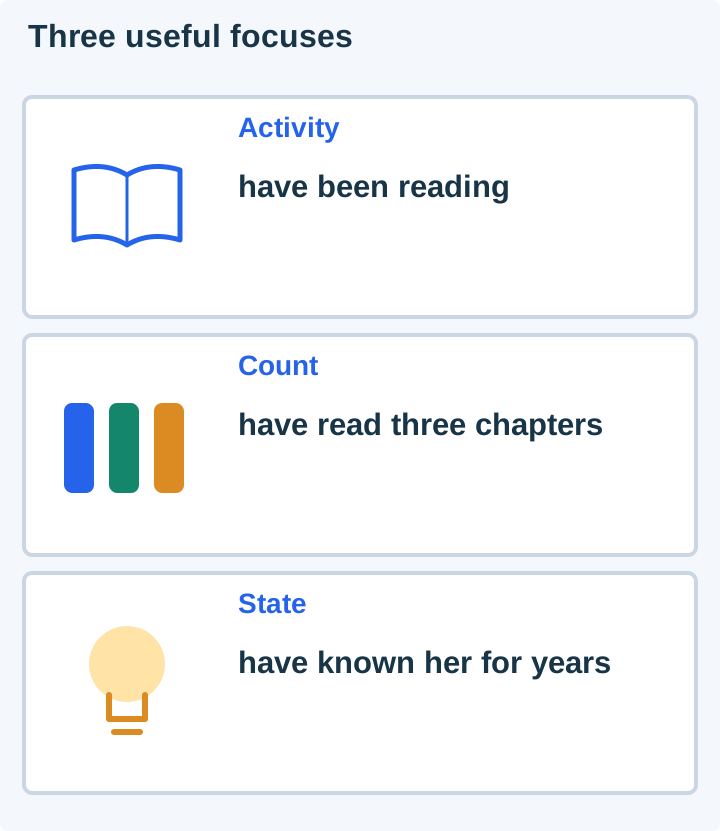
| Pattern | Have been reading: activity. Have read three chapters: number completed. |
| Example | I have been reading. I have read three chapters. I have known her for years. |
| Why | Say have known, not have been knowing. Some activity verbs allow both forms with a different focus. |
21.5 Compare the patterns side by side
| Form | Up to now | Up to then | Up to future point |
|---|---|---|---|
| Affirmative | have been studying | had been studying | will have been studying |
| Negative | have not been studying | had not been studying | will not have been studying |
| Question | Have you been studying? | Had you been studying? | Will you have been studying? |
| Duration | for an hour now | for an hour when called | for an hour by six |
21.6 Everyday examples: notice the meaning
I have been studying for an hour.
💡 Duration leading to now.
She has been working since noon.
💡 A start connects to now.
Have you been waiting long?
💡 A present-perfect-continuous question.
We haven’t been sleeping well.
💡 A recent repeated activity.
I’m tired; I have been carrying boxes.
💡 Recent activity explains present evidence.
It has been raining.
💡 The weather may still continue or have recently stopped.
I had been studying when you called.
💡 Activity leading to a past call.
She had been waiting for half an hour when the bus arrived.
💡 She started waiting first. Half an hour later, the bus arrived.
Had they been working all morning?
💡 A past-perfect-continuous question.
We hadn’t been travelling long when it rained.
💡 A duration before a past event.
By the time he retired, he had been teaching for years.
💡 His teaching continued for years up to his retirement.
By six, I will have been studying for an hour.
💡 Duration measured at a future point.
She will have been working here for a year by June.
💡 A future duration.
Will you have been waiting long by then?
💡 A future-perfect-continuous question.
I won’t have been working for long by noon.
💡 A negative future duration.
I have read three chapters.
💡 Perfect simple emphasizes a count.
I have been reading all morning.
💡 Continuous emphasizes activity.
I have known her for years.
💡 A state normally uses perfect simple.
21.7 Common mistakes and why
❌ I have been know her for years.
✅ I have known her for years.
Know is a state meaning and uses perfect simple here.
❌ She has working since noon.
✅ She has been working since noon.
Perfect continuous needs been plus -ing.
❌ I will have studying for an hour.
✅ I will have been studying for an hour.
The future form needs will have been + -ing.
21.8 Try it yourself
Step 1: Choose study, work or wait. Say how long you have been doing it.
Step 2: Describe how long you had been doing it before a past event.
Step 3: Describe its length by a future time.
21.9 Five self-checks
Choose A or B for each question. Read the answers below after you finish.
1. Choose the missing word: “She has ___ working since noon.”
A. been
B. being
2. The waiting started before a past call. Complete: “I ___ been waiting when you called.”
A. have
B. had
3. Choose the missing word: “By six tomorrow, I will have ___ studying for an hour.”
A. being
B. been
4. Which sentence is natural?
A. I have known her for years.
B. I have been knowing her for years.
5. The ground is wet. “It has been raining.” Must rain still be falling now?
A. Yes, it must still be falling.
B. No, it may have stopped recently.
Self-check answers and explanations
1. A — been
💡 Keep has been together, then add working.
2. B — had
💡 Had been waiting describes the activity before the past call.
3. B — been
💡 The full pattern is will have been studying.
4. A — I have known her for years.
💡 Know normally describes a state. Use have known, not have been knowing.
5. B — No, it may have stopped recently.
💡 This form can describe recent activity with a result now. The rain may have stopped.
21.10 Remember these points
Up to now: have/has been studying.
Up to then: had been studying.
Up to a future time: will have been studying.
Review any self-check you missed. Then say three examples aloud without looking.
Further reading: present perfect continuous tense · past perfect continuous tense · future perfect continuous tense
Grammar references: Cambridge: Present perfect simple and continuous