Tenses
Present Perfect Continuous: Actions Continuing Until Now
· 4 min read
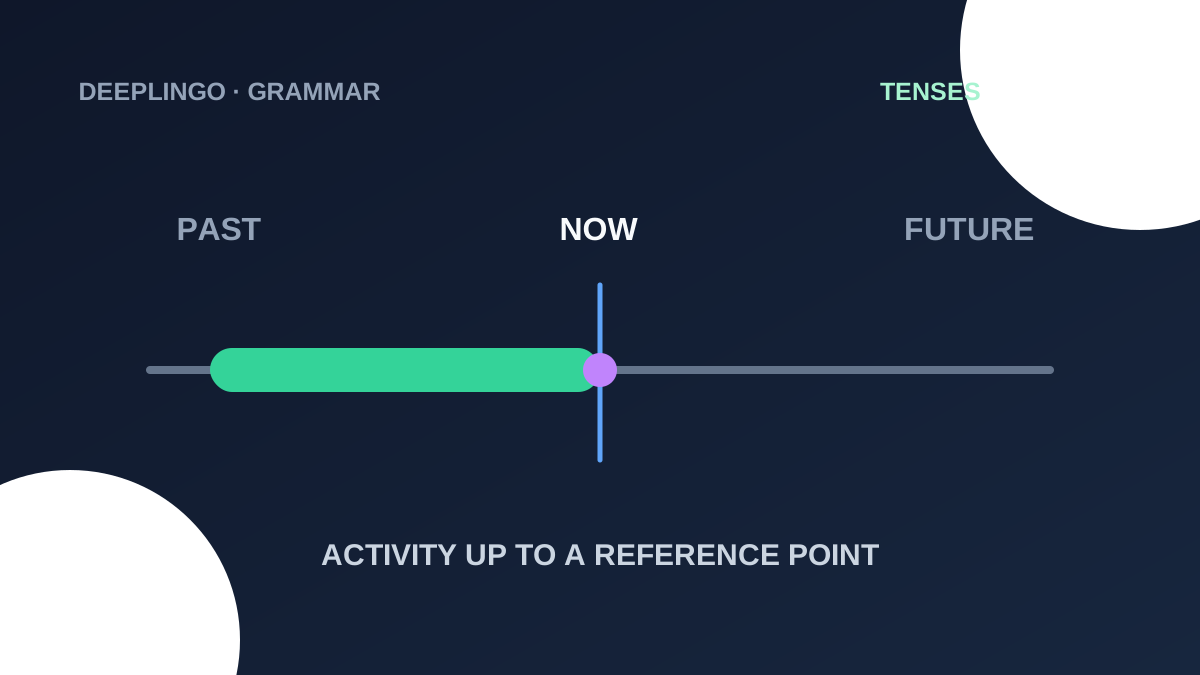
The present perfect continuous uses have/has been plus an -ing form to focus on activity continuing up to now or its recent effects.
What is the Present Perfect Continuous Tense?
The Present Perfect Continuous (also called Present Perfect Progressive) shows that an action started in the past and has been continuing until now. It emphasizes the DURATION of the action or that the action is ongoing.
Sentence Structure
Affirmative (Positive) Sentences:
Subject + have/has + been + Verb-ing
I have been working all day.
💡 Have been for I
You have been sleeping for hours.
💡 Have been for You
He has been playing games.
💡 Has been for He
She has been cooking since noon.
💡 Has been for She
It has been snowing heavily.
💡 Has been for It
We have been learning English.
💡 Have been for We
They have been traveling for weeks.
💡 Have been for They
Negative Sentences:
Subject + have/has + not + been + Verb-ing
I have not been feeling well.
💡 haven't been
She has not been sleeping properly.
💡 hasn't been
They haven't been practicing enough.
Question Form:
Have/Has + Subject + been + Verb-ing + ?
Have you been waiting long?
Has she been studying hard?
How long have you been learning English?
💡 WH-question
What have they been doing?
💡 WH-question
Present Perfect vs Present Perfect Continuous
| Present Perfect | Present Perfect Continuous |
|---|---|
| Focus on RESULT/COMPLETION | Focus on DURATION/ACTIVITY |
| I have read the book. (finished) | I have been reading the book. (maybe still reading) |
| She has written 3 emails. (completed 3) | She has been writing emails. (activity, ongoing) |
| How many pages have you read? | How long have you been reading? |
When Do We Use Present Perfect Continuous?
1. Actions that Started in the Past and Continue Now - Emphasizing how long.
I have been waiting for 2 hours.
💡 Still waiting now
She has been studying since morning.
💡 Still studying now
It has been raining all day.
💡 Still raining
2. Recent Actions with Visible Results - Something just happened, and you can see evidence.
You have been crying. Your eyes are red.
💡 Evidence: red eyes
He has been running. He is sweating.
💡 Evidence: sweat
They have been painting. There is paint everywhere.
💡 Evidence: paint
3. Repeated Actions Over a Period - Actions happening again and again.
I have been calling you all day!
💡 Multiple calls
She has been taking dance classes lately.
💡 Regular classes recently
They have been arguing a lot recently.
💡 Repeated arguments
Verbs NOT Used in Continuous
Remember, some verbs don't usually have continuous forms:
❌ I have been knowing him for years.
✅ I have known him for years.
💡 Know = state, use Perfect Simple
❌ She has been wanting a car.
✅ She has wanted a car for a long time.
💡 Want = state
Common Time Words
I have been waiting for 30 minutes.
💡 FOR + duration
She has been working here since 2020.
💡 SINCE + starting point
They have been practicing all morning.
We have been discussing this lately.
He has been acting strange recently.
Everyday Conversation Examples
A: You look tired. B: Yes, I have been working since 6 AM.
A: Why are your hands dirty? B: I have been gardening.
💡 Explaining evidence
A: How long have you been waiting? B: About 20 minutes.
A: What have you been doing lately? B: I have been learning to cook.
💡 Catching up
Practice Paragraph
I have been studying for my exams since last week. I have been waking up early every day. My sister has been helping me with math. She has been explaining difficult problems very patiently. We have been taking breaks to eat snacks. My mother has been bringing us tea. The weather has been getting warmer, so sometimes we study in the garden. I have been feeling more confident about the exam!
Continue learning
since and for · Present Perfect: Rules and Examples
Practice in the 30 Days English Challenge: Day 21: Perfect Continuous Tenses: Explain How Long