Tenses
Past Perfect Tense: The Past Before the Past
· 4 min read
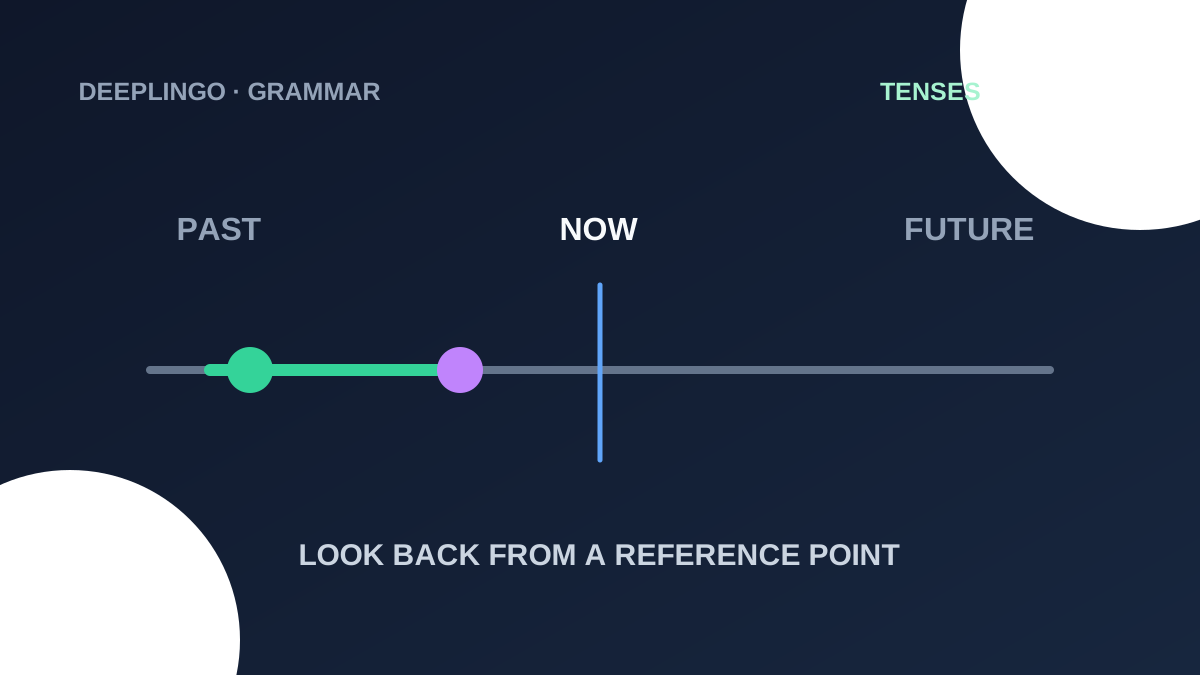
The past perfect uses had plus a past participle to look back from a past reference point at an earlier event, state or experience.
What is the Past Perfect Tense?
The Past Perfect tense describes an action that happened BEFORE another action in the past. Think of it as "the past of the past" - going even further back in time!
Imagine a timeline: NOW ← Past Event ← Earlier Past Event (Past Perfect)
Sentence Structure
Affirmative (Positive) Sentences:
Subject + had + Past Participle (V3)
I had finished my work.
She had gone home.
They had eaten already.
We had seen that movie before.
Negative Sentences:
Subject + had + not + Past Participle
I had not finished when she called.
💡 hadn't finished
She hadn't seen the message.
They had not arrived yet.
Question Form:
Had + Subject + Past Participle + ?
Had you eaten before you came?
Had she finished her homework?
What had they done before the police arrived?
💡 WH-question
Where had he gone?
💡 WH-question
Past Perfect vs Past Simple
When two actions happened in the past, Past Perfect shows which one happened FIRST.
| Past Simple | Past Perfect |
|---|---|
| Second/later action | First/earlier action |
| Main event | Background/prior event |
| verb-ed / V2 | had + V3 |
When I arrived, she left.
💡 Past Simple only: both happened around same time
When I arrived, she had left.
💡 Past Perfect: she left BEFORE I arrived
I ate the cake that my mom made.
💡 Both past, order clear from context
I ate the cake that my mom had made.
💡 Mom made it first, then I ate it
When Do We Use Past Perfect?
1. An Action Before Another Past Action - Showing which happened first.
When I arrived, the movie had already started.
💡 Movie started first, then I arrived
She had left before I got there.
💡 She left first, then I got there
They had eaten dinner before the guests arrived.
💡 Eating finished before guests came
2. Experience Before a Past Time - Life experience up to a point in the past.
I had never seen snow before I visited Shimla.
💡 First time seeing snow
She had never traveled abroad until last year.
💡 First time
Had you ever eaten sushi before you went to Japan?
💡 Any experience before that time?
3. Cause of a Past Situation - Explaining why something was the way it was.
I was hungry because I had not eaten anything.
💡 Reason for being hungry
She failed the exam because she had not studied.
💡 Reason for failing
He was tired because he had worked all night.
💡 Reason for being tired
Common Time Words
I had already eaten when she invited me for dinner.
💡 Already = before
She had just left when I arrived.
💡 Just = very recently before
They had never seen such a thing before.
💡 Never/before for experience
By the time I got home, everyone had gone to sleep.
💡 By the time = before that moment
After she had finished, she relaxed.
💡 After + Past Perfect
Before I moved here, I had lived in Delhi.
💡 Before + Past Simple, the other = Past Perfect
Everyday Conversation Examples
A: Did you like the movie? B: Yes, but I had seen it before.
💡 Previous experience
A: Why were you late? B: My train had been cancelled.
💡 Reason
A: Had you ever met him before the party? B: No, that was the first time.
A: She looked happy. B: Yes, she had just gotten a promotion!
💡 Recent prior event
Practice Paragraph
Last week, I went to visit my friend Priya. When I arrived at her house, she had already cooked a delicious meal. She had prepared my favorite dishes because she had remembered what I liked. I was surprised because I had not told her I was coming. She said her mother had informed her earlier. After we had finished eating, we watched a movie that I had never seen before. By the time I left, it had gotten dark outside.
Continue learning
Past Simple: Forms, Rules and Examples · Past Perfect Continuous: Examples
Practice in the 30 Days English Challenge: Day 5: Have, Has and Had: Simple Rules and Everyday Examples · Day 20: Perfect Tenses: Present, Past and Future Explained · Day 28: English Conditionals: Real and Imagined Situations