Grammar Basics
Day 28 · 30 Days English Challenge
English Conditionals: Real and Imagined Situations
· 6 min read
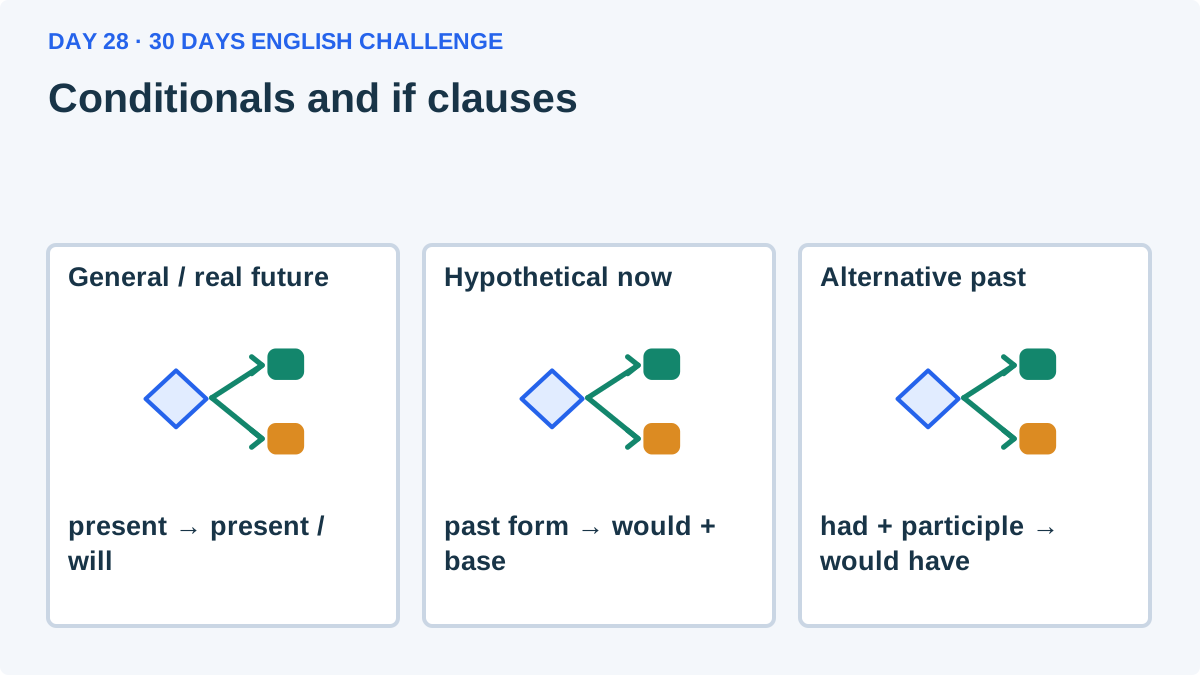
Day 28 speaking goal: Use if to explain possible results and imagine different situations.
Use if to connect a condition and a result. Compare usual results, possible futures and imagined situations.
Jump to: Rules · Compare · Examples · Self-checks · Answers
28.1 Usual results: zero conditional
| Learn | Simple English |
|---|---|
| Rule | Use present forms for things that regularly happen under a condition. This includes habits, not just scientific facts. |
| Pattern | If + present, + present. |
| Example | If I skip lunch, I get hungry. |
| Why | This describes what usually happens to me, not one particular future lunch. |
28.2 A possible future: first conditional
| Learn | Simple English |
|---|---|
| Rule | Use a present form after if. Use will and a basic verb for a possible future result. |
| Pattern | If + present, + will + verb. |
| Example | If it rains tomorrow, we will stay inside. |
| Why | Rain is possible. After if, say it rains, not it will rain in this pattern. Can can also introduce a result. |
28.3 Imagine now or later: second conditional
| Learn | Simple English |
|---|---|
| Rule | Use a past form after if and would for an imagined present or future result. The past form does not mean past time here. |
| Pattern | If + past, + would + verb. |
| Example | If I had more time, I would read more. |
| Why | I am imagining more time now. If I were you, I would call is a useful advice pattern. |
28.4 Imagine a different past: third conditional
| Learn | Simple English |
|---|---|
| Rule | Use had and a past participle after if. Use would have and a past participle for the imagined past result. |
| Pattern | If + had + past participle, + would have + past participle. |
| Example | If we had left earlier, we would have caught the train. |
| Why | We did not leave early enough. We missed the train. Now we imagine a different past. |
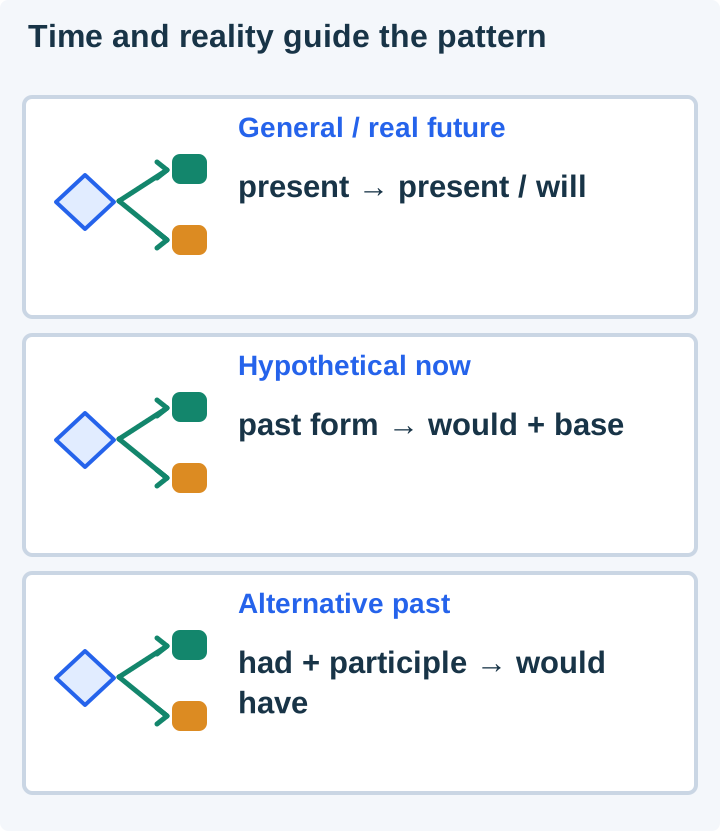
28.5 Compare the patterns side by side
| View | Condition | Result |
|---|---|---|
| General | If I skip lunch, | I get hungry. |
| Real future | If it rains, | we will stay inside. |
| Hypothetical now | If I had more time, | I would read more. |
| Alternative past | If we had left earlier, | we would have caught it. |
28.6 Everyday examples: notice the meaning
If I skip lunch, I get hungry.
💡 A repeated personal relationship.
If the shop is closed, I buy bread elsewhere.
💡 A routine consequence.
I get tired if I sleep badly.
💡 The condition can come second.
If you heat ice, it melts in ordinary conditions.
💡 A familiar general relationship.
If it rains tomorrow, we will stay inside.
💡 A real future possibility.
We will walk if the weather is good.
💡 A future result with the condition second.
If you finish early, you can call me.
💡 Can is possible in the result.
If she arrives, tell her to wait.
💡 An instruction can be the result.
If I had more time, I would read more.
💡 A hypothetical present situation.
If I were you, I would check the address.
💡 A useful advice pattern.
If we lived nearby, we could meet often.
💡 Could expresses a hypothetical possibility.
I would cycle if I had a bike.
💡 The result can come first.
If we had left earlier, we would have caught the train.
💡 An alternative past.
If she had not called, we would have missed the news.
💡 A past alternative expressing relief.
If the team had checked, it would have found the error.
💡 Neutral past analysis.
We would have waited if we had known.
💡 A result before the past condition.
If you practise, you may feel more confident.
💡 A possible future result, not a guarantee.
If I had known the route, I could have helped.
💡 An alternative past ability.
28.7 Common mistakes and why
❌ If it will rain, we will stay inside.
✅ If it rains, we will stay inside.
The basic future condition uses present here.
❌ If I had more time now, I will read more.
✅ If I had more time now, I would read more.
For this imagined situation now, use would for the result.
❌ If we had left earlier, we would caught the train.
✅ If we had left earlier, we would have caught the train.
For this imagined past result, use would have + past participle: would have caught.
28.8 Try it yourself
Step 1: Describe a usual result with if.
Step 2: Describe a possible plan for tomorrow.
Step 3: Imagine having more time. Then imagine changing one past event.
28.9 Five self-checks
Choose A or B for each question. Read the answers below after you finish.
1. Choose the missing word for a possible plan tomorrow: “If it rains, we ___ stay inside.”
A. will
B. would have
2. Choose the correct sentence about tomorrow.
A. If it will rain tomorrow, we will stay inside.
B. If it rains tomorrow, we will stay inside.
3. Imagine having more free time now. Complete: “If I had more time, I ___ read more.”
A. would
B. will have
4. Choose the missing word: “If we had left earlier, we would have ___ the train.”
A. catch
B. caught
5. You missed the train yesterday. Which sentence imagines a different past?
A. If we leave earlier tomorrow, we will catch it.
B. If we had left earlier, we would have caught it.
Self-check answers and explanations
1. A — will
💡 Present rains with will stay is a common pattern for a possible future.
2. B — If it rains tomorrow, we will stay inside.
💡 Use present rains after if for this future condition.
3. A — would
💡 Had with would describes an imagined situation now in this pattern.
4. B — caught
💡 After would have, use caught, the past participle of catch.
5. B — If we had left earlier, we would have caught it.
💡 Had left and would have caught imagine changing a past event.
28.10 Remember these points
Usual: If I skip lunch, I get hungry.
Possible: If it rains, I will stay in.
Imagined: If I had time, I would help. Past: If I had left, I would have arrived.
Review any self-check you missed. Then say three examples aloud without looking.
Further reading: conditional sentences · past perfect tense
Grammar references: Cambridge: Conditionals