Grammar Basics
Day 29 · 30 Days English Challenge
Reported Speech: Share What Someone Said
· 6 min read
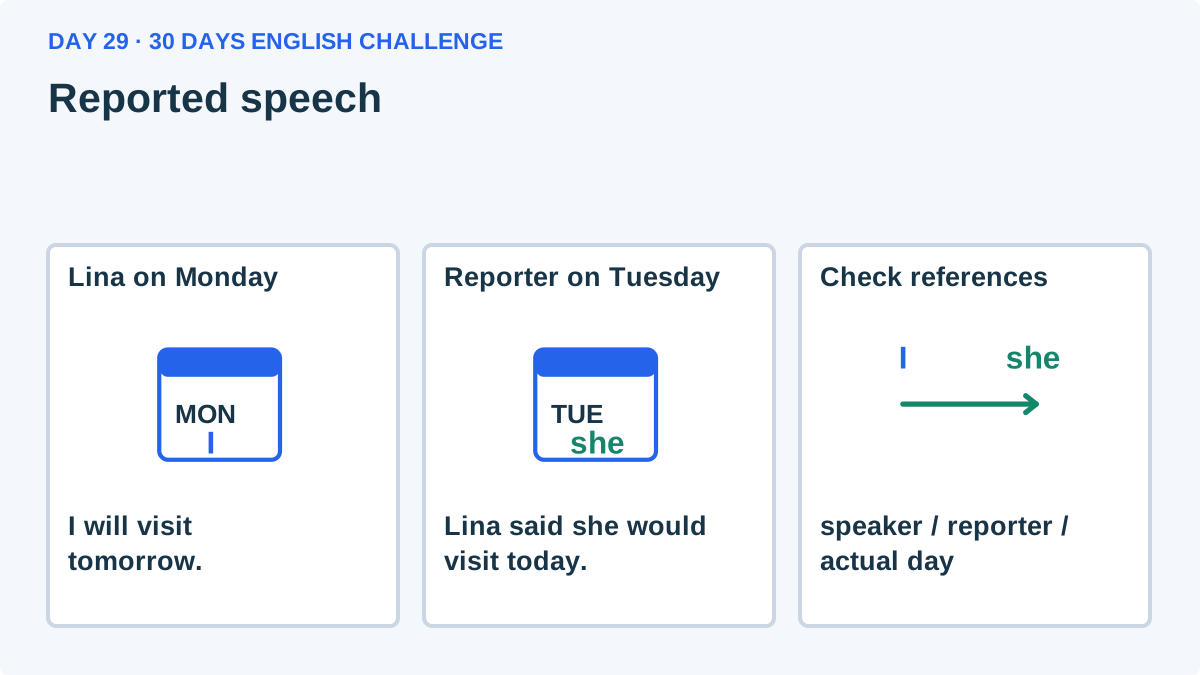
Day 29 speaking goal: Pass on a message while keeping people, time and question order clear.
Tell someone what another person said. Check the pronouns, verb forms, time and place so the message still makes sense.
Jump to: Rules · Compare · Examples · Self-checks · Answers
29.1 Report a statement
| Learn | Simple English |
|---|---|
| Rule | Use said to report a message. Use told when you also name the person who received it. Change pronouns to fit the people. |
| Pattern | She said… She told me… |
| Example | Lina said, “I am busy.” → Lina said she was busy. |
| Why | I becomes she because Lina is the person who was busy. That is optional: she said that she was busy. |
29.2 Does the tense need to change?
| Learn | Simple English |
|---|---|
| Rule | After said, we often move a tense back: am becomes was; will becomes would. A still-true fact may keep its present form. |
| Pattern | She said she was tired. She said she is a teacher. |
| Example | “I am a teacher.” → She said she is a teacher. |
| Why | She still teaches now, so is can stay. Change today to that day only if the day has changed. |
29.3 Report a question
| Learn | Simple English |
|---|---|
| Rule | Use if or whether for yes/no questions. Keep who, where or other question words. Use statement word order after them. |
| Pattern | She asked if I was ready. She asked where I lived. |
| Example | “Where do you live?” → She asked where I lived. |
| Why | Say where I lived, not where did I live. The reported question uses statement order. |
29.4 Report instructions and requests
| Learn | Simple English |
|---|---|
| Rule | Use told or asked, name the person, then add to and the verb. Use not to for a negative instruction. |
| Pattern | Told/asked + person + to + verb. |
| Example | “Please wait.” → She asked me to wait. “Don’t touch it.” → She told me not to touch it. |
| Why | Asked often reports a request. Told often reports an instruction. |
29.5 Compare the patterns side by side
| Original type | Reported pattern | Example |
|---|---|---|
| Statement | said / told + clause | She said she was busy. |
| Yes/no question | asked if / whether | She asked if I was ready. |
| Wh-question | asked + wh + statement order | She asked where I lived. |
| Instruction | told + person + to | She told me to wait. |
29.6 Everyday examples: notice the meaning
Lina said she was busy.
💡 A reported statement.
Lina told me she was busy.
💡 Tell includes a recipient.
I said I was tired.
💡 Reporting your own speech can keep I.
She said she is a teacher.
💡 A still-true fact may remain present.
He said he would call.
💡 Will often becomes would after said.
She said she had lost the key.
💡 A past verb may become had + past participle after said.
She said she was here.
💡 Here can remain if the location is the same.
She said she would come the next day.
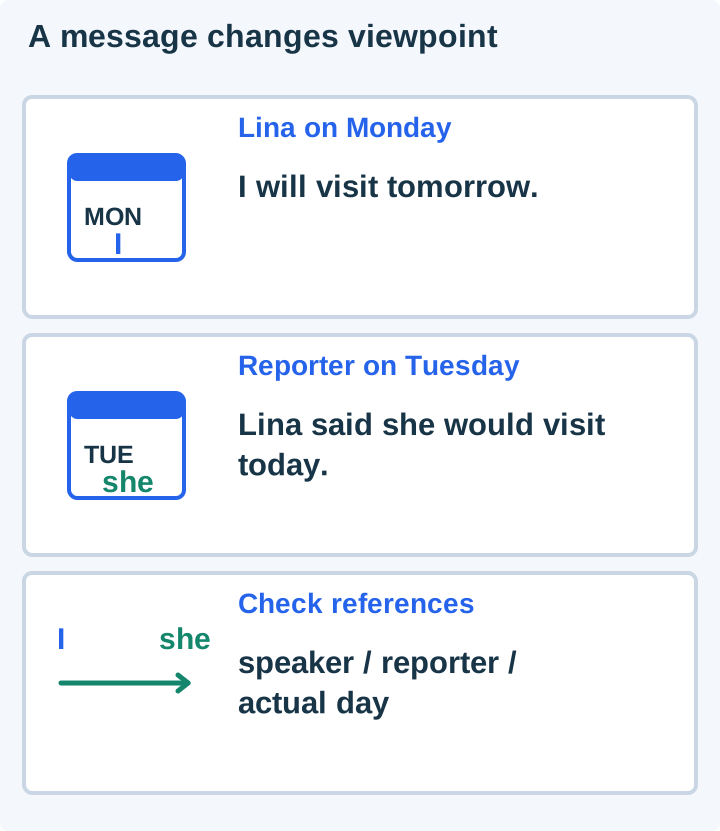
💡 Tomorrow becomes the next day when the message is reported on a different day.
She asked if I was ready.
💡 A reported yes/no question.
He asked whether the shop was open.
💡 Whether is another option.
She asked where I lived.
💡 Statement word order.
He asked why we had left.
💡 A wh-question report.
She asked who had called.
💡 The subject question remains structurally clear.
He told me to wait.
💡 A reported instruction.
She asked us to help.
💡 A reported request.
He told me not to touch it.
💡 A negative instruction.
Lina said that she needed a map.
💡 That is optional in many reports.
Lina said she needed a map.
💡 The same statement without that.
29.7 Common mistakes and why
❌ She told she was busy.
✅ She said she was busy. / She told me she was busy.
Tell normally needs a recipient in this pattern.
❌ She asked where did I live.
✅ She asked where I lived.
Reported questions use statement order.
❌ She said me she was tired.
✅ She told me she was tired.
Use told when you name the listener: told me. You can also say: She said she was tired.
29.8 Try it yourself
Step 1: Report something a friend said about their day.
Step 2: Report one yes/no question and one where question.
Step 3: Report a request using asked me to.
29.9 Five self-checks
Choose A or B for each question. Read the answers below after you finish.
1. She asked you, “Are you ready?” Which sentence reports her question correctly?
A. She asked if I was ready.
B. She asked if was I ready.
2. Which sentence correctly reports a question about your home?
A. She asked where did I live.
B. She asked where I lived.
3. She told you, “Don’t touch it.” Which sentence reports the instruction correctly?
A. She told me not to touch it.
B. She told me to not touched it.
4. Which sentence correctly uses told?
A. She told she was tired.
B. She told me she was tired.
5. She is still a teacher. Can you report her words as “She said she is a teacher”?
A. No, is must always change to was.
B. Yes, is can stay because the fact is still true.
Self-check answers and explanations
1. A — She asked if I was ready.
💡 After if, use I was, not was I.
2. B — She asked where I lived.
💡 In the report, use where I lived. Do not keep did before I.
3. A — She told me not to touch it.
💡 Use told me not to, followed by the basic verb touch.
4. B — She told me she was tired.
💡 Tell normally needs the listener here: she told me.
5. B — Yes, is can stay because the fact is still true.
💡 You do not always need to change the tense when the information remains true.
29.10 Remember these points
Said + message. Told + person + message.
Reported question: where I lived, not where did I live.
Instruction: told me to wait. Negative: told me not to touch it.
Review any self-check you missed. Then say three examples aloud without looking.
Further reading: direct indirect speech · english question words
Grammar references: Cambridge: Reported speech