Grammar Basics
Day 30 · 30 Days English Challenge
Countable and Uncountable Nouns: Choose the Right Quantity
· 6 min read
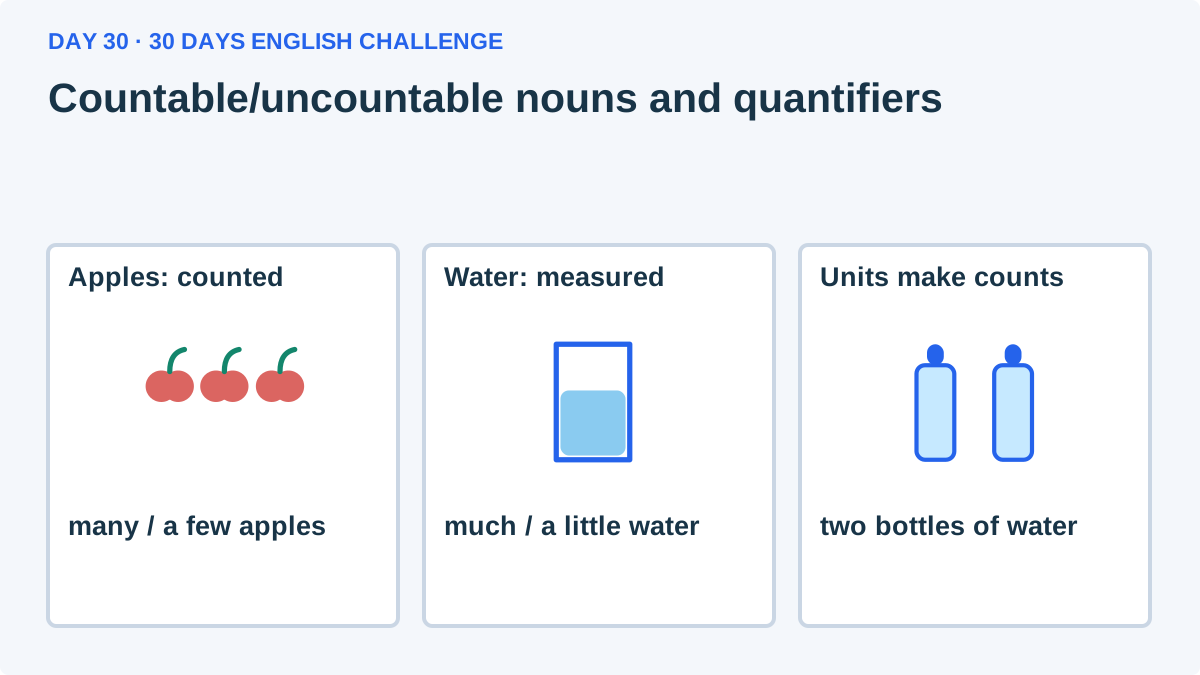
Day 30 speaking goal: Describe useful amounts, make an offer and explain whether you have enough.
Can you count it, or do you need to measure it? Use that answer to choose the right quantity words.
Jump to: Rules · Compare · Examples · Self-checks · Answers
30.1 Count things or measure an amount
| Learn | Simple English |
|---|---|
| Rule | Countable nouns can have numbers and plurals. Uncountable nouns usually need a unit when you count an amount. |
| Pattern | Three apples. Some water. Two bottles of water. |
| Example | I need two apples and a bottle of water. |
| Why | A word can change meaning: two coffees can mean two cups of coffee. Check unfamiliar nouns in a dictionary. |
30.2 Much or many?
| Learn | Simple English |
|---|---|
| Rule | Use many with plural things you count. Use much with uncountable amounts. A lot of works with both in everyday statements. |
| Pattern | How many apples? How much water? |
| Example | We have a lot of water. We do not have many apples. |
| Why | Use much water, not many water. Use many apples, not much apples. |
30.3 Some and any
| Learn | Simple English |
|---|---|
| Rule | Some is common in positive statements and offers. Any is common in questions and negatives. Any can also mean whichever you choose. |
| Pattern | Some apples. Any milk? Not any milk. |
| Example | Would you like some tea? Choose any apple. |
| Why | Some is allowed in questions, especially offers. Any is allowed in positive sentences when it means free choice. |
30.4 A few, few, a little and little
| Learn | Simple English |
|---|---|
| Rule | Use few/a few for countable plurals. Use little/a little for uncountable amounts. With “a”, the focus is positive: some are available. |
| Pattern | A few apples. Few apples. A little water. Little water. |
| Example | We have a few apples. We have little water. |
| Why | A few means some. Little stresses not much. A little does not guarantee enough: explain how much you need. |
30.5 Compare the patterns side by side
| Noun meaning | Useful quantity words | Example |
|---|---|---|
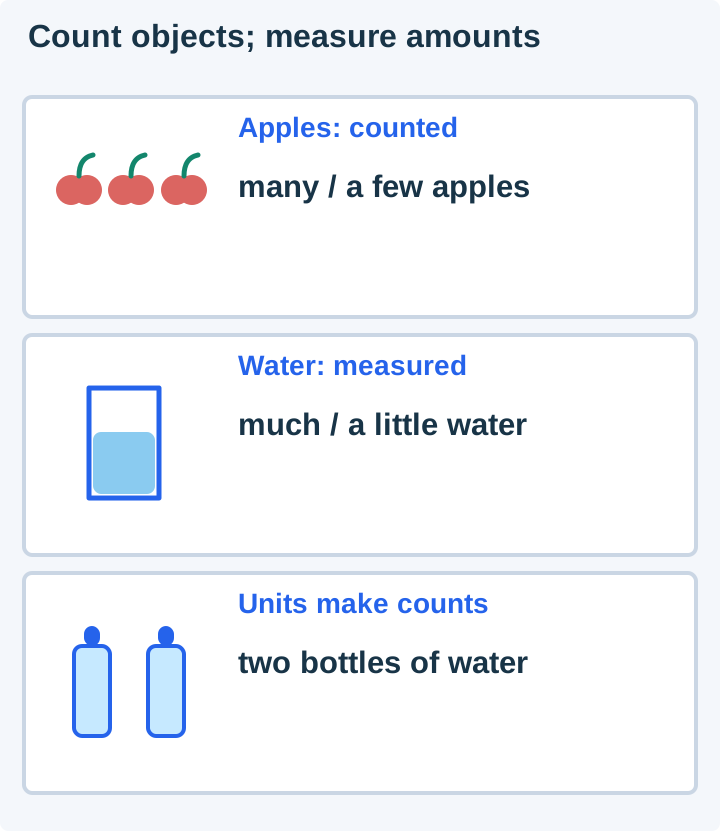
| Plural countable | many / few / a few | a few apples |
| Uncountable amount | much / little / a little | a little water |
| Both in context | some / any / a lot of | some apples; some water |
| Unit for an amount | bottle / cup / piece | two bottles of water |
30.6 Everyday examples: notice the meaning
We bought three apples.
💡 Separate countable items.
We bought some water.
💡 An uncountable amount.
We bought two bottles of water.
💡 Bottles provide countable units.
I need a piece of advice.
💡 Piece counts an uncountable meaning.
How many apples do we need?
💡 Many fits plural apples.
How much water is left?
💡 Much fits an amount.
There aren’t many cups.
💡 A countable negative.
There isn’t much milk.
💡 An uncountable negative.
We have a lot of milk.
💡 Natural affirmative quantity phrase.
Would you like some tea?
💡 Some in an offer.
Could I have some water?
💡 Some in a request.
Do we have any bread?
💡 An open question.
We don’t have any bread.
💡 Any in a negative.
Choose any apple.
💡 Any expresses free choice.
We have a few apples for a snack.
💡 Some items are available.
We have few apples left.
💡 Scarcity is emphasized.
There is a little water for a sip.
💡 Some amount remains.
There is little water left.
💡 Very limited availability is emphasized.
30.7 Common mistakes and why
❌ How much apples?
✅ How many apples?
Apples are plural countable items.
❌ I need an advice.
✅ I need some advice. / a piece of advice.
Advice is normally uncountable.
❌ We have a few water.
✅ We have a little water.
Water is uncountable here. Use a little for an amount, not a few.
30.8 Try it yourself
Step 1: Plan a picnic. Name things you can count and amounts you need to measure.
Step 2: Ask how many and how much. Offer something with some.
Step 3: Say what you have a few of and what you have little of.
30.9 Five self-checks
Choose A or B for each question. Read the answers below after you finish.
1. Choose the missing word: “How ___ apples do we need?”
A. many
B. much
2. Choose the missing word: “There is very ___ water left.”
A. few
B. little
3. You want one useful suggestion. Which phrase is correct?
A. an advice
B. a piece of advice
4. You are offering tea. Which question has the correct word order?
A. Would you like some tea?
B. Would like you some tea?
5. What does “We have a little water” tell us?
A. Some water is available.
B. No water is available.
Self-check answers and explanations
1. A — many
💡 You can count apples, so use many.
2. B — little
💡 Water is an uncountable amount here. Use little, not few.
3. B — a piece of advice
💡 Advice normally needs a unit when you count it. A piece of advice means one suggestion.
4. A — Would you like some tea?
💡 Put you between would and like. Some is natural in an offer.
5. A — Some water is available.
💡 A little means some. It does not guarantee enough water for every purpose.
30.10 Remember these points
Countable: many, few, a few.
Uncountable: much, little, a little.
Some and any work with both. Their meaning depends on the sentence.
Review any self-check you missed. Then say three examples aloud without looking.
Further reading: countable uncountable nouns · much vs many · some and any
Grammar references: Cambridge: Countable and uncountable nouns
All 30 days · Previous: Day 29 · Course complete