Grammar Basics
Much vs Many: Rules, Examples and Practice
· 4 min read
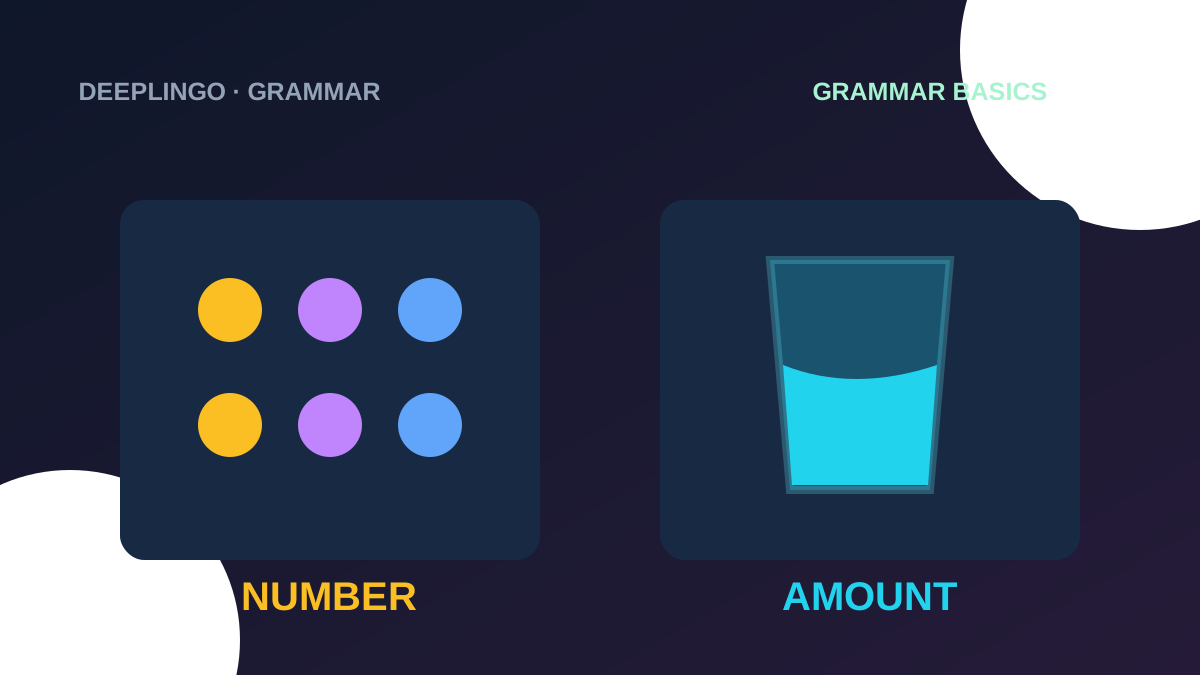
Use many with plural countable nouns and much with uncountable nouns: many questions, much information. The choice depends on how the noun is being used, not how large the amount is.
Count the items or measure the amount
| Type | Use | Examples |
|---|---|---|
| Plural countable nouns | many | many bags, many mistakes, many people |
| Uncountable nouns | much | much luggage, much advice, much water |
Countable nouns allow a number directly before the noun: three bags or seven questions. An uncountable noun describes an amount without that ordinary plural counting pattern. Furniture, information, advice and homework are normally uncountable in these meanings. To count units, name them: two pieces of furniture or three items of information.
How many chairs do we need?
💡 Chairs are separate countable items.
How much furniture fits in this room?
💡 Furniture is uncountable, even when it includes several items.
How much money did you bring?
💡 Money refers to an amount.
How many dollars did you spend?
💡 Dollars are countable units.
Questions, negatives and positive statements
Much and many are common in questions and negatives. In everyday positive statements, a lot of often sounds more natural than plain much: “We have a lot of time.” Many is also grammatical in positive statements, especially in a more formal style. A lot of works with both noun types: a lot of friends and a lot of work.
Much is natural after how, too, so, as and very in appropriate structures: “too much noise,” “so much effort,” and “not very much space.” Many uses the same patterns with plural countable nouns: “too many messages” and “so many choices.” Too means the amount or number is excessive; it does not simply mean a large quantity.
A noun can change its counting pattern
Compare “How much coffee is left?” with “How many coffees did you order?” Coffee can mean an uncountable drink, while coffees can mean countable servings. Learn the intended meaning rather than memorizing one permanent category for every word.
Common mistakes
❌ How many advice did she give you?
✅ How much advice did she give you?
Advice is normally uncountable. You can also ask how many pieces of advice.
❌ There are too much cars here.
✅ There are too many cars here.
Cars is a plural countable noun.
Practice: 12 questions
Try all twelve before reading the answers. Use the context in each sentence, not just a single signal word.
1. How ___ students are in your class? Choose much or many.
2. We don't have ___ time before the train leaves. Choose much or many.
3. How ___ furniture can the van carry? Choose much or many.
4. There are too ___ emails in my inbox. Choose much or many.
5. Did you spend ___ money? Choose much or many.
6. How ___ coins are in the jar? Choose much or many.
7. I haven't made ___ mistakes today. Choose much or many.
8. There is too ___ noise to hear the speaker. Choose much or many.
9. How ___ pieces of advice did she give you? Choose much or many.
10. How ___ homework do you have? Choose much or many.
11. How ___ cups of tea should I make? Choose much or many.
12. Choose the more natural everyday positive sentence: “We have much time” or “We have a lot of time.”
Answers and explanations
1. many
💡 Students is plural and countable.
2. much
💡 Time is an uncountable amount here.
3. much
💡 Furniture is normally uncountable.
4. many
💡 Emails are countable messages.
5. much
💡 Money is uncountable in this meaning.
6. many
💡 Coins can be counted individually.
7. many
💡 Mistakes is plural and countable.
8. much
💡 Noise is uncountable here.
9. many
💡 The counted noun is pieces, not advice.
10. much
💡 Homework is normally uncountable.
11. many
💡 Cups are countable units, even though tea itself is normally uncountable.
12. We have a lot of time.
💡 A lot of is the usual conversational choice in this positive statement.
Is many wrong in a positive sentence?
No. “Many learners use this guide” is grammatical. Register and context affect which quantity expression sounds most natural.
Should I use much or many with people?
Use many people when referring to a number of individuals. People has a plural countable meaning here.
Keep learning
Study countable and uncountable nouns, then compare some and any and singular and plural forms.
Grammar reference: British Council on countable and uncountable nouns. The lesson explanations and practice questions are original.
Practice in the 30 Days English Challenge: Day 30: Countable and Uncountable Nouns: Choose the Right Quantity