Grammar Basics
Day 16 · 30 Days English Challenge
Indefinite Pronouns: Someone, Anyone, Everyone and Nobody
· 5 min read
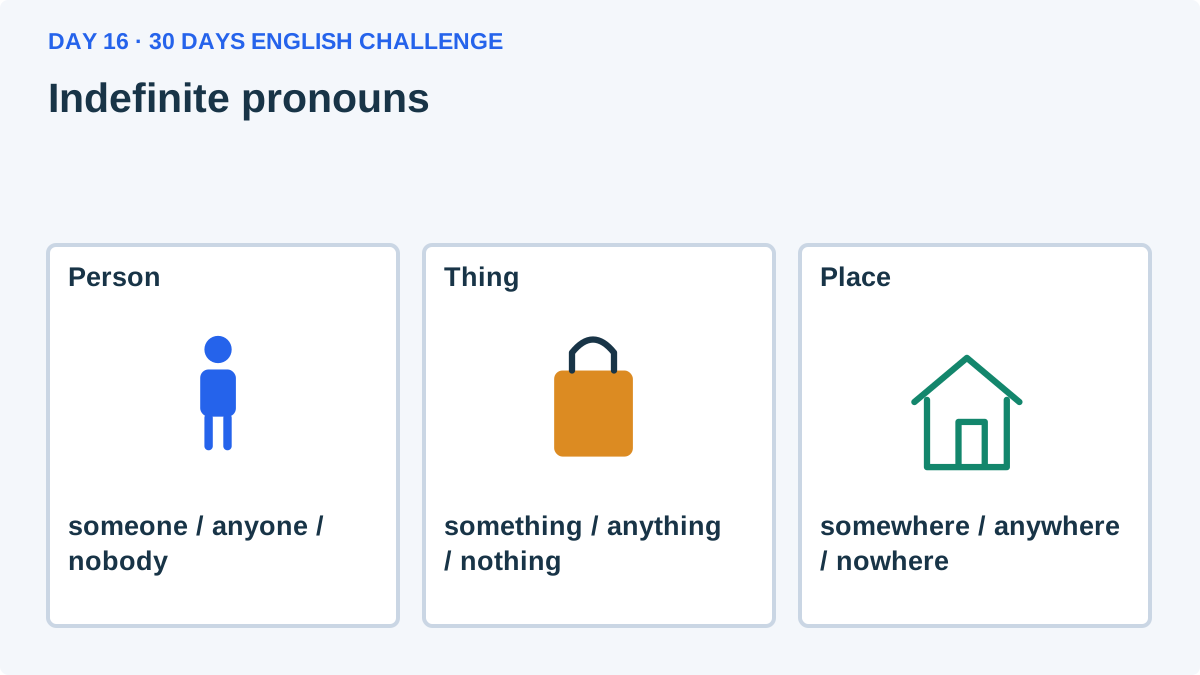
Day 16 speaking goal: Talk about people, places and things without naming every one.
Talk about people and things without naming them. Learn someone, anyone, everyone, nobody and related words.
Jump to: Rules · Compare · Examples · Self-checks · Answers
16.1 People, things and places
| Learn | Simple English |
|---|---|
| Rule | Use -one or -body for people, -thing for things and -where for places. Someone and somebody usually mean the same thing. |
| Pattern | Someone. Something. Somewhere. |
| Example | Someone is at the door. Something is in the bag. |
| Why | Someone is a person. Something is a thing. Somewhere quiet describes a place. |
16.2 Some- and any-
| Learn | Simple English |
|---|---|
| Rule | Some- is common when you say something exists. Any- is common in questions and negatives. These are common patterns, not absolute rules. |
| Pattern | Someone is here. Is anyone here? I cannot see anyone. |
| Example | Would you like something to drink? Anyone can join. |
| Why | Some- can appear in offers. Anyone can join means every person is allowed to join. |
16.3 Every- and no-
| Learn | Simple English |
|---|---|
| Rule | Everyone means all the people you mean. Nobody means not one person. Nobody already includes a negative meaning. |
| Pattern | Everyone is ready. Nobody is ready. |
| Example | I saw nobody. I did not see anybody. |
| Why | Both mean I saw no people. In standard English, avoid I did not see nobody for this meaning. |
16.4 Choose is and has
| Learn | Simple English |
|---|---|
| Rule | Someone, everyone and nobody take singular verbs: is and has. You can use they or them later for the person. |
| Pattern | Everyone is… Everyone has… If someone calls, tell them… |
| Example | Everyone has a ticket. If someone forgets theirs, help them. |
| Why | Use has after everyone. They and them avoid choosing he or she when you do not know the person. |
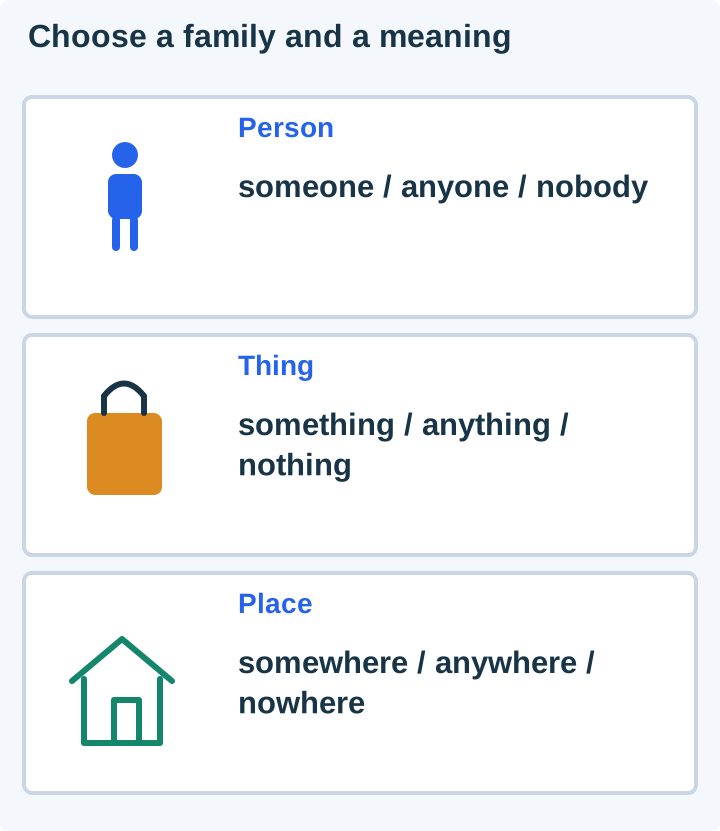
16.5 Compare the patterns side by side
| Meaning | People | Things / places |
|---|---|---|
| Unspecified | someone / somebody | something / somewhere |
| Open choice | anyone / anybody | anything / anywhere |
| All relevant members | everyone / everybody | everything / everywhere |
| None | nobody / no one | nothing / nowhere |
16.6 Everyday examples: notice the meaning
Someone is at the door.
💡 A person is there, but we do not say who.
Is anyone waiting?
💡 An open question.
Is someone at the door?
💡 The speaker may expect a visitor.
I don’t know anyone here.
💡 Any fits the negative context.
Anyone can join.
💡 Free choice, not a question.
Everyone has a ticket.
💡 Use has with everyone, not have.
Nobody is outside.
💡 One negative marker.
No one answered.
💡 No one is two words.
Something smells good.
💡 An unspecified thing.
Would you like something to drink?
💡 An offer expects a possible positive response.
I didn’t find anything.
💡 Anything fits the negative.
Everything is ready.
💡 Singular is follows everything.
Nothing is missing.
💡 Nothing supplies the negative meaning.
Let’s go somewhere quiet.
💡 A place word followed by an adjective.
You can sit anywhere.
💡 Free choice of place.
I looked everywhere.
💡 All relevant places.
There was nowhere to park.
💡 No suitable place.
If someone calls, ask them to wait.
💡 Them refers to the person meant by someone.
16.7 Common mistakes and why
❌ Everyone have a ticket.
✅ Everyone has a ticket.
Use has with everyone, not have.
❌ I didn’t see nobody.
✅ I didn’t see anybody.
“Nobody” already means no person. After “didn’t”, use “anybody” for this meaning.
❌ A useful something is here.
✅ Something useful is here.
Put useful after something: something useful.
16.8 Try it yourself
Step 1: Say where someone is and what something is.
Step 2: Ask a question with anyone.
Step 3: Make one sentence with everyone and one with nobody.
16.9 Five self-checks
Choose A or B for each question. Read the answers below after you finish.
1. Choose the missing word: “Everyone ___ ready.”
A. are
B. is
2. You saw no people. Choose the missing word: “I did not see ___.”
A. anyone
B. nobody
3. What does “Anyone can join” mean?
A. No person is allowed to join.
B. Every person is allowed to join.
4. Which word order is correct?
A. something useful
B. useful something
5. You do not know who called. Choose the missing word: “Someone called. Ask ___ to wait.”
A. them
B. they
Self-check answers and explanations
1. B — is
💡 Everyone takes is, even though it refers to many people.
2. A — anyone
💡 Use anyone after did not for this meaning. Nobody already includes a negative meaning.
3. B — Every person is allowed to join.
💡 Anyone can express free choice. It is allowed in positive sentences like this one.
4. A — something useful
💡 Put the describing word after something: something useful.
5. A — them
💡 Use them after ask. It can refer to one person whose identity is unknown.
16.10 Remember these points
Someone: a person. Something: a thing. Somewhere: a place.
Everyone is ready, not everyone are ready.
Nobody means no person.
Review any self-check you missed. Then say three examples aloud without looking.
Further reading: pronouns basics · some and any
Grammar references: Cambridge: Indefinite pronouns