Basics
Day 1 · 30 Days English Challenge
Subject Pronouns: Build Clear English Sentences
· 5 min read
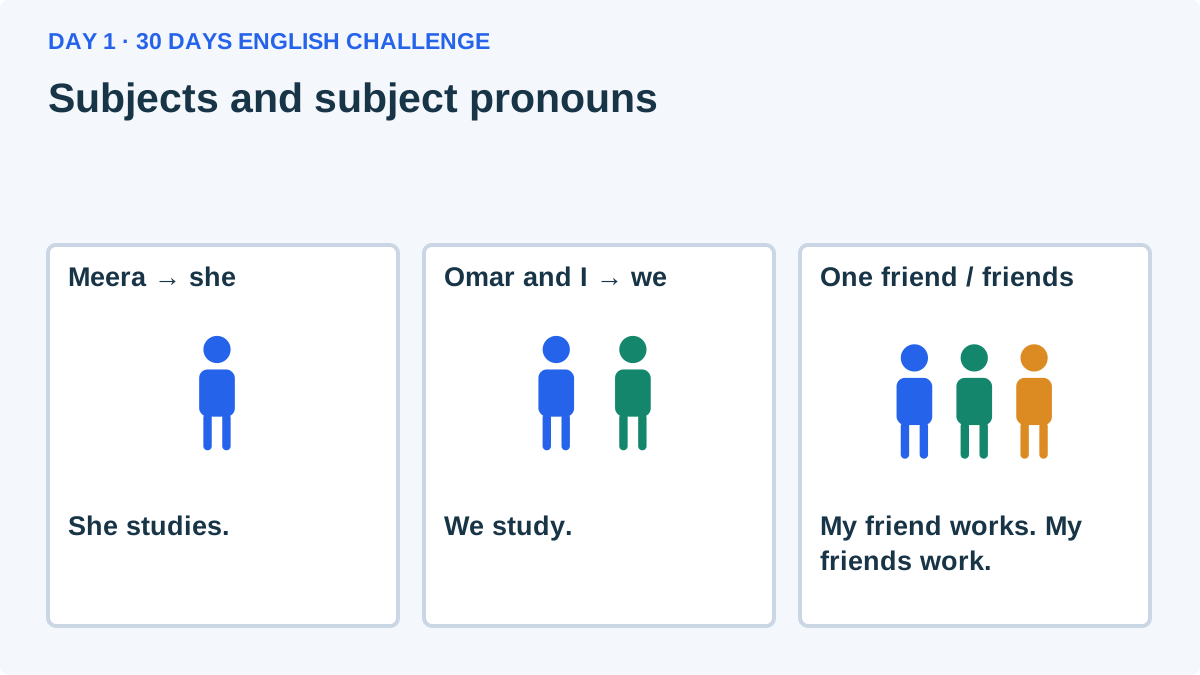
Day 1 speaking goal: Introduce people and describe their everyday activities without repeating every name.
Who is your sentence about? Start with that person or thing. Then choose a pronoun and a verb.
Jump to: Rules · Compare · Examples · Self-checks · Answers
1.1 Find the subject
| Learn | Simple English |
|---|---|
| Rule | The subject tells us who or what the sentence is about. Ask: who is doing this? |
| Pattern | Subject + verb + other information. |
| Example | Meera is preparing for an English test. |
| Why | Who is preparing? Meera. So Meera is the subject. |
1.2 One person or more?
| Learn | Simple English |
|---|---|
| Rule | Singular means one. Plural means more than one. Count people or things, not words. |
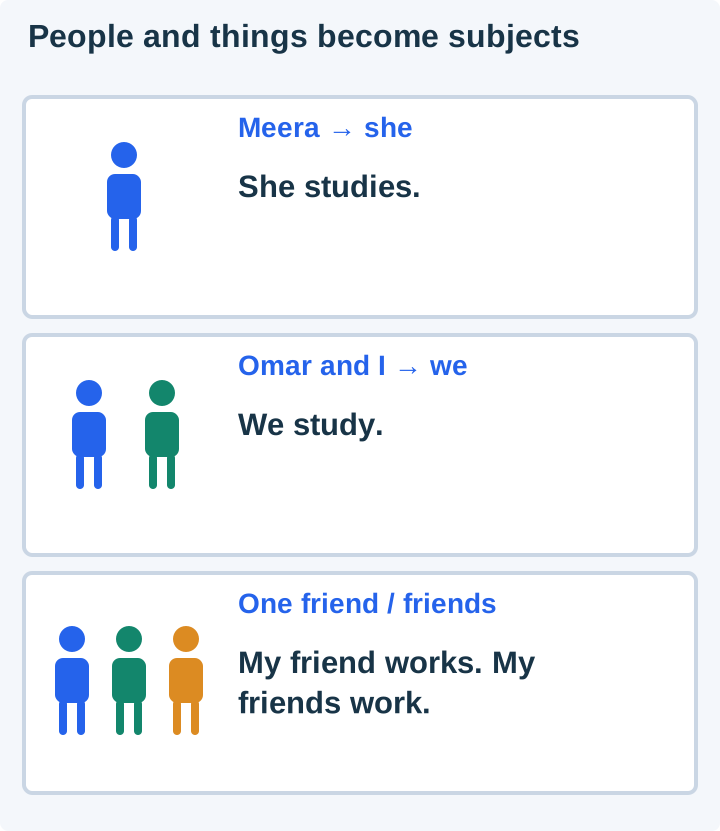
| Pattern | My friend works. My friends work. |
| Example | The little boy opened the door. |
| Why | The little boy is three words, but it names one person. |
1.3 Replace a repeated name
| Learn | Simple English |
|---|---|
| Rule | Use I, you, he, she, it, we or they instead of repeating a name. Make clear who you mean first. |
| Pattern | Meera → she. Omar and I → we. |
| Example | Meera studies English. She practises every evening. |
| Why | They can also mean one person. Use the pronouns that person uses. |
1.4 Choose work or works
| Learn | Simple English |
|---|---|
| Rule | For habits, use work with I, you, we and they. Use works with he, she, it or one named person. |
| Pattern | I work. She works. They work. |
| Example | My friend works here. My friends work here. |
| Why | Remember: I is one person, but we say I work. You can mean one person or several. |
1.5 Compare the patterns side by side
| Subject | Routine sentence |
|---|---|
| I / you | I work here. You work here. |
| He / she / it | He works here. She works here. It works well. |
| We / they | We work here. They work here. |
| One / several friends | My friend works here. My friends work here. |
1.6 Everyday examples: notice the meaning
Meera is preparing for an English test.
💡 Meera is the subject; the rest explains her activity.
The little boy opened the door.
💡 The complete subject is the little boy.
My sister reads every morning.
💡 One sister takes reads.
My sisters read every morning.
💡 Several sisters take read.
I work near the station.
💡 Even for one speaker, say “I work”, not “I works”.
You work very carefully.
💡 Use “you” for one listener or a group.
He cooks dinner on Fridays.
💡 He replaces a known person and takes cooks.
She walks to class.
💡 She is a subject pronoun before walks.
It opens at nine.
💡 It can refer to a previously named shop.
We study together.
💡 “We” includes the person speaking.
They live upstairs.
💡 They can refer to the neighbours.
A visitor is waiting. They need directions.
💡 Singular they refers to a person of unspecified gender.
My friend works in a library.
💡 The noun phrase names one friend.
My friends work in a library.
💡 More than one friend: use work, not works.
The bus stops outside.
💡 With “the bus”, add -s: stops.
The buses stop outside.
💡 With more than one bus, use “buses stop”.
Omar and I play chess.
💡 The combined subject can be replaced by we.
Meera studies at home. She likes quiet rooms.
💡 Introduce the name before using the pronoun.
1.7 Common mistakes and why
❌ My friend work here.
✅ My friend works here.
One friend: add -s to work.
❌ I works every day.
✅ I work every day.
Say I work, even though I means one person.
❌ Meera studies. Her likes music.
✅ Meera studies. She likes music.
Use she before likes. Her does not fit here.
1.8 Try it yourself
Step 1: Introduce yourself in two sentences.
Step 2: Introduce a friend. Use their name, then a pronoun.
Step 3: Describe what you and your friends do together.
1.9 Five self-checks
Choose A or B for each question. Read the answers below after you finish.
1. Who opened the door in “The little boy opened the door”?
A. The little boy.
B. The door.
2. Replace the second Meera with a pronoun: “Meera studies. ___ reads aloud.” Meera uses she.
A. Her
B. She
3. Choose the missing word: “I ___ at home.”
A. work
B. works
4. Choose the missing word: “My friend ___ at home.”
A. work
B. works
5. You do not know a visitor’s gender. Choose the pronoun: “A visitor left a bag. ___ may return.”
A. It
B. They
Self-check answers and explanations
1. A — The little boy.
💡 The little boy did the action. All three words name the subject.
2. B — She
💡 She is the subject form. Use it before reads.
3. A — work
💡 With I, use work without -s.
4. B — works
💡 One friend takes works. More than one friend takes work.
5. B — They
💡 They can refer to one person whose gender you do not know.
1.10 Remember these points
Find the subject.
Choose a clear pronoun.
Say I work, she works and they work.
Review any self-check you missed. Then say three examples aloud without looking.
Further reading: pronouns basics · subject verb agreement
Grammar references: Cambridge: Personal pronouns