Grammar Basics
Subject-Verb Agreement: Rules That Make Sense
· 3 min read
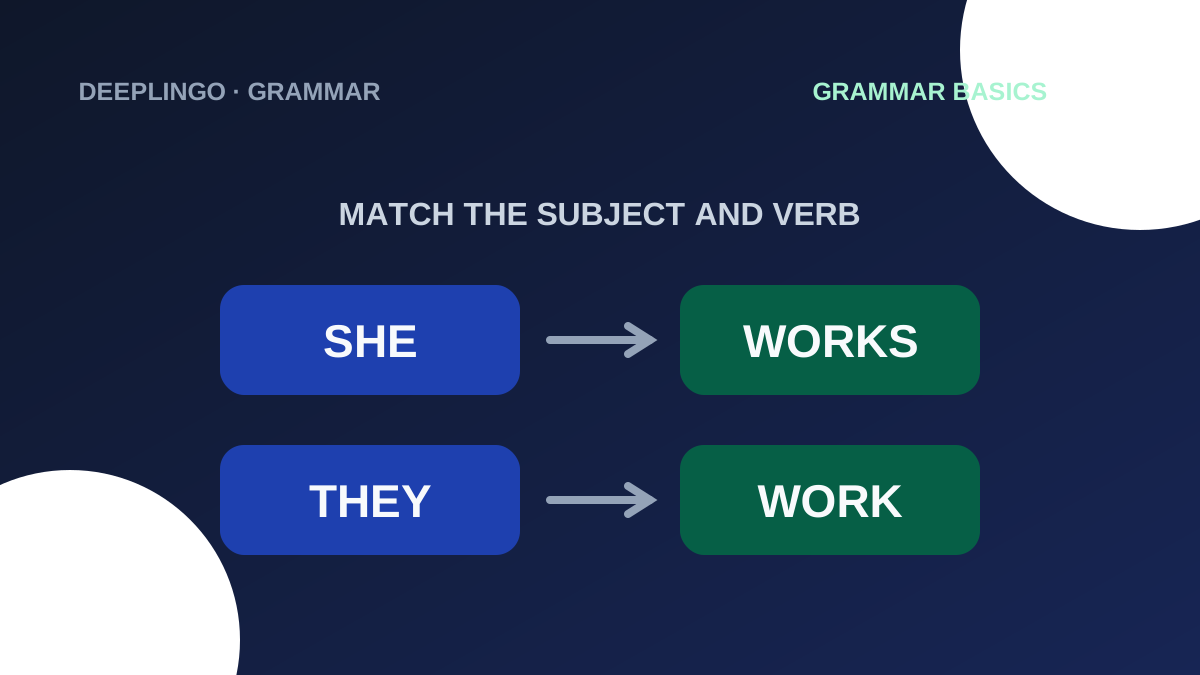
Subject–verb agreement matches the verb to the subject’s person and number. Find the head of the subject phrase rather than following the nearest noun.
Subject-verb agreement means the subject and verb must match in number. Singular subjects need singular verbs, plural subjects need plural verbs! 🎯
Basic Rule: Singular = Singular, Plural = Plural
The dog runs fast.
💡 Singular subject (dog) + singular verb (runs)
The dogs run fast.
💡 Plural subject (dogs) + plural verb (run)
She plays guitar.
💡 Singular pronoun + singular verb
They play guitar.
💡 Plural pronoun + plural verb
Tricky Cases: Words Between Subject and Verb
Don't be fooled! The verb agrees with the SUBJECT, not the noun closest to it.
The box of chocolates is on the table.
💡 Subject is "box" (singular), not "chocolates"
The students in the class are smart.
💡 Subject is "students" (plural), not "class"
One of my friends lives in Paris.
💡 "One" is singular, so use singular verb
Compound Subjects
Tom and Jerry are friends.
💡 Two subjects joined by "and" = plural
Neither the cat nor the dog is here.
💡 "Neither...nor" - verb matches the closer subject
Either my parents or my sister is coming.
💡 "Either...or" - verb matches the closer subject (sister = singular)
Indefinite Pronouns
| Always Singular | Always Plural | Can Be Both |
|---|---|---|
| everyone, everybody, everything | both, few, many | all, any, more |
| someone, somebody, something | several, others | most, none, some |
| anyone, anybody, anything | ||
| each, either, neither |
Everyone is welcome.
💡 "Everyone" is always singular
Many are called, few are chosen.
💡 "Many" and "few" are always plural
Continue learning
subject verb agreement exercises · Personal Pronouns: Subject and Object Forms
Practice in the 30 Days English Challenge: Day 1: Subject Pronouns: Build Clear English Sentences · Day 23: Each, Either and Neither: Understand the Difference