Grammar Basics
Day 23 · 30 Days English Challenge
Each, Either and Neither: Understand the Difference
· 5 min read
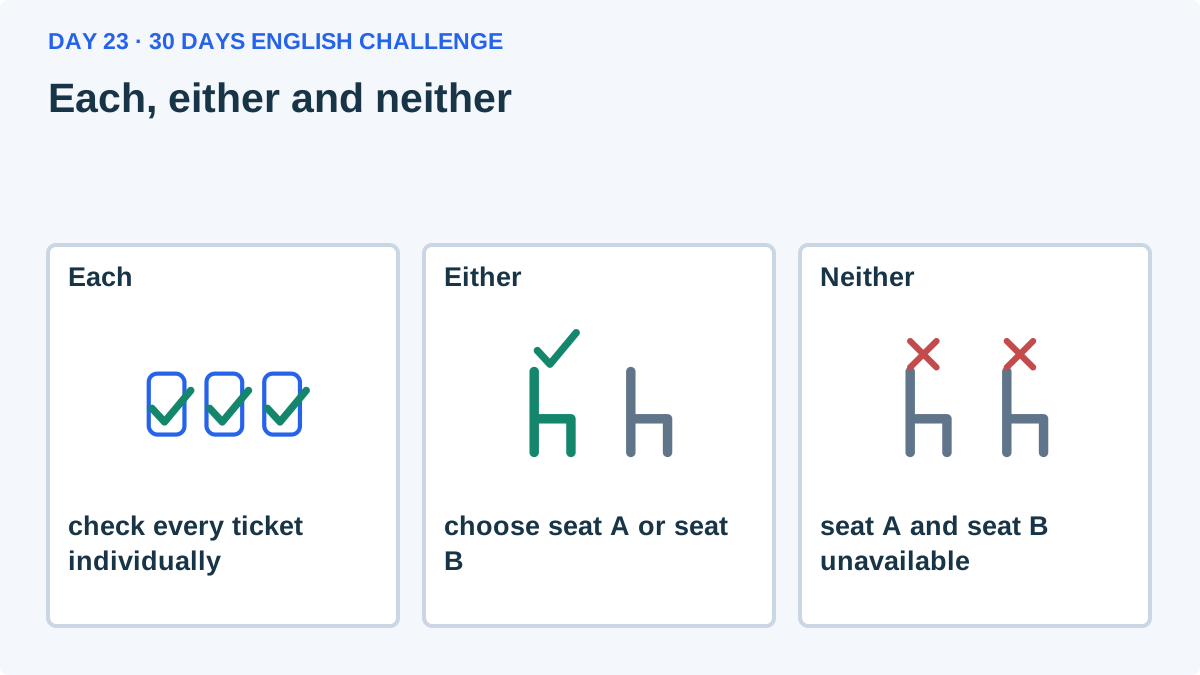
Day 23 speaking goal: Discuss people one by one and make choices between two alternatives.
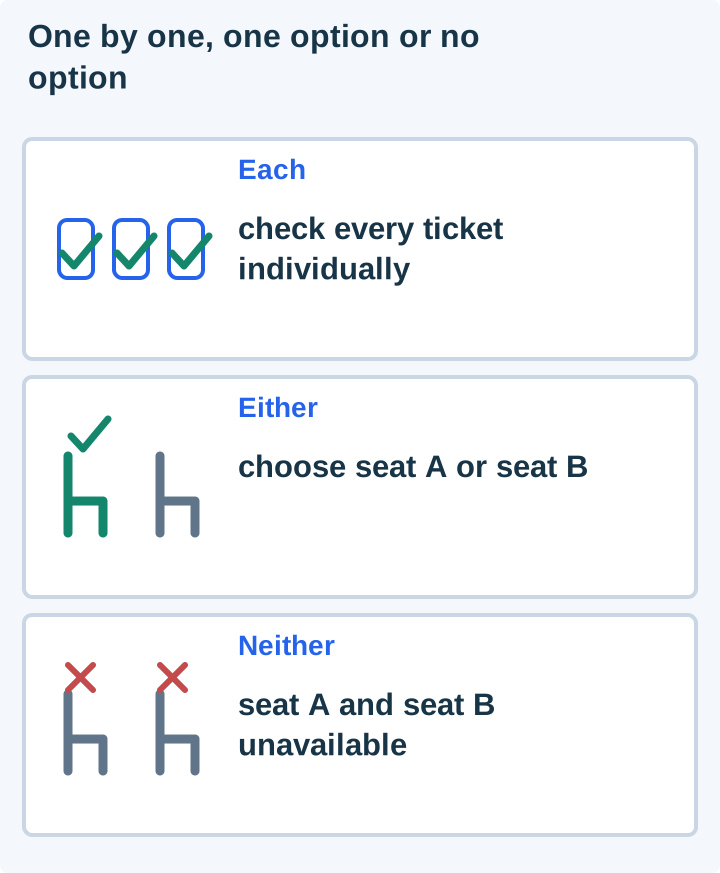
Each looks at people or things one by one. Either offers a choice of two. Neither rejects both choices.
Jump to: Rules · Compare · Examples · Self-checks · Answers
23.1 Each: one by one
| Learn | Simple English |
|---|---|
| Rule | Use each when you consider every person or thing separately. After each, use a singular noun. |
| Pattern | Each + singular noun + is/has. |
| Example | Each student has a book. |
| Why | Every student has one. Each of the students has a book is another useful pattern. |
23.2 Either: one of two
| Learn | Simple English |
|---|---|
| Rule | Use either when one of two choices is acceptable. You can choose this one or that one. |
| Pattern | Either + singular noun. Either of + the/these + plural noun. |
| Example | Either seat is fine. |
| Why | Both seats are acceptable choices, but you only need to choose one. |
23.3 Neither: not this one or that one
| Learn | Simple English |
|---|---|
| Rule | Neither means not one and not the other. It already has a negative meaning. |
| Pattern | Neither + singular noun + is/has. |
| Example | Neither seat is free. |
| Why | Seat one is not free. Seat two is not free. Do not add not to express this same meaning. |
23.4 Use them without a noun too
| Learn | Simple English |
|---|---|
| Rule | Each, either and neither can also stand alone when the choices are clear. Use is as a useful standard pattern with either/neither of. |
| Pattern | Either is fine. Neither of them is available. |
| Example | Which seat do you want? Either is fine. |
| Why | You may hear Neither of them are… in everyday speech. Practise is as the standard model here. |
23.5 Compare the patterns side by side
| Meaning | Before a noun | Standing / of phrase |
|---|---|---|
| Individual members | Each ticket is valid. | Each of the tickets is valid. |
| One of two | Either seat is fine. | Either is fine. |
| Not either of two | Neither seat is free. | Neither of them is free. |
23.6 Everyday examples: notice the meaning
Each student has a ticket.
💡 Individual singular subjects.
Each of the bags is labelled.
💡 Use “is” after “each of the bags”. Think about one bag at a time.
The students each have a ticket.
💡 The subject remains plural students.
I checked each door.
💡 Each goes before a singular noun: each door.
Each costs five euros.
💡 Each stands as a pronoun.
Either seat is fine.
💡 A choice between two.
Either of these routes is safe.
💡 One of the two routes.
You may choose either.
💡 Either stands alone.
We can walk either today or tomorrow.
💡 Either…or connects alternatives.
Either Lina or Ravi can help.
💡 Two possible helpers.
Neither seat is free.
💡 Both are unavailable.
Neither of the keys is correct.
💡 A standard singular model.
Neither is mine.
💡 Neither stands alone.
Neither Lina nor Ravi is here.
💡 Two singular alternatives.
I liked neither option.
💡 The object excludes both.
We gave each child a book.
💡 Each individual receives a book.
The children each received a book.
💡 “The children” is plural. “Each” tells us every child received a book.
Neither of them is ready.
💡 Use is as the standard pattern after neither of them.
23.7 Common mistakes and why
❌ Each students have a ticket.
✅ Each student has a ticket.
Before a noun, each selects singular here.
❌ Either seats is fine.
✅ Either seat is fine.
Before a noun, use either with a singular form: either seat.
❌ Neither seats are free.
✅ Neither seat is free.
Use a singular noun after neither: seat. With neither seat, use is.
23.8 Try it yourself
Step 1: Describe something each student has.
Step 2: Offer two choices and say Either is fine.
Step 3: Name two unavailable choices using neither.
23.9 Five self-checks
Choose A or B for each question. Read the answers below after you finish.
1. Choose the missing word: “Each ticket ___ valid.”
A. is
B. are
2. Choose the missing word: “The students each ___ a ticket.”
A. has
B. have
3. There are two seats. What does “Either seat is fine” mean?
A. You may choose one seat or the other.
B. Neither seat is suitable.
4. Both seats are occupied. Which sentence means no seat is free?
A. Either seat is free.
B. Neither seat is free.
5. Choose the missing word: “Neither of them ___ ready.”
A. is
B. be
Self-check answers and explanations
1. A — is
💡 Each ticket refers to one ticket at a time, so use is.
2. B — have
💡 The subject is the students, which means more than one student. Use have.
3. A — You may choose one seat or the other.
💡 Either allows a choice between the two seats.
4. B — Neither seat is free.
💡 Neither rejects both choices: seat one is not free, and seat two is not free.
5. A — is
💡 Use is here. Neither means not one and not the other.
23.10 Remember these points
Each: every one, considered separately.
Either: one choice out of two.
Neither: not one and not the other.
Review any self-check you missed. Then say three examples aloud without looking.
Further reading: subject verb agreement · subject verb agreement exercises
Grammar references: Cambridge: Each · Cambridge: Either · Cambridge: Neither