Grammar Basics
Day 24 · 30 Days English Challenge
English Adjectives: Describe People and Things Clearly
· 5 min read
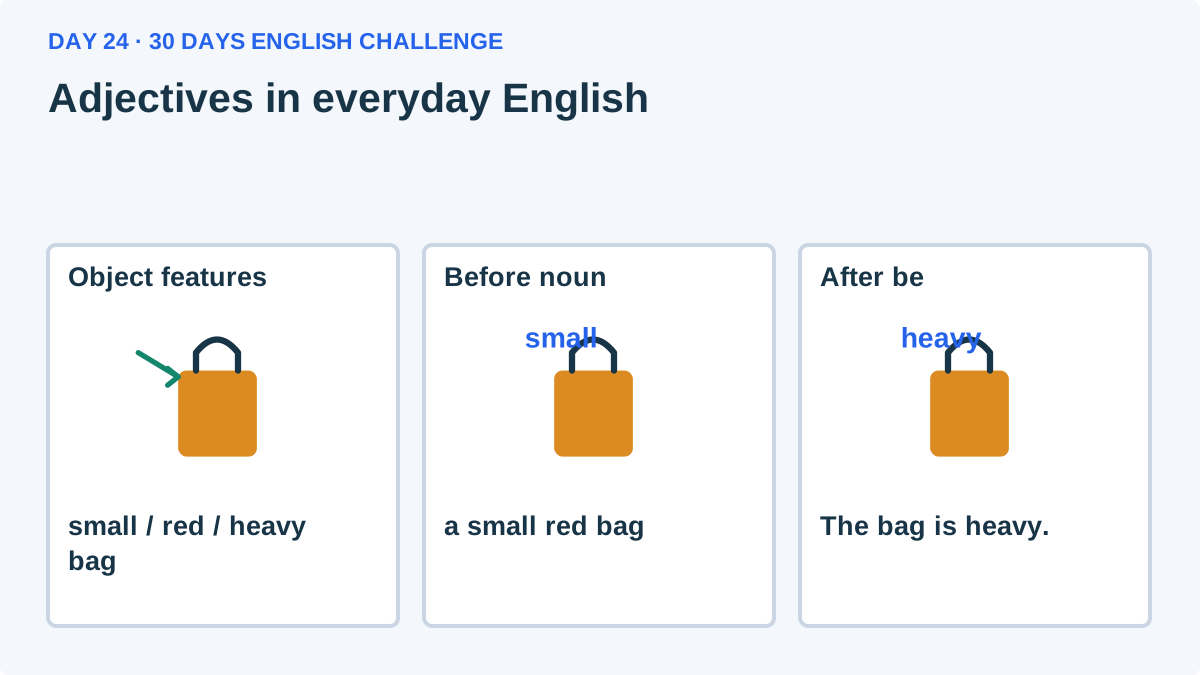
Day 24 speaking goal: Describe people and things with clear, well-placed adjectives.
Adjectives describe people and things. Learn where to put them and how to keep descriptions simple.
Jump to: Rules · Compare · Examples · Self-checks · Answers
24.1 Before a noun
| Learn | Simple English |
|---|---|
| Rule | An adjective can come before the thing it describes. It normally stays the same with one thing or several. |
| Pattern | A + adjective + noun. |
| Example | A quiet room. Two quiet rooms. |
| Why | Add -s to rooms, not quiet. Say quiet rooms, not quiets rooms. |
24.2 After be, look and feel
| Learn | Simple English |
|---|---|
| Rule | An adjective can follow be, look, seem, feel or smell to describe someone or something. |
| Pattern | Person/thing + is/looks/feels + adjective. |
| Example | She is tired. The soup smells good. |
| Why | Good describes the soup. It does not describe how the soup performs an action. |
24.3 Two adjectives together
| Learn | Simple English |
|---|---|
| Rule | With several adjectives, opinion often comes before size, age, colour or material. Start by practising just two adjectives. |
| Pattern | Opinion + size + noun. Age + colour + noun. |
| Example | A lovely small bag. An old red bicycle. |
| Why | These are common orders, not a reason to add many adjectives to every sentence. |
24.4 Choose the right description
| Learn | Simple English |
|---|---|
| Rule | Some adjectives describe feelings now. Others describe qualities. Interested describes your feeling; interesting describes what creates that feeling. |
| Pattern | I am interested. The lesson is interesting. |
| Example | I am interested in this lesson because it is interesting. |
| Why | Do not say I am interesting when you mean the lesson holds your attention. |
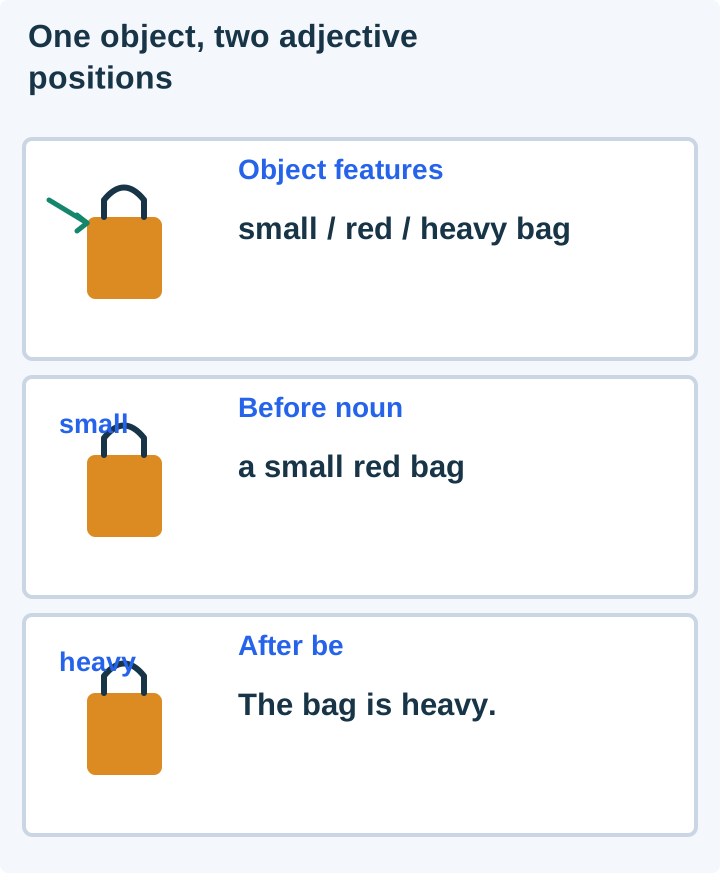
24.5 Compare the patterns side by side
| Position / job | Pattern | Example |
|---|---|---|
| Before a noun | adjective + noun | a quiet room |
| After a linker | subject + be + adjective | The room is quiet. |
| Plural noun | unchanged adjective | quiet rooms |
| Two descriptions | natural order tendency | a small red bag |
24.6 Everyday examples: notice the meaning
This is a quiet room.
💡 Adjective before a noun.
The room is quiet.
💡 Adjective after be.
We need strong chairs.
💡 The adjective stays unchanged with a plural.
The box is heavy.
💡 A useful lifting description.
Please take the red box.
💡 Colour identifies an item.
She seems tired.
💡 Seems links a state.
The soup smells good.
💡 Good describes the soup.
The bread feels soft.
💡 A linking sensory verb.
He looks calm.
💡 Looks means appears.
He looked carefully at the label.
💡 Carefully describes the action of looking.
It is a small red bag.
💡 A common size-before-colour order.
She has an old blue bicycle.
💡 A common age-before-colour order.
We bought a wooden table.
💡 Material description.
It is a lovely little café.
💡 Opinion precedes a size description.
The film is interesting.
💡 The film causes interest.
I am interested in the film.
💡 The speaker experiences interest.
The instructions are clear.
💡 A plural subject with an adjective.
She is patient with beginners.
💡 A quality in context.
24.7 Common mistakes and why
❌ Two reds bags are here.
✅ Two red bags are here.
Adjectives do not add plural -s here.
❌ The soup smells well, meaning pleasant.
✅ The soup smells good.
The linking use describes the soup with an adjective.
❌ I am interesting in the lesson.
✅ I am interested in the lesson.
Interested describes the person’s feeling in this meaning.
24.8 Try it yourself
Step 1: Describe an object using two adjectives.
Step 2: Describe how you feel now with I am….
Step 3: Make one sentence with interesting and one with interested.
24.9 Five self-checks
Choose A or B for each question. Read the answers below after you finish.
1. Describe two rooms. Which phrase is correct?
A. quiets rooms
B. quiet rooms
2. The soup tastes pleasant. Choose the missing word: “The soup smells ___.”
A. good
B. well
3. Which phrase uses the usual adjective order?
A. a red small bag
B. a small red bag
4. The lesson holds your attention. Choose the missing word: “I am ___ in this lesson.”
A. interesting
B. interested
5. Which sentence describes your friend’s patient character?
A. She is patient.
B. She is patiently.
Self-check answers and explanations
1. B — quiet rooms
💡 Add plural -s to rooms, not to the adjective quiet.
2. A — good
💡 Good describes the soup after smells. Well usually describes how an action is done.
3. B — a small red bag
💡 Size commonly comes before colour: small red.
4. B — interested
💡 Interested describes your feeling. Interesting describes something that holds your attention.
5. A — She is patient.
💡 After is, use the adjective patient to describe her.
24.10 Remember these points
Adjective before a noun: a quiet room.
Adjective after be: The room is quiet.
Adjectives normally do not take plural -s.
Review any self-check you missed. Then say three examples aloud without looking.
Further reading: comparative superlative · action verbs vs state verbs
Grammar references: Cambridge: Adjectives