Grammar Basics
Day 25 · 30 Days English Challenge
English Adverbs: How, When, How Often and How Much
· 5 min read
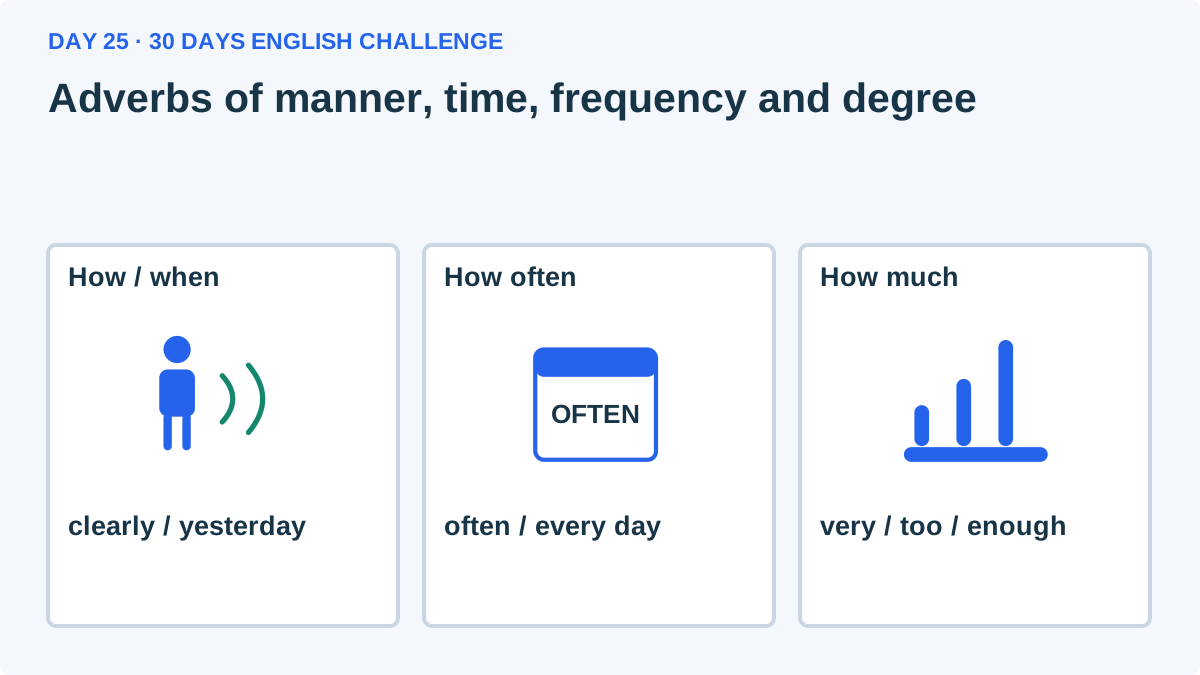
Day 25 speaking goal: Explain how, when, how often and how much something happens.
Adverbs add details: how, when, how often or how much. Learn one clear pattern for each kind.
Jump to: Rules · Compare · Examples · Self-checks · Answers
25.1 Manner: how?
| Learn | Simple English |
|---|---|
| Rule | An adverb of manner describes how someone does an action. Many end in -ly, but not all do. |
| Pattern | Action verb + adverb. |
| Example | She speaks clearly. He runs fast. |
| Why | Fast and hard can be adverbs without -ly. Good is an adjective; well often describes an action. |
25.2 Time: when?
| Learn | Simple English |
|---|---|
| Rule | Time words and phrases tell us when something happens. Many fit at the start or end of a sentence. |
| Pattern | Person + action + time. |
| Example | We met yesterday. Tomorrow, I will call you. |
| Why | Yesterday and tomorrow tell us when. Choose the verb form to match the whole message. |
25.3 Frequency: how often?
| Learn | Simple English |
|---|---|
| Rule | Words such as always, often and never tell us how often something happens. Usually put them before ordinary verbs, but after be. |
| Pattern | I often walk. She is usually early. |
| Example | I often study at home. She is always helpful. |
| Why | Often comes before study. Always comes after is. With a helping verb: I have never tried it. |
25.4 Degree: how much?
| Learn | Simple English |
|---|---|
| Rule | Very makes a description stronger. Too means more than suitable. Enough means as much as needed. |
| Pattern | Very hot. Too hot. Warm enough. Enough time. |
| Example | The tea is too hot to drink. It is not cool enough yet. |
| Why | Enough comes after an adjective, but before a noun: warm enough, enough water. |
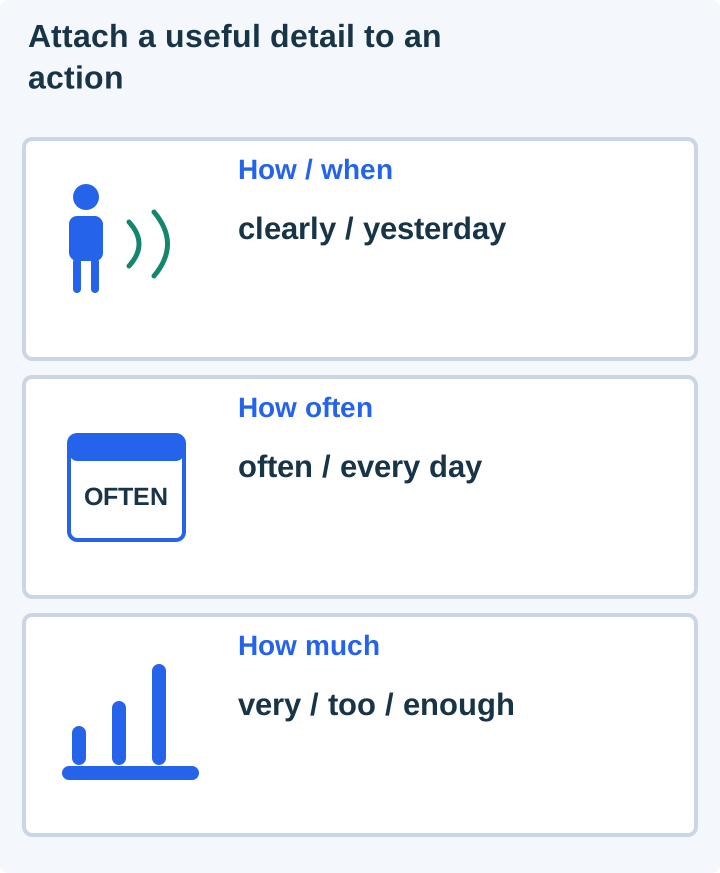
25.5 Compare the patterns side by side
| Type | Question | Example |
|---|---|---|
| Manner | How? | She speaks clearly. |
| Time | When? | We met yesterday. |
| Frequency | How often? | I often walk. |
| Degree | To what extent? | It is too hot. |
25.6 Everyday examples: notice the meaning
She speaks clearly.
💡 “Clearly” tells us how she speaks: her words are easy to understand.
He runs fast.
💡 Fast is an adverb without -ly.
She works hard.
💡 Hard means with effort.
He hardly works.
💡 Hardly means almost not.
She plays well.
💡 Well describes performance.
It is a good game.
💡 Good describes a noun.
We met yesterday.
💡 Time at the end.
Tomorrow, I will call.
💡 Time at the beginning.
She is working now.
💡 A current time expression.
I often walk to work.
💡 Frequency before an ordinary verb.
She is usually early.
💡 Frequency after main be.
I have never tried it.
💡 Never goes after have and before tried.
We practise every day.
💡 A frequency phrase at the end.
The room is very warm.
💡 “Very” makes “warm” stronger.
The soup is too hot to drink.
💡 It is hotter than you can comfortably drink.
The instructions are clear enough.
💡 Enough follows an adjective.
We have enough time.
💡 Enough precedes a noun.
She is friendly.
💡 Friendly is an adjective, not automatically an adverb.
25.7 Common mistakes and why
❌ He runs fastly.
✅ He runs fast.
Fast is the ordinary adverb.
❌ She is a well singer.
✅ She is a good singer.
The noun description needs good.
❌ The room is enough warm.
✅ The room is warm enough.
Enough follows the adjective in this pattern.
25.8 Try it yourself
Step 1: Say how you do an activity using an adverb.
Step 2: Say when and how often you do it.
Step 3: Describe something with too and something with enough.
25.9 Five self-checks
Choose A or B for each question. Read the answers below after you finish.
1. Choose the missing word: “He runs ___.”
A. fast
B. fastly
2. You walk to work four days a week. Complete: “I ___ walk to work.”
A. never
B. often
3. Put usually after is. Which sentence follows this pattern?
A. She is usually early.
B. She usually is early.
4. Which phrase has the correct word order?
A. enough clear
B. clear enough
5. What does “I hardly work on Sundays” mean?
A. I work with a lot of effort on Sundays.
B. I do almost no work on Sundays.
Self-check answers and explanations
1. A — fast
💡 Fast is the usual adverb. Do not add -ly.
2. B — often
💡 Often means many times. Never means not at any time, so it does not fit this routine.
3. A — She is usually early.
💡 The practice pattern puts usually after is. The other order can also be grammatical, especially for emphasis.
4. B — clear enough
💡 Put enough after the adjective: clear enough.
5. B — I do almost no work on Sundays.
💡 Hardly means almost not. Hard, without -ly, means with effort.
25.10 Remember these points
Manner: how? Time: when?
Frequency: how often? Degree: how much?
Many adverbs end in -ly; fast, hard and well do not.
Review any self-check you missed. Then say three examples aloud without looking.
Further reading: action verbs vs state verbs · comparative superlative
Grammar references: Cambridge: Adverb phrases: types and meanings