Basics
Day 6 · 30 Days English Challenge
Relative Pronouns: Connect Ideas with Who, Which and That
· 6 min read
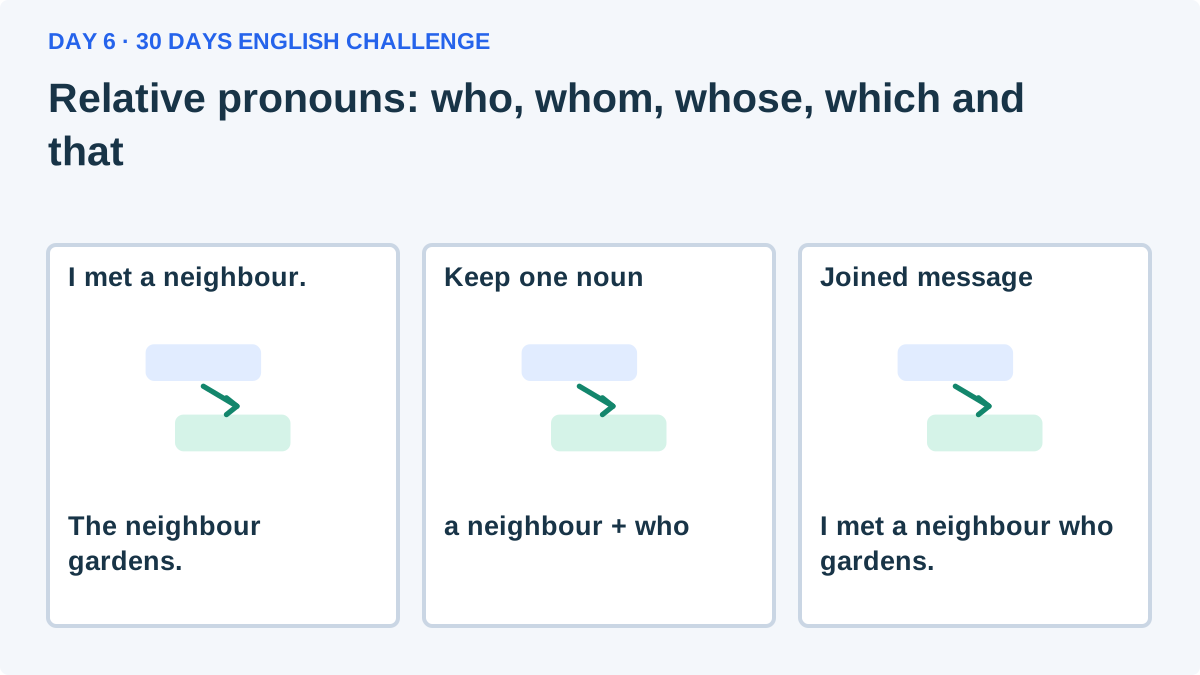
Day 6 speaking goal: Join short messages so a listener knows which person or thing you mean.
Join two ideas without repeating a name. Use who, whose, which or that to add useful information.
Jump to: Rules · Compare · Examples · Self-checks · Answers
6.1 Who and whom: people
| Learn | Simple English |
|---|---|
| Rule | Use who to add information about a person. Whom is a more formal form when that person receives the action. |
| Pattern | A person who + verb. |
| Example | The woman who lives upstairs is a teacher. |
| Why | In everyday English, the person who I met is natural. Whom I met is more formal. |
6.2 Whose: belonging to someone
| Learn | Simple English |
|---|---|
| Rule | Use whose before a noun to show who something belongs to. |
| Pattern | Person + whose + noun + verb. |
| Example | This is the boy whose bag is missing. |
| Why | The bag belongs to the boy. Whose joins that information to the sentence. |
6.3 Which and that: things
| Learn | Simple English |
|---|---|
| Rule | Use which or that to identify a thing. That can also identify people in this pattern. |
| Pattern | Thing + which/that + words that identify it. |
| Example | The book that I borrowed is useful. |
| Why | The book which I borrowed is also correct here. Both tell us which book. |
6.4 When commas change the meaning
| Learn | Simple English |
|---|---|
| Rule | Without commas, the added words identify which person or thing. With commas, they add extra information about someone or something already clear. |
| Pattern | Identifying: no commas. Extra information: commas. |
| Example | My brother, who lives in Chennai, is visiting. |
| Why | The commas add a detail about my brother. For extra information with commas, use who or which, not that. |
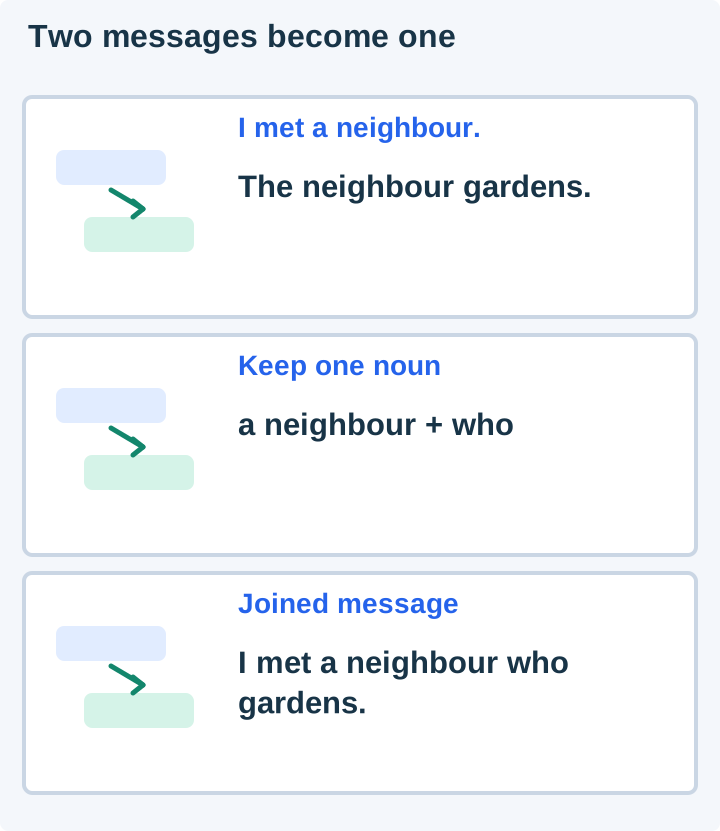
6.5 Compare the patterns side by side
| Job | Relative word | Example |
|---|---|---|
| Person doing action | who / that | The friend who called is here. |
| Person receiving action | who / whom / that | The friend whom I called is here. |
| Possession | whose | The friend whose bike broke is here. |
| Thing | which / that | The bike that broke is outside. |
6.6 Everyday examples: notice the meaning
The woman who teaches us is patient.
💡 Who is the relative subject.
The man who I met was friendly.
💡 Object who is common in conversation.
The man whom I met was friendly.
💡 Whom gives a more formal object form.
The colleague to whom I wrote replied.
💡 Whom comes after to in this formal pattern.
The colleague who I wrote to replied.
💡 A natural less formal alternative.
The student whose bag is red is waiting.
💡 Whose introduces possession.
The shop whose window broke is closed.
💡 Whose can refer to a thing.
The book which I borrowed is useful.
💡 Which refers to a thing.
The book that I borrowed is useful.
💡 That also tells us which thing you mean.
The book I borrowed is useful.
💡 You can leave out “that” here because “I” does the borrowing.
The book that fell is damaged.
💡 Keep “that”: it tells us what fell. There is no other subject before “fell”.
The person that called left a message.
💡 That can identify a person.
Ravi, who lives nearby, can help.
💡 Commas mark an extra detail.
My phone, which is new, works well.
💡 Which adds extra information about a thing already identified.
The room where we meet is upstairs.
💡 Where introduces a place relationship.
I know a cook who makes excellent soup.
💡 The added words describe a person already mentioned.
She found the keys that I lost.
💡 The added words tell us which keys.
The family whose car stopped needs help.
💡 The associated car identifies the family.
6.7 Common mistakes and why
❌ The neighbour who he gardens is kind.
✅ The neighbour who gardens is kind.
“Who” already means the neighbour here. Do not add “he”.
❌ Ravi, that lives nearby, is here.
✅ Ravi, who lives nearby, is here.
For extra information about a person after a comma, use who, not that.
❌ The student who’s phone rang apologized.
✅ The student whose phone rang apologized.
Possession needs whose, not who is.
6.8 Try it yourself
Step 1: Describe a person using who.
Step 2: Describe something you own using which or that.
Step 3: Add a sentence with whose, such as a friend whose dog is small.
6.9 Five self-checks
Choose A or B for each question. Read the answers below after you finish.
1. Join these ideas: “I know a woman. She repairs phones.” Which sentence is correct?
A. I know a woman who repairs phones.
B. I know a woman which repairs phones.
2. The bike belongs to the man. Choose the missing word: “The man ___ bike broke is here.”
A. who’s
B. whose
3. You met a person yesterday. Which phrase sounds natural in everyday English?
A. the person who I met
B. the person whose I met
4. Choose the missing word: “Mira, ___ lives nearby, is coming.”
A. that
B. who
5. Choose the missing word: “The bag ___ fell is mine.”
A. whose
B. that
Self-check answers and explanations
1. A — I know a woman who repairs phones.
💡 Use who for the woman doing the repairs.
2. B — whose
💡 Whose shows that the bike belongs to the man. Who’s means who is or who has.
3. A — the person who I met
💡 Who can refer to the person you met. Whom is a more formal alternative here.
4. B — who
💡 Use who for this extra detail about a person after a comma.
5. B — that
💡 That joins the information and tells us which bag: the one that fell.
6.10 Remember these points
Who: a person. Whose: belonging to someone.
Which: a thing. That: a person or thing in identifying information.
Commas can change the meaning.
Review any self-check you missed. Then say three examples aloud without looking.
Further reading: pronouns basics · parts of a sentence
Grammar references: Cambridge: Relative pronouns