Basics
Day 7 · 30 Days English Challenge
Will, Shall, May and Can: Ability, Offers and Permission
· 5 min read
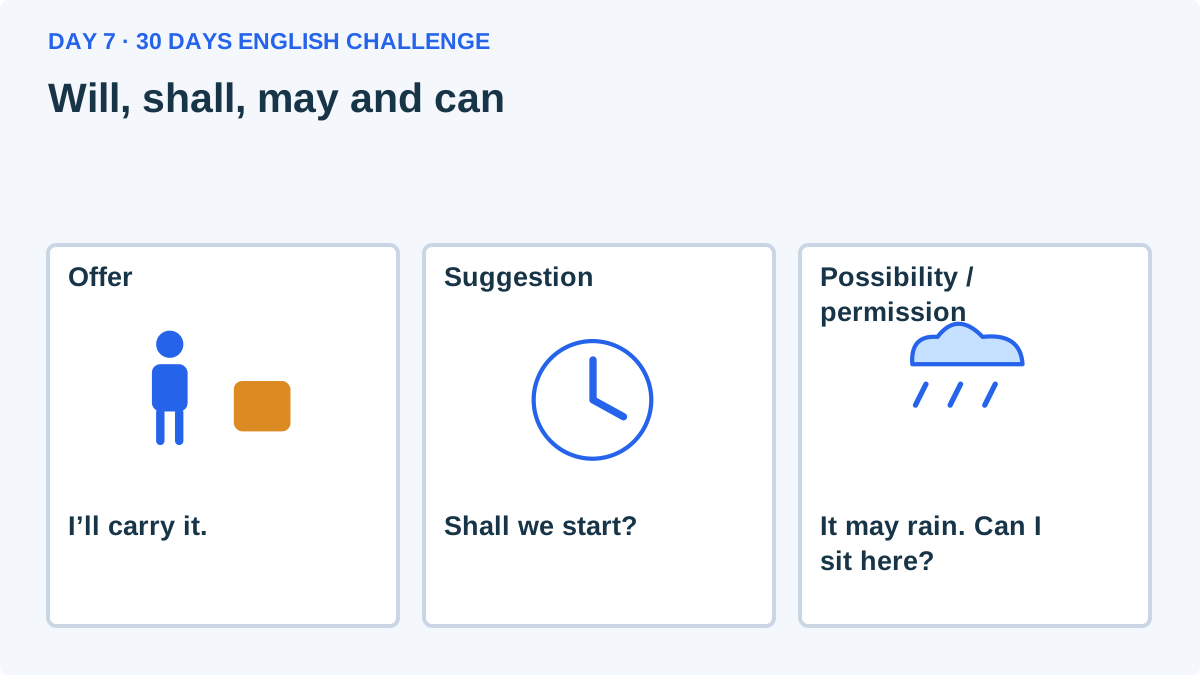
Day 7 speaking goal: Make an offer, discuss a possibility and ask for permission naturally.
Use will, shall, may and can to make decisions, offer help and talk about what is possible.
Jump to: Rules · Compare · Examples · Self-checks · Answers
7.1 Will: decisions and promises
| Learn | Simple English |
|---|---|
| Rule | Use will for a decision made now, a promise or a prediction. The meaning depends on the situation. |
| Pattern | Person + will + basic verb. |
| Example | The bus is cancelled. I will walk home. |
| Why | I will walk is a decision here. I will call you tomorrow can be a promise. |
7.2 Shall: offers and suggestions
| Learn | Simple English |
|---|---|
| Rule | Shall I…? offers help. Shall we…? suggests doing something together. These patterns are especially common in British English. |
| Pattern | Shall I/we + basic verb? |
| Example | Shall I carry your bag? Shall we sit here? |
| Why | The first offers help. The second asks for agreement about a plan. |
7.3 May: perhaps or permission
| Learn | Simple English |
|---|---|
| Rule | May can mean perhaps. May I…? is a polite way to ask permission. |
| Pattern | It may + verb. May I + verb? |
| Example | It may rain. May I come in? |
| Why | May rain means rain is possible. May I come in? asks if entering is allowed. |
7.4 Can: ability and permission
| Learn | Simple English |
|---|---|
| Rule | Can describes an ability. Can I…? can also ask permission in everyday English. |
| Pattern | Person + can + basic verb. |
| Example | I can swim. Can I use your phone? |
| Why | I can swim describes a skill. Can I use…? asks permission, not about my skill. |
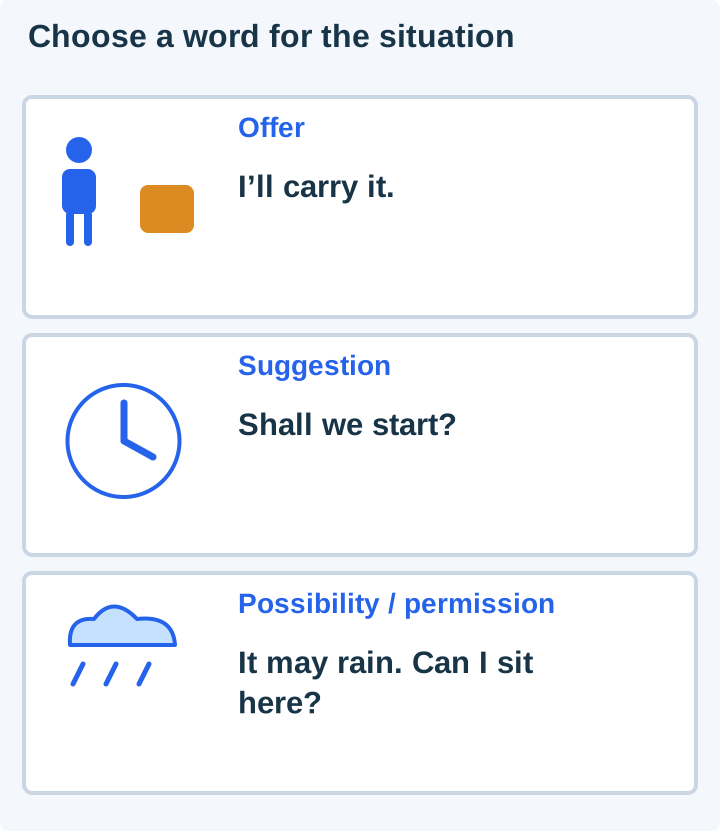
7.5 Compare the patterns side by side
| Modal | Situation | Example |
|---|---|---|
| will | Decision or promise | I’ll send the address. |
| shall | Offer or suggestion | Shall we leave now? |
| may | Possibility or formal permission | It may rain. May I enter? |
| can | Ability or permission | I can cook. Can I sit here? |
7.6 Everyday examples: notice the meaning
I’ll carry your bag.
💡 An immediate offer.
I will call you tonight.
💡 A promise in context.
The journey will take an hour.
💡 A prediction about duration.
Will you join us?
💡 A question about willingness or plans.
I won’t forget the ticket.
💡 A negative promise.
Shall I close the door?
💡 The speaker offers an action.
Shall we take a break?
💡 A shared suggestion.
Shall I write the address down?
💡 An offer to help.
It may rain later.
💡 An uncertain possibility.
The café may be closed.
💡 The speaker does not know for sure.
May I come in?
💡 A formal permission request.
You may leave after the meeting.
💡 Permission is granted.
I can swim.
💡 Personal ability.
She can repair bicycles.
💡 Can does not take -s.
Can I borrow your pen?
💡 A normal permission request.
We can hear the music outside.
💡 Circumstances make hearing possible.
I can’t lift this box.
💡 Inability in the situation.
Can you see the sign?
💡 A question about present ability or perception.
7.7 Common mistakes and why
❌ She cans swim.
✅ She can swim.
Say can, may or will with he and she too. Do not add -s.
❌ I will to call.
✅ I will call.
After will, use call without to.
❌ She may arrives late.
✅ She may arrive late.
After may, use the basic verb: arrive, not arrives.
7.8 Try it yourself
Step 1: Make one promise with will.
Step 2: Offer help with Shall I…?
Step 3: Say one ability with can and one possibility with may.
7.9 Five self-checks
Choose A or B for each question. Read the answers below after you finish.
1. Your friend needs help with a bag. Make an offer: “I ___ carry that for you.”
A. will
B. wills
2. Suggest taking a break together. Which question is correct?
A. Shall we taking a break?
B. Shall we take a break?
3. Which sentence correctly describes her cooking ability?
A. She can cook.
B. She can to cook.
4. What is someone asking with “May I enter?”
A. What will happen in the future.
B. Permission to come in.
5. You want to sit in a free chair. Which question asks permission naturally?
A. Can I sit here?
B. Can I sitting here?
Self-check answers and explanations
1. A — will
💡 Use will with I. Keep carry in its basic form.
2. B — Shall we take a break?
💡 Shall we…? suggests doing something together. Use take after shall.
3. A — She can cook.
💡 Use cook directly after can, without to.
4. B — Permission to come in.
💡 May I…? politely asks whether an action is allowed.
5. A — Can I sit here?
💡 Can I…? can ask permission. Use sit, not sitting.
7.10 Remember these points
Will: a decision, promise or prediction.
Shall I/we: an offer or suggestion.
May: possibility or permission. Can: ability or permission.
Review any self-check you missed. Then say three examples aloud without looking.
Further reading: modal verbs guide · future simple tense
Grammar references: Cambridge: Modal verbs: meanings and uses