Basics
Day 8 · 30 Days English Challenge
Would, Should, Could and Might: Uses and Examples
· 5 min read
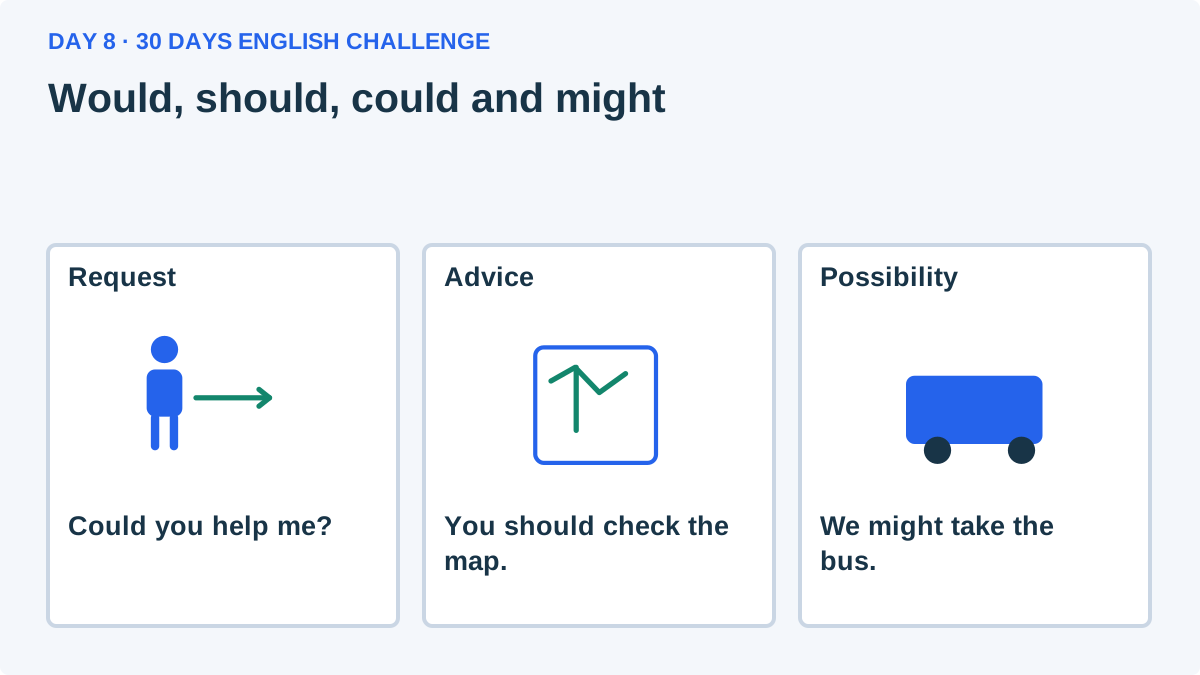
Day 8 speaking goal: Ask politely, offer useful advice and discuss an uncertain possibility.
Make polite requests, give advice and talk about possibilities. Choose the word that fits your message.
Jump to: Rules · Compare · Examples · Self-checks · Answers
8.1 Would: polite requests and imagined results
| Learn | Simple English |
|---|---|
| Rule | Use would for a polite request or an imagined result. Would like means want, said politely. |
| Pattern | Would you + verb? I would like + noun/to + verb. |
| Example | Would you open the window? I would like some water. |
| Why | Would makes these requests polite. If I had time, I would help describes an imagined situation. |
8.2 Should: advice and expectations
| Learn | Simple English |
|---|---|
| Rule | Use should to give advice. It can also say what you expect to happen. |
| Pattern | Person + should + basic verb. |
| Example | You should rest. The bus should arrive soon. |
| Why | Rest is advice. Arrive soon is an expectation, not a guarantee. |
8.3 Could: requests, past ability and possibility
| Learn | Simple English |
|---|---|
| Rule | Could can make a polite request. It can also describe a general past ability or something possible. |
| Pattern | Could you + verb? Person + could + verb. |
| Example | Could you help me? I could swim when I was six. |
| Why | A polite Could you…? asks for help now. It does not mean past time here. |
8.4 Might: a possibility
| Learn | Simple English |
|---|---|
| Rule | Use might when something is possible but you are unsure. It often overlaps with may and could. |
| Pattern | Person + might + basic verb. |
| Example | I might join you later. |
| Why | I have not decided yet. Might does not give an exact percentage of chance. |
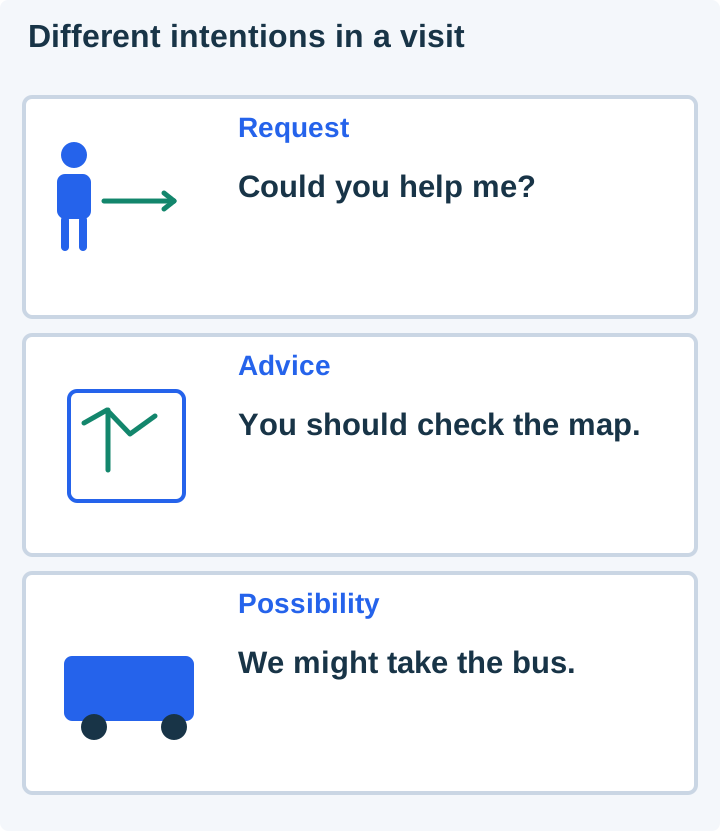
8.5 Compare the patterns side by side
| Modal | Typical job | Example |
|---|---|---|
| would | Polite request or wish | Would you help? I would like tea. |
| should | Advice or expectation | You should rest. |
| could | Request, ability, possibility | Could we take the bus? |
| might | Uncertain possibility | It might rain later. |
8.6 Everyday examples: notice the meaning
Would you pass the salt?
💡 A polite request.
I would like a glass of water.
💡 A polite wish.
Would you like some tea?
💡 An offer to the listener.
I would cycle if I had a bicycle.
💡 An imagined condition.
You should check the address.
💡 Advice.
Should I book a table?
💡 A request for advice.
We should leave earlier next time.
💡 A recommendation based on experience.
The parcel should arrive tomorrow.
💡 An expectation.
You shouldn’t skip the instructions.
💡 Advice against an action.
Could you speak more slowly?
💡 A polite present request.
I could read when I was five.
💡 General past ability.
We could meet at the library.
💡 A proposed option.
This could be the right road.
💡 A possibility.
I couldn’t open the door yesterday.
💡 A specific unsuccessful attempt.
I was able to find the missing key.
💡 A specific successful past action.
It might rain tonight.
💡 Uncertainty.
She might not attend.
💡 Attendance is uncertain, not forbidden.
Might this be the wrong entrance?
💡 A possible but formal question.
8.7 Common mistakes and why
❌ You should to rest.
✅ You should rest.
After should, use rest without to.
❌ Could you to help me?
✅ Could you help me?
After could, use help without to.
❌ She might comes later.
✅ She might come later.
After might, use come without -s. Might does not give an exact percentage.
8.8 Try it yourself
Step 1: Ask for help with Could you…?
Step 2: Give a friend advice with should.
Step 3: Say an uncertain plan with might and a polite wish with would like.
8.9 Five self-checks
Choose A or B for each question. Read the answers below after you finish.
1. Ask someone politely to speak more slowly. Which question is correct?
A. Could you speak more slowly?
B. Could you to speak more slowly?
2. Ask for advice about booking a table. Which question is correct?
A. Should I to book a table?
B. Should I book a table?
3. What does “It might rain” mean?
A. Rain is certain.
B. Rain is possible, but not certain.
4. The rescue succeeded yesterday. Which sentence clearly says this?
A. The team was able to rescue the child.
B. The team might rescue the child.
5. You want water. Which request is correct and polite?
A. I would like some water.
B. I would likes some water.
Self-check answers and explanations
1. A — Could you speak more slowly?
💡 Could you…? makes a polite request. Do not add to before speak.
2. B — Should I book a table?
💡 Use book directly after should I.
3. B — Rain is possible, but not certain.
💡 Might shows a possibility. It does not promise that rain will happen.
4. A — The team was able to rescue the child.
💡 Was able to rescue clearly describes success in this past event. Might rescue describes a possibility.
5. A — I would like some water.
💡 Would like is a polite way to say want. Do not add -s to like.
8.10 Remember these points
Would and could can make requests polite.
Should gives advice or an expectation.
Might describes a possibility.
Review any self-check you missed. Then say three examples aloud without looking.
Further reading: modal verbs guide · conditional sentences
Grammar references: Cambridge: Modal verbs: meanings and uses · Cambridge: Could and past ability