Basics
Day 9 · 30 Days English Challenge
Reflexive Pronouns and Nouns: A Practical Guide
· 5 min read
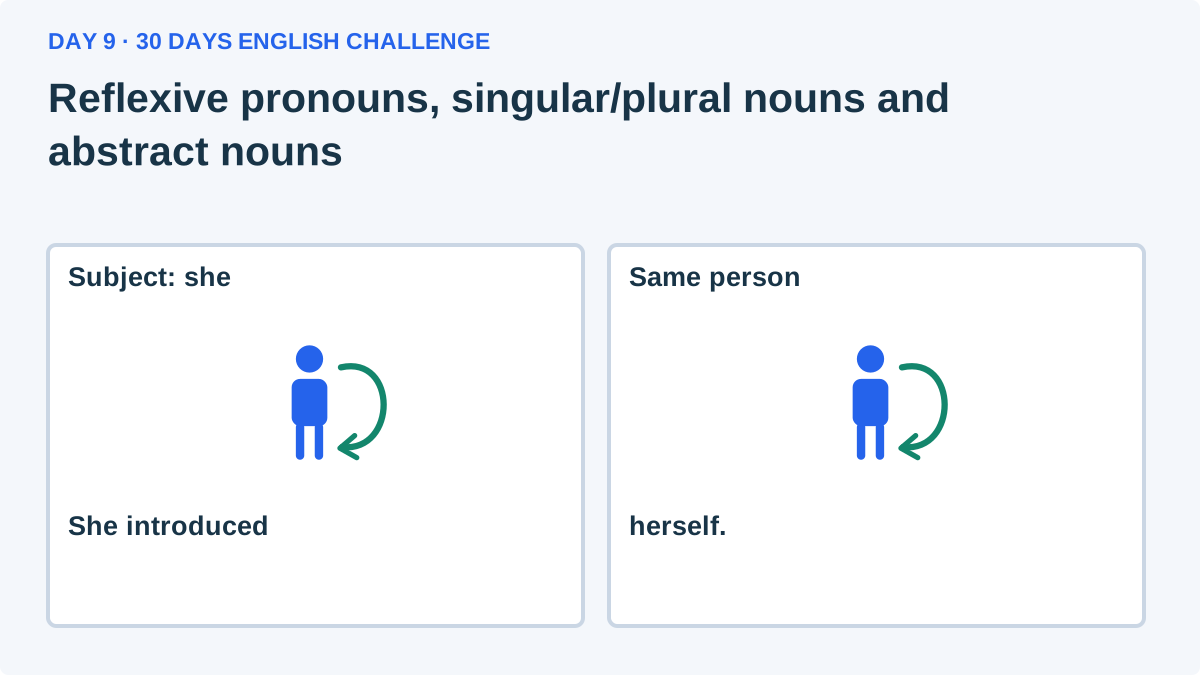
Day 9 speaking goal: Describe actions you do yourself, count familiar things and talk about qualities or ideas.
Learn three useful tools: say who did an action, count things and name feelings or ideas.
Jump to: Rules · Compare · Examples · Self-checks · Answers
9.1 Myself, yourself and themselves
| Learn | Simple English |
|---|---|
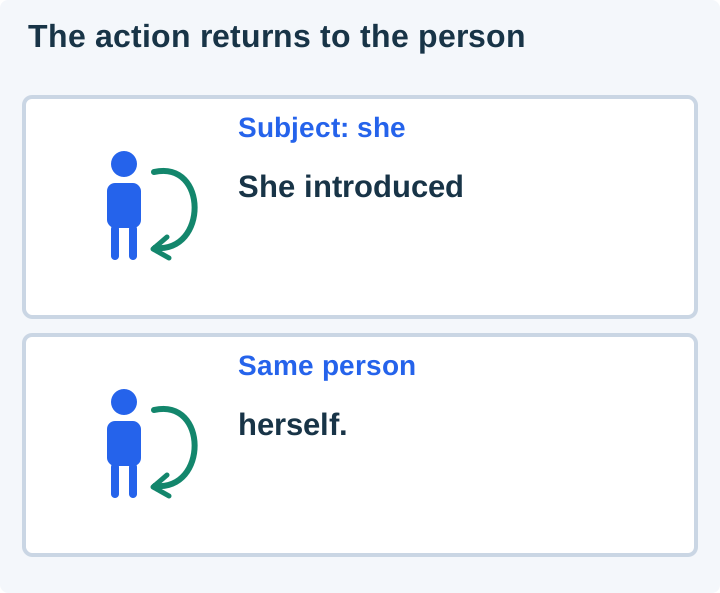
| Rule | Use a reflexive pronoun when the action comes back to the same person. The subject and object are the same. |
| Pattern | I → myself. You → yourself/yourselves. He → himself. She → herself. It → itself. We → ourselves. They → themselves. |
| Example | I introduced myself. She introduced me. |
| Why | I did the introducing, and I was the person introduced. In the second sentence, she introduces a different person: me. |
9.2 One thing or several things
| Learn | Simple English |
|---|---|
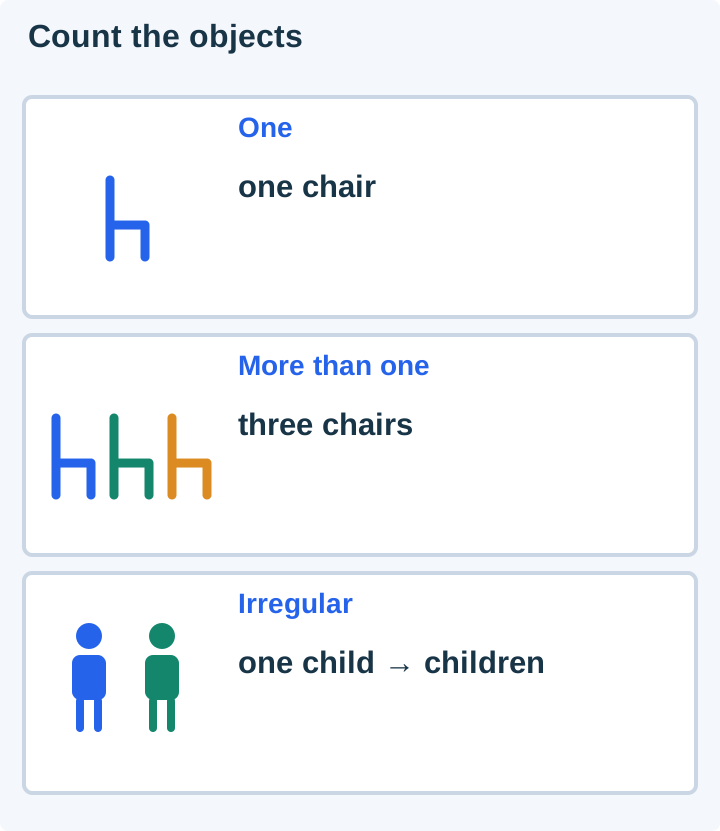
| Rule | A singular noun names one thing. A plural noun names more than one. Many plurals add -s, but some change. |
| Pattern | One chair → chairs. One box → boxes. One child → children. |
| Example | One person is here. Three people are here. |
| Why | Use a, the or my before many singular countable nouns: a chair, the chair, my chair. |
9.3 Ideas and feelings
| Learn | Simple English |
|---|---|
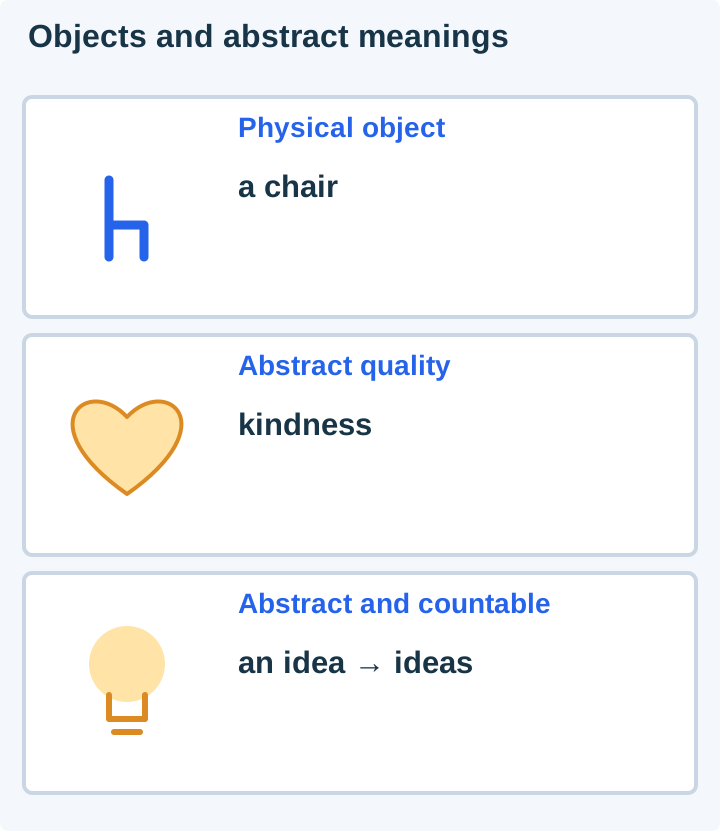
| Rule | Abstract nouns name ideas, feelings or qualities. Examples include kindness, confidence and freedom. Some can be counted; others cannot. |
| Pattern | An idea → two ideas. Some confidence, not two confidences in this meaning. |
| Example | Her kindness helped me. I have two ideas. |
| Why | Abstract does not mean uncountable. You can count ideas even though you cannot touch them. |
9.4 Compare the patterns side by side
| Question | Word family | Example |
|---|---|---|
| Who does it to the same person? | Reflexive | She introduced herself. |
| How many items? | Singular / plural | One chair; three chairs. |
| What idea or quality? | Abstract noun | Confidence helps us speak. |
9.5 Everyday examples: notice the meaning
I introduced myself.
💡 The speaker is both subject and introduced person.
She taught herself to knit.
💡 Herself refers back to she.
We prepared the room ourselves.
💡 Ourselves emphasizes our effort.
They enjoyed themselves.
💡 A familiar reflexive phrase.
He cut himself by accident.
💡 The injured person and subject are the same.
I went by myself.
💡 By myself means alone.
She introduced me to her friend.
💡 Different people need an ordinary object form.
One chair is missing.
💡 Chair is singular.
Three chairs are missing.
💡 Chairs is plural.
Two boxes are ready.
💡 Box adds -es.
The children are waiting.
💡 Children is irregular.
Several people arrived early.
💡 People is the normal plural here.
The furniture is new.
💡 Furniture is normally uncountable.
Her kindness made us comfortable.
💡 Kindness names a quality.
I have an idea.
💡 An abstract idea can be countable.
We discussed two ideas.
💡 The plural is appropriate for separate proposals.
Confidence grows with practice.
💡 Confidence is an uncountable quality here.
One fear kept him awake.
💡 A particular worry can be countable.
9.6 Common mistakes and why
❌ She introduced myself.
✅ She introduced herself.
The reflexive must refer to the subject.
❌ Two childs are here.
✅ Two children are here.
Child has an irregular plural.
❌ I have two idea.
✅ I have two ideas.
Ideas can be counted. With two, use the plural ideas.
9.7 Try it yourself
Step 1: Say something you did yourself.
Step 2: Name three things and give their plural forms.
Step 3: Name one feeling or quality, such as kindness.
9.8 Five self-checks
Choose A or B for each question. Read the answers below after you finish.
1. Each person said their own name. Complete: “They introduced ___.”
A. themselves
B. ourselves
2. Choose the missing word: “One child is here. Two ___ are outside.”
A. childs
B. children
3. Which word names a quality rather than a physical object?
A. kindness
B. chair
4. What does “I did it by myself” usually mean?
A. I did it with a group.
B. I did it alone or without help.
5. Which sentence is correct?
A. The furnitures are new.
B. The furniture is new.
Self-check answers and explanations
1. A — themselves
💡 The people doing the introducing are also the people introduced. Use themselves with they.
2. B — children
💡 The plural of child is children, not childs.
3. A — kindness
💡 Kindness is a quality. Chair names a physical object. Kindness is an abstract noun.
4. B — I did it alone or without help.
💡 By myself usually means alone or without help.
5. B — The furniture is new.
💡 Furniture is normally uncountable. Do not add -s; use is in this sentence.
9.9 Remember these points
Myself refers back to I.
One child becomes two children.
Kindness is a quality; ideas can be counted.
Review any self-check you missed. Then say three examples aloud without looking.
Further reading: pronouns basics · singular plural nouns · countable uncountable nouns
Grammar references: Cambridge: Reflexive pronouns · Cambridge: Nouns: types and meanings