Grammar Basics
Modal Verbs: Can, Could, Should, Would & More
· 3 min read
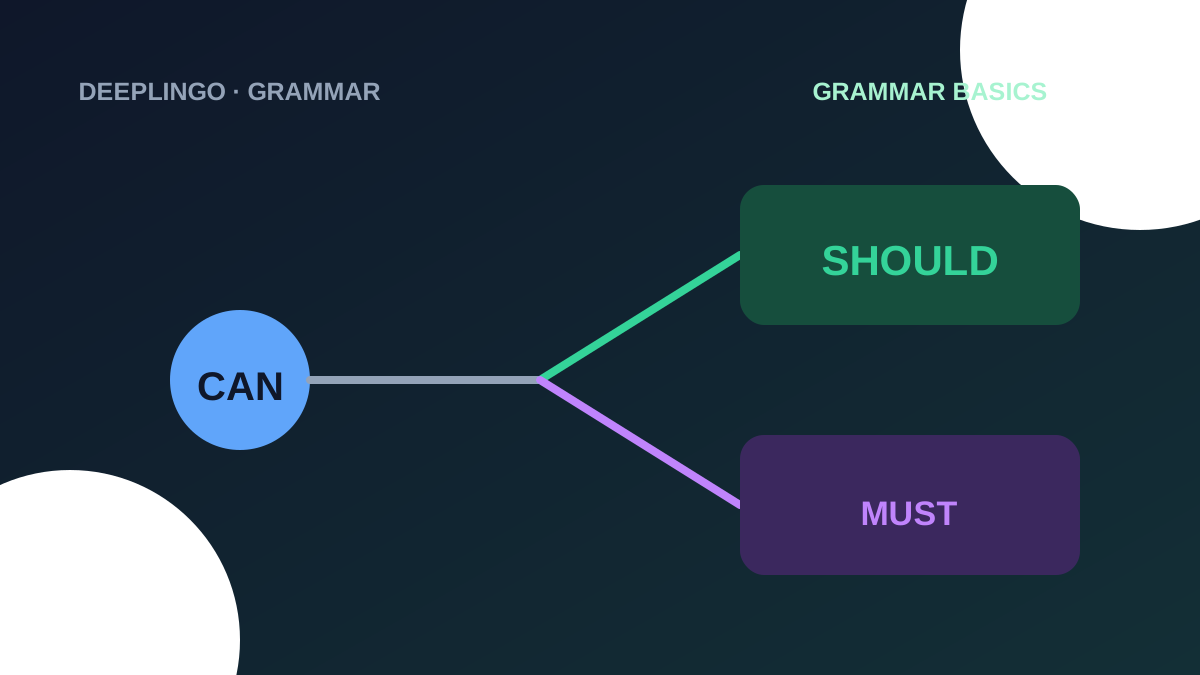
Core modal verbs express meanings such as possibility, ability, advice and obligation. They normally take a bare infinitive and do not add a third-person -s.
Modal verbs are special helper verbs that add meaning like possibility, ability, or necessity. They're like seasoning for your sentences! 🌟
CAN & COULD: Ability & Possibility
I
💡 Present ability
She
💡 Past ability
💡 Offering help / asking permission
It
💡 Possibility
SHOULD & OUGHT TO: Advice
You
💡 Giving advice
We
💡 Moral obligation (formal)
You
💡 Advice against something
MUST & HAVE TO: Obligation
You
💡 Strong obligation (law/rule)
I
💡 External obligation
You
💡 Prohibition - NOT allowed!
MAY & MIGHT: Permission & Possibility
💡 Formal permission request
It
💡 Possibility (50% chance)
She
💡 Less certain possibility
WOULD: Requests & Hypotheticals
💡 Polite request
I
💡 Hypothetical situation
When I was young, I
💡 Past habit
| Modal | Use | Example |
|---|---|---|
| can | ability, permission, possibility | I can help you |
| could | past ability, polite request, possibility | Could you help me? |
| should | advice, recommendation | You should rest |
| must | strong obligation, certainty | You must stop |
| may | permission, possibility | May I leave? |
| might | slight possibility | It might work |
| would | polite request, hypothetical | Would you like tea? |
Continue learning
Conditional Sentences: Types and Examples · Future Simple with Will: Rules and Examples
Practice in the 30 Days English Challenge: Day 7: Will, Shall, May and Can: Ability, Offers and Permission · Day 8: Would, Should, Could and Might: Uses and Examples