Grammar Basics
Pronouns Exercises with Explained Answers
Published · Updated · 3 min read
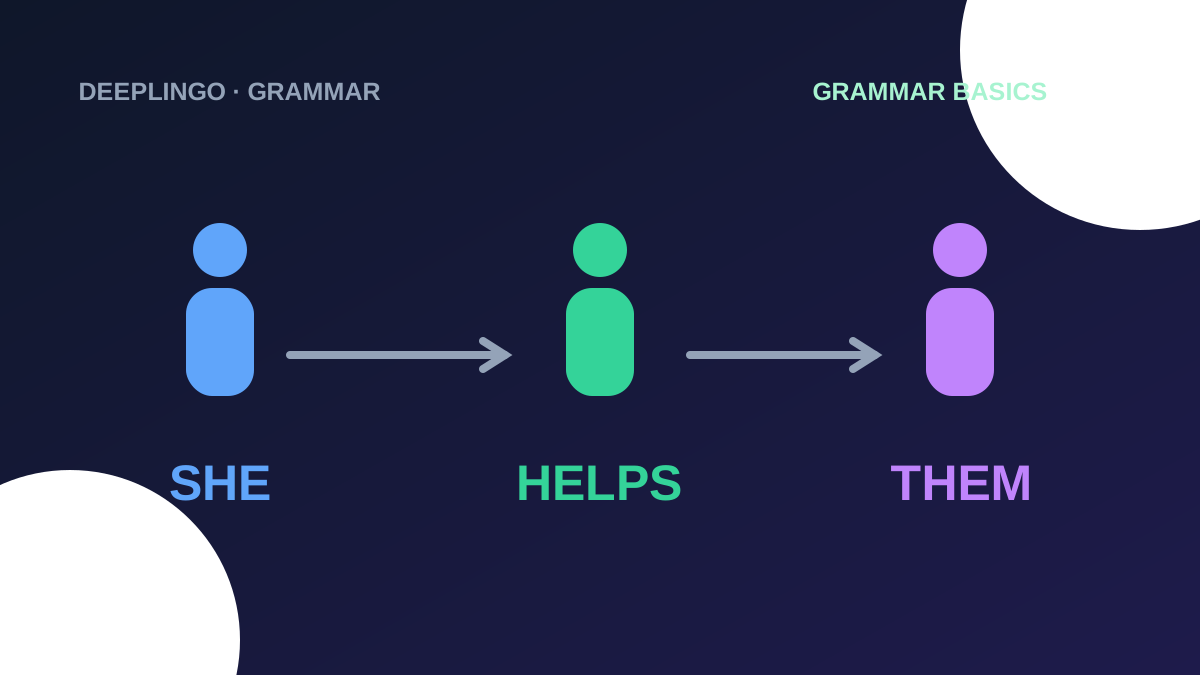
Choose a pronoun by its job in the sentence. Use a subject pronoun (I, he, she, we, they) before the verb, an object pronoun (me, him, her, us, them) after a verb or preposition, and a possessive form to show ownership.
Pronoun forms
| Subject | Object | Possessive adjective | Possessive pronoun |
|---|---|---|---|
| I | me | my | mine |
| you | you | your | yours |
| he | him | his | his |
| she | her | her | hers |
| it | it | its | — |
| we | us | our | ours |
| they | them | their | theirs |
She called me yesterday.
💡 She does the action; me receives it.
This is my bag. That one is yours.
💡 My comes before a noun; yours stands alone.
The dog wagged its tail.
💡 Its shows possession and has no apostrophe.
Common mistakes to watch
❌ Me and him went home.
✅ He and I went home.
The pronouns are the subject, so subject forms are standard in careful English.
❌ Between you and I, it’s late.
✅ Between you and me, it’s late.
After a preposition, use the object form.
❌ The company changed it’s logo.
✅ The company changed its logo.
It’s means it is or it has; its is possessive.
Is “It’s me” wrong?
No. “It’s me” is normal in everyday English. “It is I” is very formal and sounds old-fashioned to most speakers.
Can they refer to one person?
Yes. Singular they is widely used when a person’s gender is unknown or not relevant, or when it is the person’s chosen pronoun. It still takes a plural verb: they are.
Grammar reference: Cambridge on pronouns. The lesson explanations and practice questions are original.